






Максимизирање соларне ефикасности концентрованим фотонапонским системима: Технолошки и инвестициони увиди
How Concentrated Photovoltaics Enhance Solar Panel Efficiency
Concentrated photovoltaics (CPV) optimize solar power conversion by using optical elements such as Fresnel lenses and mirrors to concentrate sunlight onto smaller solar cells, increasing the фотонапонска irradiance beyond standard conditions. This method decreases the required semiconductor surface area per watt generated and enhances module efficiency.
CPV systems are classified by their concentration ratio, defined as the multiple of sunlight intensity focused onto the solar cell compared to natural sunlight:
- Low Concentration Photovoltaics (LCPV): Concentration ratios approximately 2x to 10x.
- Medium Concentration Photovoltaics (MCPV): Ratios ranging from 10x to 100x.
- High Concentration Photovoltaics (HCPV): Ratios exceeding 500x, with some systems achieving up to 1000x concentration.
High concentration ratios intensify the heat flux on the solar cell, necessitating solar cell designs capable of sustaining elevated temperatures and irradiances. Standard crystalline silicon solar cells show efficiency and durability limits under above 100x concentration. Therefore, HCPV modules utilize III-V multi-junction solar cells—typically triple-junction devices based on gallium arsenide (GaAs) and related compounds. These cells convert multiple spectral bands simultaneously, reaching conversion efficiencies between 35% and 42% under concentrated illumination according to laboratory measurements compliant with IEC 61853 testing procedures.
By comparison, conventional flat-plate photovoltaic modules using single-junction silicon cells deliver module-level efficiencies typically in the 15% to 22% range under standard test conditions (STC, 1000 W/m2 irradiance, 25°C cell temperature). Thus, CPV technologies can effectively double the photovoltaic efficiency per unit area, making them particularly advantageous where land availability is constrained or high power density is desired. However, the higher complexity in cell design, manufacturing, and system integration impacts initial costs and operational considerations.
Critical Components and Materials in Concentrated Photovoltaic Modules
CPV module performance depends on precise integration of optical, photovoltaic, thermal management, and mechanical tracking sub-systems designed for concentrated solar power generation.
Optical Concentrators: The principal elements responsible for sunlight concentration are:
- Fresnel lenses: Composed of concentric ring segments milled from acrylic or glass, these lenses provide lightweight solutions with concentration up to 500x. Their manufacturing tolerances typically require lens surface quality better than 5 micrometers RMS roughness to minimize optical losses.
- Parabolic mirrors: Metal-coated glass or anodized aluminum reflectors shaped to a parabolic profile enable higher concentration ratios exceeding 1000x in some designs, but pose increased mechanical complexity.
Solar Cells: The solar cells utilized in CPV modules are predominantly multi-junction designs made from III-V semiconductor materials. These cells consist of stacked sub-cells, each targeting a distinct solar spectrum band: typically indium gallium phosphide (InGaP), gallium arsenide (GaAs), and germanium (Ge). This design facilitates spectral splitting and reduces thermalization losses, which are more significant under concentrated solar irradiance. The cells are mounted on thermally conductive substrates to ensure effective heat dissipation.
Термално управљање: Concentrated solar illumination elevates cell temperatures beyond the 60–80 °C range typical for flat-plate modules, making effective heat removal critical for maintaining conversion efficiency and cell longevity. Passive heat sinks made from aluminum or copper with fins provide initial thermal dissipation, often augmented by forced-air cooling or liquid cooling loops in high-irradiance installations. System designs continuously monitor cell temperature through embedded thermistors to trigger cooling mechanisms or reduce concentration levels if thresholds are exceeded.
Tracking Systems: To maintain optimal sunlight incidence on concentrators, CPV modules employ dual-axis tracking systems capable of maintaining alignment within ±0.2 degrees of the solar vector throughout daylight hours. This precision is essential because even minor misalignment can cause rapid efficiency drops due to the narrow acceptance angle of concentrators. Tracking systems include programmable logic controllers (PLCs), position encoders, and stepper or servo motors, with control algorithms adjusting the azimuth and elevation angles based on solar ephemeris data. Single-axis trackers, which adjust only east-west rotation, are an alternative in less demanding or cost-sensitive applications.
Performance and Durability Challenges Unique to Concentrated Photovoltaics
Despite offering superior photovoltaic conversion efficiency, CPV systems face distinctive challenges related to complexity and environmental exposure.
Thermal Effects: Concentration of solar irradiance can result in solar cell junction temperatures exceeding 100°C during peak insolation if heat dissipation is insufficient. Elevated temperature accelerates semiconductor degradation mechanisms including electromigration and junction fatigue, reducing module lifespan below the 25+ years expected from standard photovoltaic modules compliant with IEC 61215. Consequently, thermal management systems require redundancy and routine condition monitoring.
Optical Degradation: Fresnel lenses and parabolic mirrors are susceptible to environmental degradation caused by ultraviolet radiation, surface abrasion, and contamination from dust and particulate matter. Studies indicate average annual optical transmittance losses of 1.5% to 2.5% in outdoor exposure depending on geographic location and maintenance frequency. Cleaning schedules every 3 to 6 months are standard practice to mitigate these effects and sustain power output. Protective coatings such as anti-reflective and hydrophobic layers extend concentrate efficiency retention.
Mechanical Reliability of Trackers: Key mechanical components—motors, gearboxes, bearing assemblies, and sensors—require scheduled preventive maintenance at intervals of approximately six months. Failure of tracking mechanisms often results in significant power losses or system downtime. Advanced fault detection leveraging vibration sensors and motor current analysis is increasingly deployed for predictive maintenance.
Environmental Loads: Wind shear, temperature cycling (-20°C to +60°C typical for many CPV deployment zones), and airborne particulates including sand or volcanic ash impose mechanical stress and influence module sealing. Modules are designed to meet IEC 62790 standards for CPV module mechanical load testing, ensuring structural integrity under representative regional conditions.
Evaluating Concentrated Photovoltaics for Large-Scale Solar Power Projects
Project developers must evaluate several site-specific and technical criteria when considering CPV systems for large-scale solar photovoltaic applications.
Land-use Efficiency: CPV achieves power densities of approximately 20 to 50 W/m2 of land area—an improvement of 30–50% compared to typical ground-mounted flat-plate PV arrays, which range from 10 to 30 W/m2. This advantage stems from the focused solar energy input enabling compact module layouts.
Capital Expenditure: Per installed megawatt peak (MWp), CPV systems incur higher upfront costs primarily due to precision optics, dual-axis trackers, and cooling infrastructure. These additional components require specialized manufacturing and installation processes. Consequently, initial investment planning must weigh cost per watt against expected module efficiency, capacity factor, and maintenance expenditures across a 20- to 25-year project lifetime.
Resource Compatibility: The performance of CPV depends heavily on the availability of high-quality direct normal irradiance (DNI). Typical minimum annual DNI thresholds for economic viability range around 5 kWh/m²/day or higher, common in desert and semi-arid regions. Sites with DNI levels below this value experience diminished concentration benefits and reduced system capacity factors.
Modularity and Scalability: CPV technology modularity supports incremental plant construction. Standard CPV units range from 5 kW to 50 kW, allowing project phases to be planned in alignment with investor timelines and grid connection milestones. The modular approach facilitates staged capital deployment and risk management.
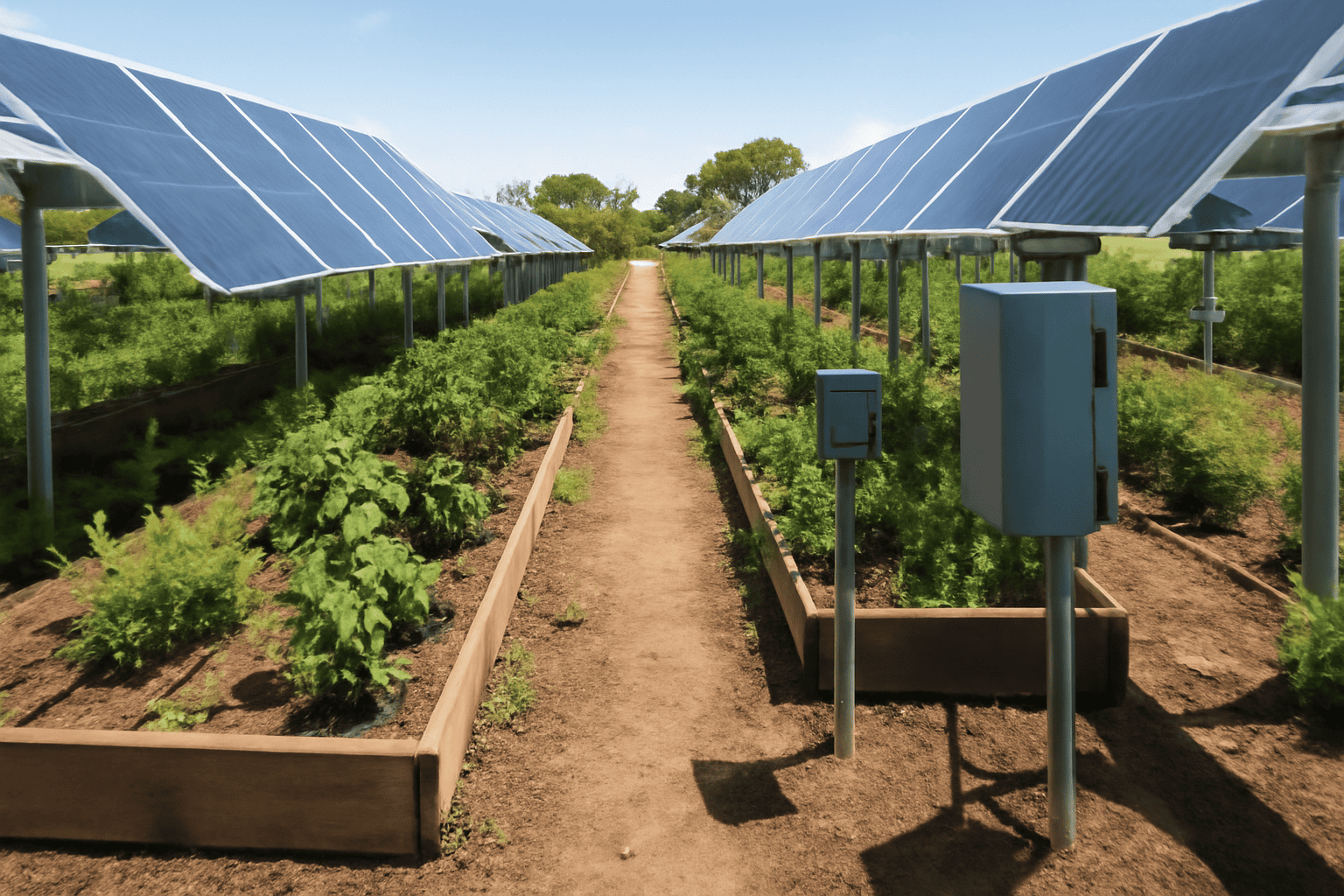
Agrivoltaic Integration: Platforms like Solar Plus Garden combine CPV with local agricultural use, deploying agrivoltaic principles that optimize land for both solar energy production and crop growth. This co-location mitigates land use conflicts and diversifies revenue streams, presenting innovative support for sustainable energy-investment models.
Legal and Regulatory Considerations for Deploying Concentrated Photovoltaic Systems in 2026-2027
CPV project compliance involves adherence to international photovoltaic standards and local regulatory frameworks that govern safety, grid integration, and environmental impact.
- IEC 62670: Specifies design qualification and type approval requirements specific to concentrating photovoltaic modules, including tests for temperature cycling, humidity freeze, and thermal shock.
- IEC 62817: Defines testing standards and performance criteria for photovoltaic tracking systems, covering mechanical robustness, tracking accuracy, and operational reliability.
Electric grid interconnection requires compliance with power quality standards such as IEEE 1547 or EN 50438 depending on jurisdiction, addressing voltage regulation, frequency stability, and fault ride-through capabilities. Regulatory authorities may also mandate third-party performance validation and safety certification audits.
Local land-use policies dictate zoning permissions, especially when incorporating agrivoltaic schemes and community gardens within CPV projects. Environmental impact assessments (EIAs) evaluate ecosystem disturbance, water usage, and visual impact. Solar Plus Garden operates within a legal structure separating the Estonian OÜ holding the solar assets from the Serbian DOO managing garden activities, ensuring compliance with respective national laws and transparent financial transactions through escrow arrangements.
Investors must monitor subsidy frameworks, feed-in tariffs, and fiscal incentives for concentrated solar power (CSP) technologies, which vary regionally and may be revised by national authorities. Availability of grants or tax credits significantly influences project cash flow models.
Innovations and Future Trends in Concentrated Photovoltaics for Sustainable Investment
Continued research in photovoltaic technologies is expanding CPV capabilities in efficiency, integration, and operational flexibility.
- Next-generation Multi-junction Cells: Research into quadruple-junction cells incorporating novel III-V semiconductor alloys aims to surpass 45% photovoltaic conversion efficiency under standardized concentrated solar conditions.
- Hybrid CPV and Solar Thermal Systems: Integration of concentrated photovoltaic modules with solar thermal collectors enables simultaneous generation of electricity and heat (combined heat and power – CHP) from a shared optical concentration platform. Systems in pilot phases demonstrate overall solar-to-energy conversion efficiency exceeding 60%.
- Agrivoltaic Integration Enhancements: Advances in CPV module design and placement optimize light diffusion and shading patterns, promoting improved microclimates beneficial to certain crops. Solar Plus Garden exemplifies this approach, incorporating community engagement and fresh produce distributions alongside solar power generation since 2025.
- Smart Tracking and Adaptive Optics: Artificial intelligence algorithms use real-time irradiance data, weather forecasts, and system diagnostics to dynamically adjust both tracker positioning and optical concentration focus. These systems improve daily energy yield profiles by up to 5% over traditional fixed-parameter controls.
- Modularization and Standardization: Ongoing development targets smaller, standardized CPV module units facilitating rapid deployment, easier maintenance, and flexible investment scaling, critical for integrating with community-focused solar platforms.
How Concentrated Photovoltaics Fit Within the Solar Plus Garden Investment and Community Model
Solar Plus Garden’s planned 10 MW solar power capacity leverages concentrated photovoltaic technology to maximize energy efficiency per land unit and reduce overall system footprint. This approach complements the platform’s integrated Garden community concept, providing sustainable solar energy funding for localized agricultural projects.
Investors participate through a structured membership model: an initial one-time Чланство у башти fee of €200 grants community access, while optional monthly Баштенска кутија subscriptions at €20 deliver 18 annual deliveries of fresh local produce. Both fees directly support solar photovoltaic module maintenance and agrivoltaic system operations.
Investor capital is secured through a transparent escrow payment system, ensuring funds are disbursed according to pre-agreed milestones and legal compliance checks for both Estonian and Serbian legal entities involved. This structure mitigates risk and enforces accountability.
Community members influence project development by engagement in governance decisions, feedback on technology upgrades, and scalability initiatives, fostering stakeholder alignment with environmental impact goals and long-term sustainability.
FAQ: Practical Considerations for Investors and Property Owners Considering Concentrated Photovoltaics
- What is the typical efficiency improvement offered by concentrated photovoltaics compared to traditional solar panels?
- Concentrated photovoltaics employing multi-junction III-V solar cells achieve conversion efficiencies between 30% and 42% under concentrated sunlight, compared with 15% to 22% for standard flat-plate silicon photovoltaic modules operating under 1 sun.
- Are concentrated photovoltaic systems suitable for all locations and climates?
- CPV systems require high direct normal irradiance (DNI) values, typically above 5 kWh/m²/day on an annual basis, favoring arid or semi-arid climates with minimal cloud cover. Locations with frequent diffuse irradiation or heavy atmospheric scattering are not cost-effective for CPV deployment.
- What are the maintenance requirements unique to concentrated photovoltaic installations?
- Maintenance includes biannual cleaning and inspection of optical concentrators to prevent efficiency losses from soiling and weathering, calibration and servicing of precision dual-axis tracking mechanisms to maintain sun alignment within ±0.2 degrees, and thermal management system checks to detect overheating risks. Preventive maintenance intervals typically range from 4 to 6 months.
- How does investing in concentrated photovoltaics through platforms like Solar Plus Garden benefit small and medium investors?
- Platforms such as Solar Plus Garden provide regulated, transparent investment access to CPV projects by pooling capital from multiple small and medium investors, reducing entry barriers. The model combines financial returns with чланство у заједници, integrating solar income streams with agrivoltaic benefits and ensuring investor protections through escrow and legal compliance mechanisms.
Закључак: Concentrated photovoltaics represent a high-efficiency solar photovoltaic technology offering significant land-use advantages in suitable high DNI environments. Their deployment demands careful assessment of thermal management, optical integrity, tracking precision, and regional regulatory compliance. Investment models exemplified by Solar Plus Garden illustrate how CPV systems can be integrated with community-driven agrivoltaic frameworks, enhancing sustainability and social impact. As technological innovations advance cell design, system integration, and adaptive controls, CPV’s role in the renewable energy landscape is poised for growth pending stable market policies and continued operational performance validation.