





Solar Projects for Investors: A Strategic Guide to Investing in Solar Energy
Overview of Solar Projects for Investors
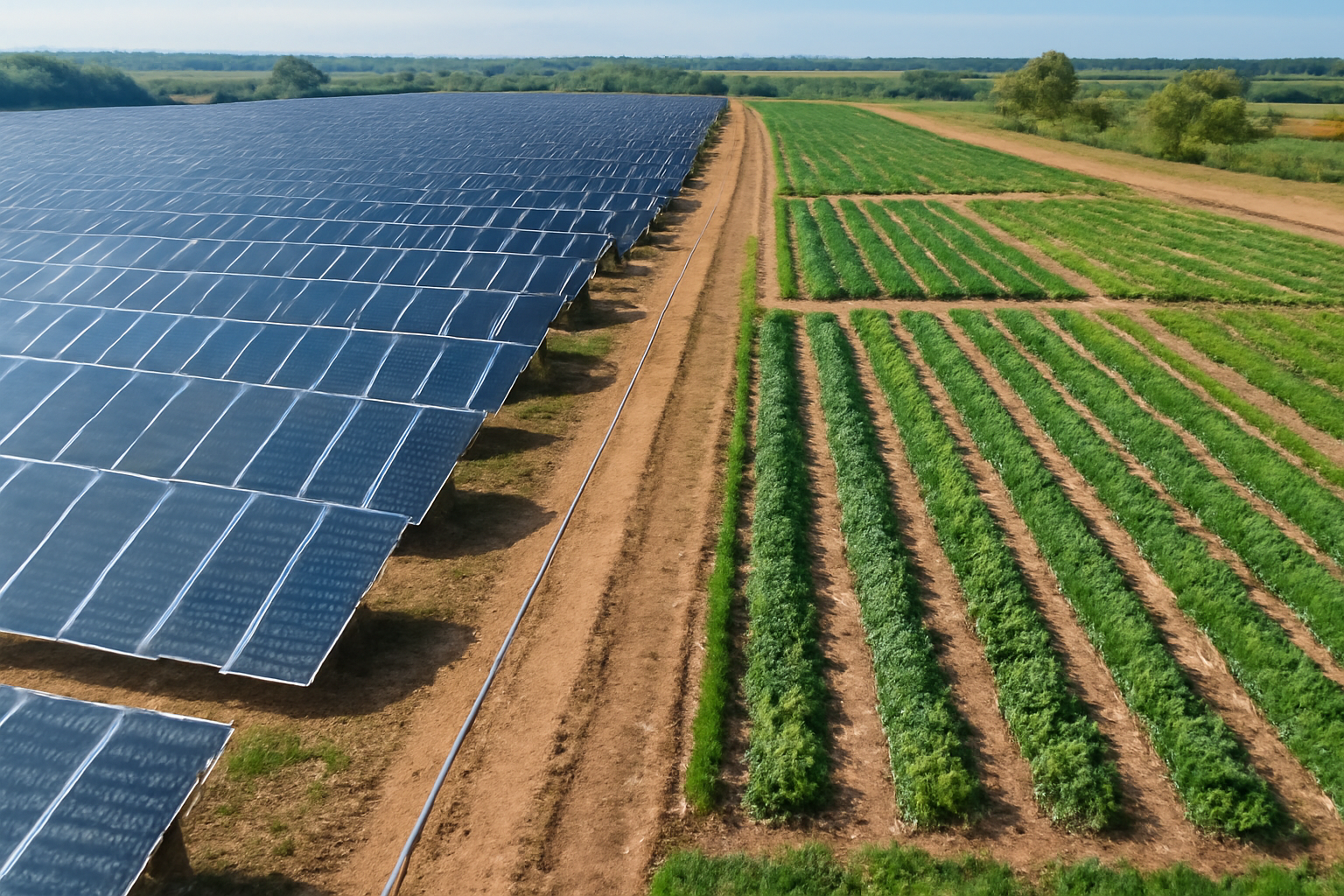
Solar projects for investors typically involve the development and management of solar farms or solar parks—engineered arrays of photovoltaic (PV) modules with capacities ranging from a few megawatts to tens or hundreds of megawatts. These solar energy projects convert sunlight into electricity primarily for grid injection or designated consumption, contributing to the expanding portfolio of renewable energy sources globally.
Solar power is distinguished by its modularity and declining costs driven by improvements in PV technology and economies of scale. Unlike wind or hydroelectric generation, solar power offers flexible siting options, including distributed generation near consumption points. This flexibility enhances its role as a complement to other renewable energy sources in diversified energy portfolios.
Solar Plus Garden demonstrates an integrated approach by pairing a 10 MW solar farm with a community-based Garden membership model. This combination enables private investors to invest directly in a regulated and transparent solar park while simultaneously participating in a community solar initiative that includes agrivoltaic and social activities. This hybrid model aligns investments in renewable energy with tangible community benefits.
The 10 MW capacity corresponds to a medium-scale solar park, structured to comply with EU and Serbian regulatory requirements. This capacity is typical for attracting private investors and energy funds seeking exposure to stable solar energy projects with manageable development and operational risk profiles.
How Solar Investment Works: Mechanisms and Models
Investing in solar projects generally occurs through two primary mechanisms: equity stakes and loan-based financing. Equity investments confer ownership shares in the solar park, entitling investors to dividends based on project cash flow and value appreciation. Equity investors assume exposure to operational performance and market price fluctuations.
Loan-based investments function as debt financing, where investors provide capital with predefined interest rates, repayment schedules, and maturity dates. This model offers fixed income with comparatively lower risk but limited upside potential. Investors can select structures aligned with their risk-return preferences.
Within the Solar Plus Garden framework, this bifurcation is reflected in two investment pathways—equity share acquisition or guaranteed payout plans. The community solar aspect is maintained via the Garden membership, funded by a €200 one-time membership fee and optional recurring contributions. This membership funds community activities, while the core solar funds support project development and operation.
To safeguard investment capital and ensure regulatory compliance, Solar Plus Garden employs a multi-tiered payment and escrow system. The Estonian OÜ acts as the asset owner and investor fund custodian, while a Serbian DOO administers daily operations. Payments flow through escrow accounts that segregate community membership fees, solar funds, and operational expenditures, preventing unauthorized fund disbursement and reinforcing financial transparency.
Cost Considerations in Investing in Solar Projects
The minimum entry point for investments in Solar Plus Garden’s solar park is €500, making participation accessible for individual private investors and mid-sized energy funds. This threshold supports broad investor inclusion in large-scale solar park development without necessitating significant capital commitments.
Membership expenses include a €200 one-time fee granting access to the Garden community’s social and agrivoltaic activities. Moreover, an optional monthly €20 Garden box subscription funds the delivery of locally grown agrivoltaic produce to members, integrating ecological agriculture with renewable energy investment.
Capital expenditure (CAPEX) of solar park development covers procurement of high-efficiency photovoltaic modules (typically monocrystalline silicon technology), land leasing or acquisition, electrical infrastructure such as inverters and transformers, and grid connection compliance. Operational expenditure (OPEX) comprises scheduled preventive maintenance, system performance monitoring including SCADA systems, and community program administration funded via membership fees.
The combined structure ensures that membership and subscription fees contribute explicitly to maintaining the community and agrivoltaic elements, while direct solar investment covers energy project capital and operational costs. This delineation fosters financial clarity and sustainable cost management.
Understanding Risks in Solar Investments
Investing in solar and storage projects involves assessing multiple risk categories. Regulatory risks arise from navigating cross-border legal frameworks as Solar Plus Garden’s ownership resides in Estonia, whereas operational management is in Serbia. Compliance challenges include adherence to EU directives on renewable energy certification, environmental impact assessments under local Serbian laws, and grid interconnection standards.
Operational risk factors include panel degradation rates (typically 0.5% to 1% efficiency loss per year), potential inverter failures requiring replacement within 10-15 years, and weather-related variability impacting solar irradiance levels. These factors influence projected energy yields and subsequent returns. Solar Plus Garden deploys continuous monitoring and prompt maintenance protocols to mitigate performance risks.
Financial risks are addressed through the project’s governance and financial controls. The escrow and payment segregation system ensures investor funds are allocated exclusively for intended purposes, reducing risks of misappropriation. Reporting structures provide investors with quarterly performance and financial statements aligned with regulatory disclosure requirements.
Key Steps to Participate in Solar Projects for Investors
Participation in Solar Plus Garden’s solar park investment and community model follows a structured onboarding process designed for regulatory compliance and investor readiness:
- Sign up on the Solar Plus Garden waiting list to express interest.
- Complete KYC (Know Your Customer) and KYB (Know Your Business) verification within approximately 48 hours, requiring submission of government-issued identification and, for business entities, incorporation and ownership documents.
- Receive approval notification allowing access to investment opportunities.
- Select between two investment options: equity share acquisition for long-term participation or guaranteed payout linked to project phases offering predefined returns.
- Pay the €200 Garden membership fee to activate community access; optionally subscribe to the €20/month Garden box for agrivoltaic produce.
- Optionally join the affiliate program, earning a 3% commission on referred investor contributions, supporting program expansion.
This process ensures alignment with anti-money laundering regulations and investor protection standards, simplifying investor onboarding in cross-border renewable energy projects.
Comparing Solar Investments with Other Renewable Energy Sources
Investing in solar projects presents comparative advantages over wind and hydroelectric projects regarding scalability, predictability, and regulatory ease. Solar farms leverage predictable daily and seasonal insolation data to inform energy production models and financial projections, supported by standardized metrics such as performance ratio and capacity factor.
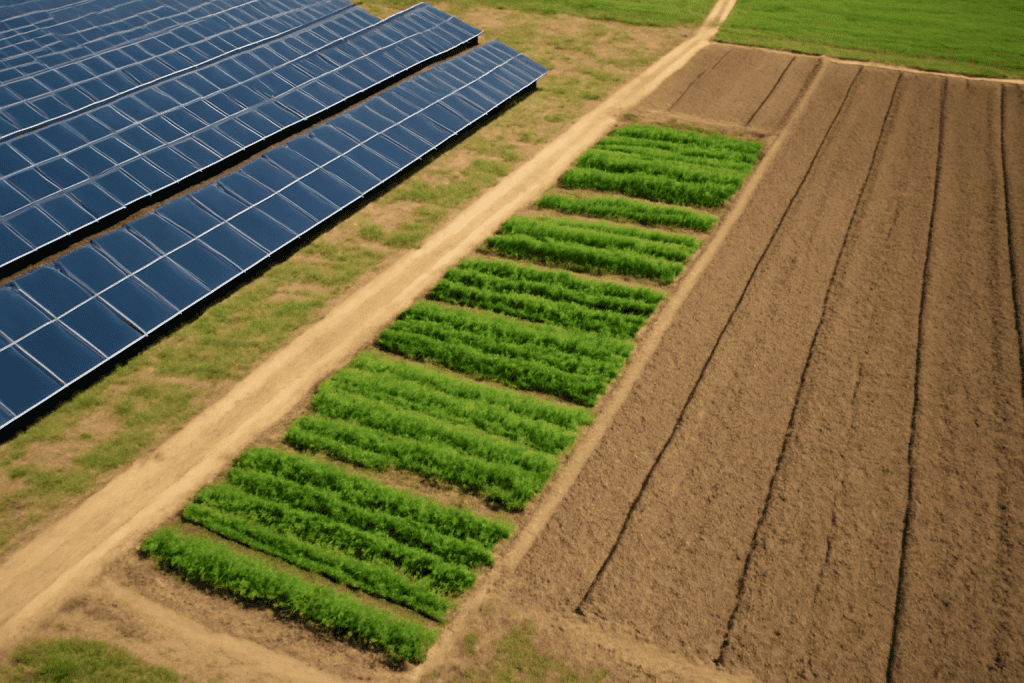
Solar Plus Garden integrates agrivoltaic solar park development, allowing dual land use—installing PV modules above crops without significantly reducing agricultural output. This system supports up to 3,000 garden plots, each tied to community membership, providing local food production in tandem with solar power generation.
Regulatory frameworks in Estonia and Serbia respect these land-use synergies, facilitating permits for agrivoltaic installations that meet environmental standards. This contrasts with some wind or hydropower projects facing extended permitting periods due to ecological impact assessments or site limitations.
The community solar concept embodied in Solar Plus Garden enhances investor appeal through non-energy benefits, including local involvement and social impact, absent in many traditional renewable energy sources. This diversified benefit stream supports portfolio diversification strategies for private investors and energy funds.
Local Market and Regulatory Insights
Solar Plus Garden operates under a bifurcated legal structure designed to optimize compliance and investor security. The Estonian OÜ, established on February 20, 2026, holds the project’s assets and investor agreements. Concurrently, the Serbian DOO manages operational activities, grid interfacing, and on-site maintenance under Serbian jurisdiction.
EU renewable energy directives applicable include the Renewable Energy Directive (RED II), which governs certification and sustainability criteria for solar energy projects, while Serbian regulations specify land use, construction permits, and grid connection licensing. Solar Plus Garden ensures both sets of regulations are adhered to, notably avoiding regulatory arbitrage and ensuring legal clarity.
The transparent payment and escrow mechanism maintains the separation of solar farm investment funds from Garden membership fees and operational expenses. This approach abides by financial prudence and investor protection principles, precluding fund commingling and misuse.
Unlike some platforms employing escrow-like or informal fund controls, Solar Plus Garden’s escrow mechanism is fully auditable and governed by contractual agreements, supporting a regulated and investor-ready crowdfunding platform for renewable energy investments.
Maintenance and Operational Management of Solar Investments
The Solar Plus Garden 10 MW solar farm’s operational management is the responsibility of the Serbian DOO’s technical team, with documented experience in implementing large-scale photovoltaic projects exceeding 10 MW capacity in the region. This experience encompasses project commissioning, grid integration, and performance optimization.
Maintenance protocols include quarterly inspections of PV modules for dirt, micro-cracks, and electrical output checks, inverter functional testing every six months, and annual system calibrations to maintain an optimal performance ratio typically above 80%. These activities conform to industry best practices for solar farm O&M.
Agrivoltaic management involves strategic panel spacing—set at elevations between 2.5 and 3 meters—to ensure adequate sunlight penetration for under-panel crops. Solar Plus Garden employs horticultural planning to coordinate shading patterns that support plant growth without compromising energy yield.
Financially, operational costs are financed by solar energy sales revenues, providing a continuous fee stream for maintenance and community support. This model integrates technical and social program budgets, making operational management both sustainable and investor-aligned.
Future Outlook for Investing in Solar Projects
The solar energy sector continues its growth trajectory in response to increasing energy demand and climate policy incentives. Solar Plus Garden’s phased project roadmap includes plans to incrementally scale the solar park beyond the initial 10 MW capacity, contingent on regulatory approvals and community expansion.
Investors may adjust their participation profiles as phases progress, selecting appropriate risk levels through expanding equity or guaranteed payout options. This staged approach allows realignment of portfolio exposure with evolving market conditions and technological advancements.
Integration of solar and storage projects is anticipated as battery technologies mature and regulatory frameworks evolve to support grid stability services and time-shifting of solar generation. These developments will enhance project profitability, improve energy independence, and reduce curtailment risk.
Solar Plus Garden’s model, combining solar park development with agrivoltaics and community engagement, provides a replicable framework for sustainable solar investment. Investors seeking to diversify renewable energy portfolios should consider the platform’s transparent governance, community benefits, and scalable design when making investment decisions.
Frequently Asked Questions
- What are the minimum investment amounts for participating in Solar Plus Garden’s solar projects?
- The minimum solar investment amount is €500, complemented by a one-time €200 Garden membership fee granting community access. An optional €20 monthly subscription supports agrivoltaic produce delivery.
- How does the Garden membership work alongside solar investment?
- Garden membership is funded by membership fees invested indirectly in solar funds, enabling members to benefit from community activities and fresh local produce even without direct equity or loan investments in the solar park.
- What legal protections exist for investors in cross-border solar projects like Solar Plus Garden?
- Solar Plus Garden’s ownership is held by an Estonian OÜ, with operational activities managed by a Serbian DOO. The escrow-based payment system provides transparent, auditable fund control, preventing misappropriation and ensuring compliance with multi-jurisdictional regulations.
- Can I earn additional income through referrals or equity with Solar Plus Garden?
- Yes, Solar Plus Garden’s affiliate program offers a 3% commission for successful investor referrals and opportunities for enhanced earnings through equity participation within the project’s ownership structure.
Conclusion
Investing in solar projects, particularly through a regulated platform like Solar Plus Garden, offers private investors and energy funds a structured opportunity to participate in renewable energy generation combined with community solar benefits. The 10 MW solar park and Garden membership model integrate financial returns with agrivoltaic social engagement, supported by a transparent payment and legal framework spanning Estonia and Serbia.
Prospective investors seeking to diversify renewable energy portfolios should evaluate the project’s phased roadmap, governance structure, and community engagement mechanisms. Continuous monitoring of regulatory developments, technological integration such as solar and storage projects, and operational performance will be vital to optimizing investment outcomes in this evolving energy sector.