


Solar Farm Investment Opportunities 2026
The Current Context of Solar Energy Investment in 2026
Solar energy continues its global expansion as a fundamental element of the renewable energy mix. By early 2026, global installed solar farm capacity exceeded 1,000 GW, driven by commitments embedded in frameworks such as the European Green Deal and the REPowerEU plan, targeting at least 45% renewable energy share EU-wide by 2030.
The energy transition seeks to replace coal, natural gas, and oil with low-carbon sources, with solar power’s scalability making it a leading solution in this sector. Utility-scale solar parks equipped predominantly with crystalline silicon solar panels provide reliable, dispatchable power capacity to national grids, often complemented with grid-balancing and forecasting tools to optimize output.
In the European Union, directives such as the Renewable Energy Directive (RED II) govern legal conditions for solar projects, including support schemes and permitting processes. Serbia aligns with these frameworks by adapting its Energy Law and introducing feed-in premium schemes and net metering, improving viability for solar farm investing through clearer regulatory guidance and financial incentives.
An example relevant to 2026 is the establishment of Solar Plus Garden’s Estonian OÜ on 20.02.2026, which acts as the platform owner coordinating cross-border investment and facilitating transparency. This legal foundation supports structured solar project deployment within complex central and eastern European markets.
How Solar Farm Investments Work: Mechanisms and Models
Investing in solar projects in 2026 requires understanding distinct financial instruments designed to match investor profiles and project phases. Models include equity participation, debt lending, and hybrid mechanisms combining community membership fees with solar investment returns.
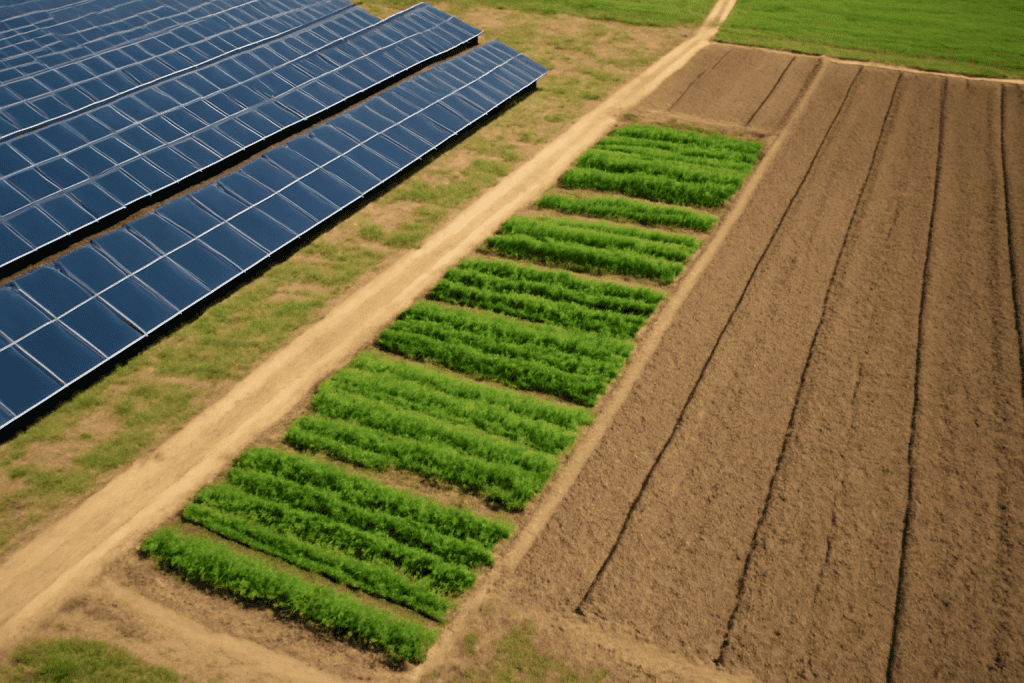
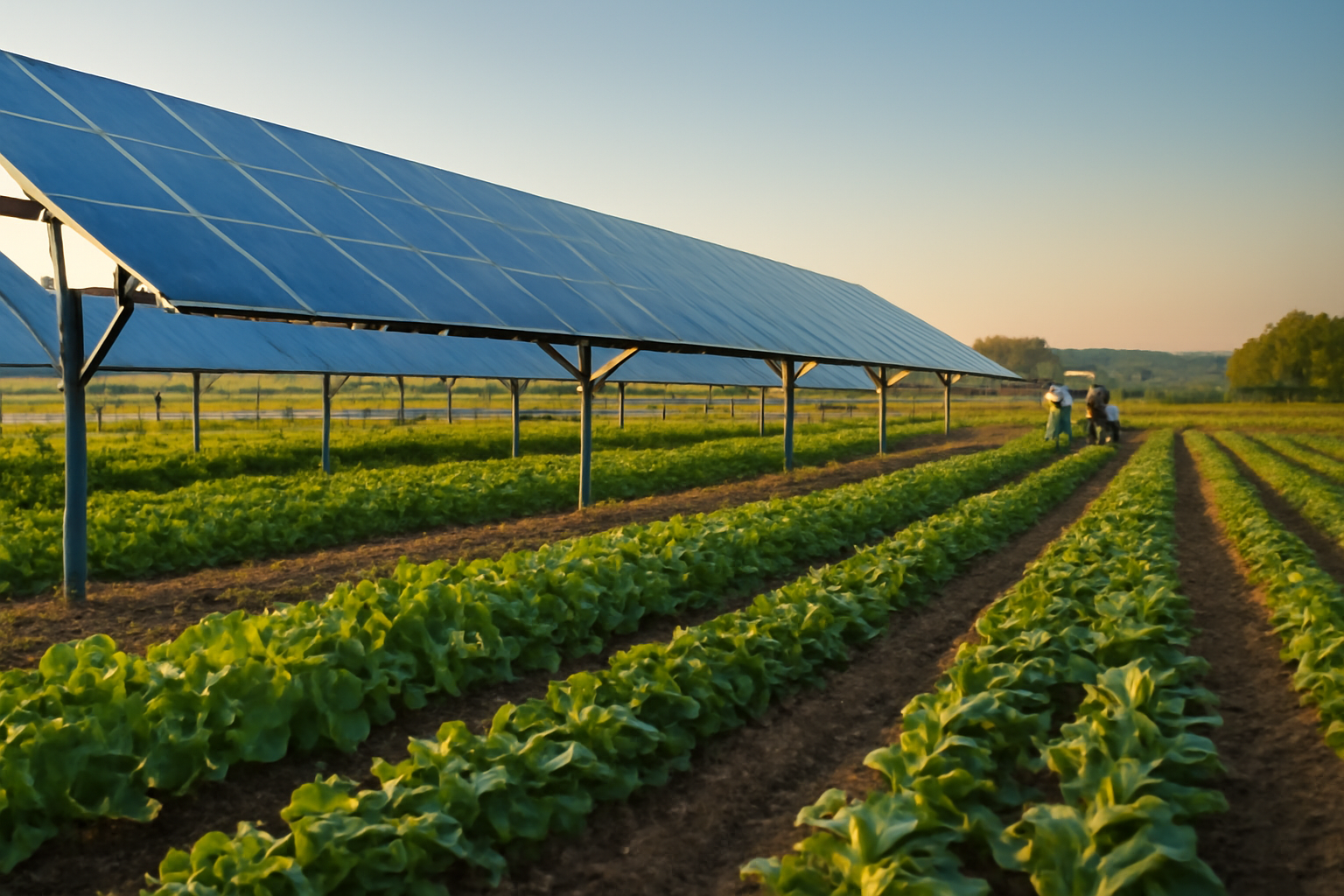
The Solar Plus Garden project incorporates a 10 MW solar farm integrating a community solar approach that links solar farm investing with agrivoltaics. Investors may choose between:
- Long-term equity shares in Phases 1 and 2, granting proportional ownership rights to net revenues derived from electricity sales, after operational expenses and maintenance deductions;
- Guaranteed payout option in Phase 2, providing a fixed return predicated on contractual revenue forecasts, offering a lower-risk alternative subject to project performance clauses.
Community membership fees, set at a one-time €200, provide financial support for solar investments and garden community activities. This model fosters participation beyond traditional investing avenues by allowing members to access fresh produce and community benefits without mandatory direct equity commitments.
Cost Factors and Payment Structure in Solar Farm Investments
Solar farm investing through Solar Plus Garden offers entry points accommodating a spectrum of investors from retail to institutional. Minimum investment thresholds start at €500, facilitating access to asset ownership or financing participation.
Cost components include:
- Initial Investment Minimum: €500 for equity or loan participation;
- Community Membership Fee: A one-time €200 payment grants rights to community benefits and access to project updates;
- Optional Garden Box Subscription: Priced at €20 per month, this service delivers 18 shipments per year of locally grown vegetables, leveraging the solar farm’s agrivoltaic produce capacity.
Funds flow through a rigorously defined payment and escrow system designed to meet regulatory compliance and investor protection standards common in EU financial markets. This system precludes unauthorized fund release, employs transparent accounting practices, and eliminates dependence on third-party escrow-like arrangements lacking full audit traceability.
Assessing Risks in Solar Farm Investment Opportunities
Solar farm investing includes exposure to regulatory, operational, technological, and market risks. Solar Plus Garden’s governance model addresses these through:
- Clear Legal Structures: Separation between the Estonian OÜ, which holds platform ownership and manages investor relations, and Serbian DOO, charged with project construction, operations, and maintenance, creating accountability within jurisdictional boundaries.
- Strict Fund Controls: Investor payments are held and disbursed under predefined conditions with transparent oversight, minimizing mismanagement risks endemic to emerging market projects.
- Technical Risks and Asset Maintenance: The project employs crystalline silicon solar panels with typical degradation rates around 0.5% to 0.7% annually. Operational risks are mitigated via scheduled preventive maintenance, monitored by the Serbian DOO, ensuring compliance with IEC 62446 standards for photovoltaic system performance testing and documentation.
This dual-entity arrangement with rigorous financial controls reduces uncertainties in market volatility, equipment reliability, and emerging market political shifts.
Steps to Invest in a Solar Farm in 2026
The Solar Plus Garden investment pathway includes these sequenced steps designed to meet regulatory and compliance requirements:
- Investor Waiting List Enrollment: Prospective investors register interest on solarplusgarden.com, receiving preliminary project materials.
- KYC and KYB Completion: Investors and entities complete Know Your Customer and Know Your Business verifications consistent with Anti-Money Laundering (AML) regulations applicable in Estonia and Serbia.
- Investment Selection: Decision between acquiring equity shares in Phases 1 and 2 or opting for the guaranteed payout model available in Phase 2, based on risk and return preferences.
- Garden Community Membership Activation: Payment of the €200 membership fee plus optional Garden Box subscriptions, unlocking community solar benefits and access to agrivoltaic produce.
The entire onboarding process, including affiliate and referral program entry, is completed within a 48-hour timeframe, balancing investor convenience with thorough due diligence.
Comparison of Solar Farm Investment to Other Renewable Energy Funds
Direct solar farm investing contrasts notably with participation in solar stock portfolios or broader energy funds:
- Tangible Asset Ownership: Solar farm investment confers direct stake or secured lending in physical solar infrastructure, unlike solar stock or energy funds that represent fractional ownership in diversified publicly traded companies.
- Community Solar Impact: Solar Plus Garden’s community solar model merges financial returns with local social impact, including regenerative agriculture through agrivoltaics—benefits seldom realized through generic solar or energy funds.
- Diversification and Accessibility: The membership model invites broader participation, enabling investors to diversify energy portfolios beyond traditional securities and align investments with community benefits and energy future sustainability.
Local Market Insights: Serbia and EU Solar Investment Landscape
Investment conditions in Serbia and the EU reflect dynamic regulatory landscapes promoting solar power:
- EU Policy Frameworks: In 2026, EU member states enforce the Renewable Energy Directive II (RED II) and associated national action plans, introducing incentives such as feed-in premiums, guaranteed grid access, and renewable certificates to attract solar investments.
- Serbia’s Alignment: While not an EU member, Serbia adopts compatible regulations encouraging solar park development via simplified permitting and support mechanisms, establishing a conducive environment for foreign and domestic solar investment.
- Cross-Border Corporate Structure: Solar Plus Garden’s Estonian OÜ manages investment strategy and compliance, whereas the Serbian DOO focuses on local solar farm operations, leveraging jurisdictional specialization and legal clarity.
- Community Capacity: The Garden concept supports up to 3,000 individual plots (parcel boxes), each linked to financial support for solar farm financing and offering agricultural produce, extending community solar participation beyond electricity generation.
Maintenance and Operational Considerations for Solar Farm Investors
Operational efficiency is critical in solar farm investing, impacting returns and asset longevity. Industry-standard maintenance includes:
- Regular Cleaning Cycles: Removing dust and soiling every 2-4 months to maintain solar panel efficiency, aligned with IEC 61215 photovoltaic panel durability standards;
- Electrical System Inspections: Quarterly checks of inverters, wiring, and protective systems to comply with IEC 62446 framework;
- Performance Monitoring: 24/7 SCADA systems monitor real-time output, alerting operators to deviations below expected generation profiles caused by shading, panel degradation, or equipment faults.
The Serbian DOO is responsible for these maintenance procedures, funded through solar power revenue streams, ensuring sustained operational reliability without additional capital calls to investors.
Outlook on Solar Farm Investment Returns and Sector Growth for 2026 and Beyond
Demand forecasts for solar power in 2026 and subsequent years project compound annual growth rates (CAGR) of 8-12%, supported by policy acceleration within the EU and renewable energy financial instruments expanding capital flows into solar funds and direct projects.
Solar Plus Garden plans phased capacity expansion beyond the initial 10 MW park, aiming to incorporate larger-scale agrivoltaic systems that amplify land-use efficiency by co-locating solar panels with agriculture.
Solar farm assets benefit from regulatory stability, grid integration improvements, and rising corporate renewable procurement, which together contribute to asset valuation appreciation and investor return sustainability in the medium to long term.
Frequently Asked Questions (FAQ)
- What is the minimum investment required to participate in Solar Plus Garden’s solar farm project?
- Investors can begin with an initial investment of €500 to engage in solar farm investing via Solar Plus Garden’s equity or lending models.
- How does the Garden membership model relate to solar investments?
- Garden membership involves a one-time €200 fee plus an optional monthly €20 subscription for fresh local produce. These fees support solar investment funding and community activities, enabling members to benefit from both solar power and agrivoltaic farming.
- What legal structures protect my investment in Solar Plus Garden’s projects?
- The Estonian OÜ owns the investment platform and solar assets, ensuring adherence to EU financial regulations, while the Serbian DOO manages plant construction and operational maintenance, providing jurisdictional clarity and operational accountability.
- Are there risks of fund mismanagement or lack of transparency with Solar Plus Garden?
- The project employs a definitive payment and escrow model backed by clear governance frameworks, preventing unapproved expenditures and ensuring funds align strictly with project activities and community membership support.
Conclusion
Those interested in solar farm investment opportunities in 2026 should evaluate individual risk profiles and preferred investment modes—equity or guaranteed payout—before joining the Solar Plus Garden platform. Awareness of evolving EU and Serbian regulatory landscapes and the dual-entity corporate structure underpinning the project is vital to prudent investing in solar energy.
This approach enables participation in renewable energy financing while engaging with community solar through the Garden membership, integrating environmental, social, and economic benefits when investing in solar energy.
Given that regulatory incentives, subsidy frameworks, and market conditions will continue to evolve, maintaining up-to-date information and adapting investment strategies accordingly is essential for capitalizing on solar energy’s role in the energy transition and realizing benefits of solar in the 2026 and future energy future.