











A Comprehensive Guide to Organic Turmeric Cultivation: From Planting to Harvesting
Selecting Turmeric Varieties and Rhizome Quality for Organic Cultivation
The foundation of successful organic turmeric farming lies in selecting the appropriate turmeric varieties and high-quality turmeric rhizomes as planting material. Curcuma longa is the primary species cultivated globally for its commercial turmeric production, but local agro-climatic adaptation of turmeric varieties significantly affects both productivity and resilience.
Choosing turmeric varieties that have documented agronomic performance under your region’s average temperature (20-30°C), annual rainfall (1500-2250 mm), and prevalent soil types (loam to sandy loam) reduces cultivation risk and input requirements. Varieties exhibiting resistance to common local diseases like rhizome rot (Pythium spp.) and leaf blotch ensure more consistent yields and maintain organic certification compliance.
The turmeric seed or rhizomes used as planting material must be robust, free from pest or disease symptoms, and not treated with prohibited synthetic chemicals. Optimal rhizomes for planting weigh between 25 and 50 grams, with 2-3 viable buds per rhizome segment, supporting uniform sprouting and growth within 15-21 days under optimal moisture and temperature conditions. Rhizomes smaller than 25 grams or with fewer buds commonly lead to uneven plant stands, while those over 50 grams may increase upfront costs and complicate handling during planting operations.
Certified organic turmeric seed material sourced from suppliers accredited by recognized organic standards—such as EU Organic Regulation (EU) 2018/848 or USDA NOP—ensures traceability and adherence to organic farming requirements. When certified seeds are unavailable or unaffordable, untreated traditional rhizomes compliant with sector-specific organic production manuals may be used, provided meticulous documentation and isolation protocols prevent contamination.
Summary of Decision Criteria for Rhizome Selection:
- Choose Curcuma longa varieties verified to perform under local climate and soil conditions.
- Select rhizomes weighing 25–50 g with 2–3 buds per segment to ensure consistent sprouting within three weeks.
- Prioritize certified organic turmeric seed compliant with standards such as (EU) 2018/848 or USDA NOP.
- Confirm planting material is free of pests, diseases, chemical residues, and synthetic treatments.
Soil and Climate Requirements for Successful Organic Turmeric Farming
Organic turmeric cultivation depends on precise soil and climate conditions to optimize rhizome development and overall yield. Curcuma longa thrives in well-structured soils with correct chemical and physical parameters supporting organic nutrient cycling.
The ideal soil is loamy or sandy loam with organic matter content above 3%, promoting good aeration and water infiltration while preventing waterlogging. The preferred soil pH for turmeric is between 4.5 and 7.5, balancing nutrient bioavailability—especially for phosphorus and manganese—and fostering beneficial microbial activity. Soils outside this pH range often require liming or organic acid amendments compatible with organic standards to achieve optimal growth conditions.
Climate parameters critically influence growth stages. Optimal temperatures range from 20°C to 30°C; below 20°C, the rhizome growth slows significantly, extending the maturation period beyond 9 months and risking crop losses. Soil temperatures above 30°C increase evapotranspiration rates and may induce thermal stress, especially without mulch or shade. Annual rainfall between 1500 and 2250 millimeters is needed; however, supplemental irrigation ensures continuity during dry spells, particularly over the critical rhizome initiation period (3-6 months after planting).
Maintaining soil moisture between 60-80% of field capacity is necessary to avoid both drought stress and waterlogging, which can trigger rhizome rot (Pythium, Fusarium) and reduce curcumin concentration. Mechanical soil aeration or organic mulching can mitigate compaction and improve gas exchange around roots.
Ensuring such environmental controls allows rhizomes to develop consistently in size, shape, and curcumin content, the latter being the primary bioactive compound determining commercial and medicinal value.
Preparing Land and Planting Practices for Organic Turmeric
Effective land preparation and planting strategies are essential to growing turmeric organically. Initial land clearing involves removing crop residues, perennial weeds, and stones followed by deep ploughing to a depth of 30-40 cm to break compacted layers and facilitate penetration of water and roots.
The land should receive well-decomposed organic manure—typically 10-15 tons per hectare—with a carbon-to-nitrogen (C:N) ratio close to 25:1 to ensure gradual nutrient release. Application should be completed 2–3 weeks before planting to allow microbial mineralization. Compost conforming to organic production criteria (free from contaminants and synthetic additives) is preferable.
Before planting, turmeric rhizomes must undergo organic-compliant treatments such as hot water dips at 50°C for 30 minutes, reducing surface pathogens without chemical residues. Neem oil application at 2% volume can be applied preventively. Chemical seed treatments are forbidden under organic certification.
Planting depth is critical: 5 to 7 centimeters balances rhizome moisture uptake and aeration. Spacing depends on varietal vigor and farming system; common layouts are 30×30 cm or 45×30 cm. Close spacing (<30×30 cm) maximizes land use but requires higher nutrient input and careful weed management.
Planting is optimally timed to align with the warm, moist phase of the growing season, typically early spring in temperate or immediately post-rainy season in tropical zones, to exploit natural soil temperatures around 25°C.
- Clear land, deep plough 30-40 cm, removing stones and debris.
- Incorporate 10-15 t/ha well-decomposed organic manure 2–3 weeks before planting.
- Treat rhizomes using hot water dips (50°C, 30 minutes) and/or neem oil (2%) prior to planting.
- Plant rhizomes at 5-7 cm depth, spaced 30×30 cm or 45×30 cm per local varietal growth patterns.
- Schedule planting to coincide with soil temperatures ≥20°C and adequate moisture.
Irrigation and Nutrient Management under Organic Standards
Managing irrigation and nutrition constitutes a decisive factor in sustainable turmeric farming under organic regulations such as (EU) 2018/848 and USDA NOP.
Drip irrigation is the recommended practice, delivering water directly to the root zone to maintain soil moisture at 60-80% of field capacity. This reduces water waste and prevents saturation that leads to rhizome rot while adapting to the crop’s multi-month demand phases. Scheduling irrigation follows key growth stages: moderate watering during initial sprouting (day 0–30), increased volume during rhizome expansion (month 2–6), tapering off near maturity to facilitate curing.
Organic nutrient inputs predominantly consist of vermicompost, green manure incorporation, and biofertilizers. Vermicompost application rates typically range from 2 to 3 tons per hectare, split into 2–3 doses throughout the vegetative and rhizome development phases. Such inputs increase organic matter content, improve soil structure, and stimulate beneficial microbial populations.
Biofertilizers including Azotobacter (nitrogen-fixing bacteria), Rhizobium, and phosphate-solubilizing bacteria enhance nutrient bioavailability without synthetic chemicals, supporting nutrient cycling in organically managed soils. Exact nutrient application depends on soil test results but targets a balanced nitrogen-phosphorus-potassium (NPK) ratio conducive to rhizome biomass and curcumin synthesis.
Use of synthetic fertilizers or pesticides is strictly prohibited and monitoring crop nutrient status assists in adjusting organic input schedules effectively.
- Implement drip irrigation maintaining 60–80% field capacity, adjusted by growth stage.
- Apply 2–3 t/ha organic vermicompost in split doses during vegetative and rhizome growth.
- Utilize biofertilizers such as nitrogen-fixing (Azotobacter) and phosphate-solubilizing bacteria.
- Exclude all synthetic fertilizers and pesticides consistent with organic standards (EU 2018/848, USDA NOP).
Pest and Disease Management in Organic Turmeric Cultivation
Managing pests and diseases without synthetic pesticides is a principal challenge when growing turmeric organically. Dominant pests include rhizome scale (Aspidiella hartii) and shoot borer (Conogethes punctiferalis), which damage rhizomes and shoots, adversely affecting yield quantity and curcumin content.
Diseases such as rhizome rot (caused by Pythium and Fusarium spp.) and leaf blotch (Taphrina maculans) persist especially under poor drainage or repetitive heavy rain. Prevention hinges on cultural practices like crop rotation with non-host crops (e.g., cereals), which disrupts pest life cycles, and mulch application with organic material to suppress weeds and moderate soil moisture.
At early detection stages, neem-based biopesticides standardized at approximately 2% active ingredient effectively reduce pest populations. Neem azadirachtin degrades within 48-72 hours, aligning with organic certification requirements. Treatment timing should coincide with pest hotspot emergence, typically weeks 6–10 post-planting.
Mechanical interventions such as manual removal of infected shoots and rhizomes, combined with regular field scouting every 7–10 days, enable early control and prevent systemic spread.
- Identify and monitor common pests: rhizome scale, shoot borer; diseases: rhizome rot, leaf blotch.
- Employ crop rotation with non-host plants and maintain organic mulch layers.
- Apply neem-based biopesticides at 2% concentration during the first sign of infestation.
- Conduct manual removal of infested plant parts and weekly scouting to limit outbreaks.
Harvesting Techniques and Post-Harvest Handling of Organic Turmeric
Harvest turmeric at the optimal physiological stage for maximum yield and quality, which occurs 7–9 months after planting—signaled by uniform leaf senescence (yellowing and drying). Harvesting outside this window risks low rhizome weight or quality degradation due to microbial invasion.
Manual harvest is preferred to minimize bruising, which compromises the rhizome’s protective skin and reduces shelf life. Uprooting should be done carefully using hand tools or mechanical diggers adapted for low-impact extraction in organically maintained soils.
Post-harvest cleaning involves washing rhizomes with clean water to remove soil. Subsequently, boiling for 45–60 minutes in clean water terminates enzymatic browning and microbial growth while enhancing color intensity critical for market standards. After boiling, rhizomes must be sun-dried on raised racks or clean surfaces to approximately 10% moisture content, measured by portable moisture meters, to prevent mold development.
Storage requires cool (below 25°C), dry, and ventilated conditions to conserve bioactive compounds, including curcumin and essential oils, preserving organic integrity and economic value for up to 6 months before further processing or sale.
- Harvest between 7 and 9 months post-planting, indicated by leaf senescence.
- Use manual careful harvest methods to avoid rhizome damage.
- Wash and boil rhizomes for 45–60 minutes before drying.
- Sun-dry to 10% moisture; store below 25°C in dry, ventilated environments.
Integrating Organic Turmeric Cultivation with Agrivoltaic Systems
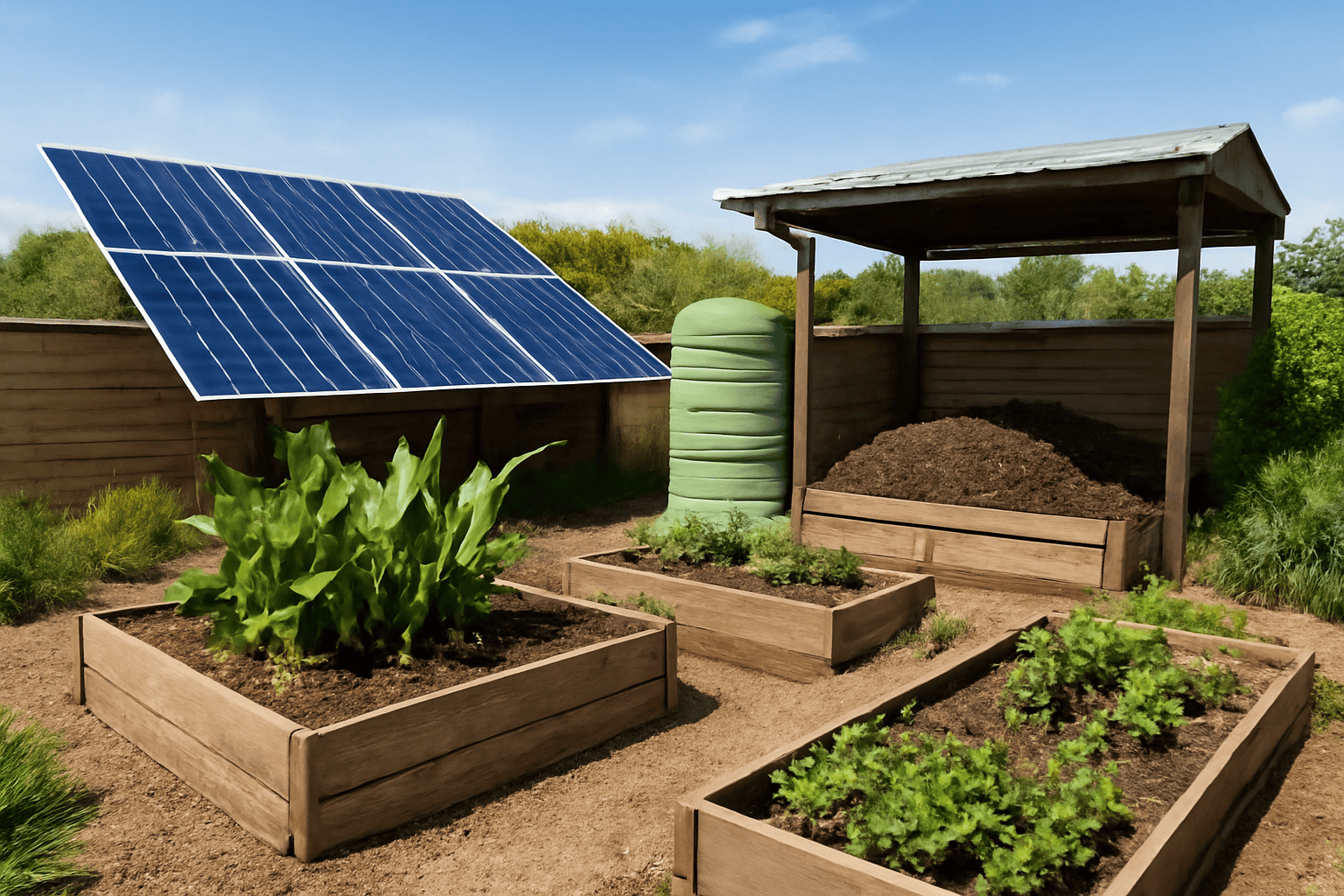
Integrating organic turmeric cultivation with agrivoltaic systems, which combine solar photovoltaic panels and crop production on the same land, presents an innovative approach relevant to Sustainable Development Goals.
Partial shading under solar panels reduces incident solar radiation by approximately 20-35%, mitigating heat stress and decreasing evapotranspiration rates. Recent field studies report yield stability improvements for turmeric by up to 10% compared to full sun, linked to improved soil moisture retention and moderated air temperatures.
The modified microclimate necessitates adjustment of irrigation schedules, often reducing water application frequency by 10-15%, while selecting turmeric varieties tolerant to lower light intensity. Planting density may require a 10-20% reduction to compensate for shaded conditions and avoid excessive intra-plant competition.
Design considerations must ensure adequate panel height and spacing to maintain airflow and prevent shading-induced fungal diseases. Solar panel efficiency is maintained by orienting arrays to optimize sunlight capture without excessively compromising crop growth.
- Partial solar shading reduces heat stress, improving yield stability by ~10%.
- Agrivoltaics enhance soil moisture retention through reduced evapotranspiration.
- Irrigation may be decreased by 10-15%; planting density adjusted for shading effects.
- System design must balance crop light needs and solar panel performance.
Frequently Asked Questions on Organic Turmeric Cultivation
Where can I source certified organic turmeric rhizomes for planting?
Certified organic turmeric rhizomes are available from specialized suppliers accredited under organic certification programs such as the EU Organic Regulation 2018/848 or USDA NOP. These suppliers provide traceable, disease-free, untreated planting material complying with organic regulations.
What yield range can I expect from organic turmeric farming?
Under organic management, fresh rhizome yields typically range from 15 to 25 tons per hectare, depending on soil and climate factors, varietal choice, and adherence to recommended farming practices such as nutrient management and irrigation scheduling.
How do I maintain organic certification during turmeric cultivation?
Certification maintenance requires exclusive use of approved organic inputs, well-defined buffer zones (minimum 3 meters from non-organic fields), strict record-keeping covering seed sourcing, fertilizers, pest control measures, and regular inspections by accredited certifiers over the crop cycle.
What are effective organic methods to control turmeric pests and diseases?
Integrated pest management includes crop rotation with cereals, planting resistant varieties, preventive neem-based pesticides at 2% concentration during early infestations, mechanical removal of infected plant parts, and continuous monitoring every 7–10 days to enable rapid response.
These answers address key operational and certification concerns relevant for anyone growing turmeric organically.
Conclusion
Successful organic turmeric cultivation begins with selecting certified, locally adapted turmeric varieties and planting materials exhibiting 25–50 g rhizomes with 2–3 viable buds. Managing soil within the pH 4.5–7.5 range and maintaining soil moisture at 60–80% field capacity through drip irrigation are crucial for optimal rhizome development and yield.
Adopting organic-compliant fertilization with vermicompost and biofertilizers, along with cultural pest control methods and preventive neem-based treatments, helps maintain plant health and organic certification compliance during the growth period.
Integration with agrivoltaic systems offers a synergistic opportunity to improve yield stability and water use efficiency under changing climate conditions but necessitates adjustment of planting density and irrigation to accommodate altered microclimates.
Continuous adherence to evolving organic standards (e.g., EU 2018/848, USDA NOP) and scientific agronomic developments in pest management and agrivoltaics will ensure resilient, certified organic turmeric farming projects with commercial viability into 2026 and beyond.