









How Solar Investment Guarantee Structures Secure Your Renewable Energy Projects and Minimize Risks
Overview of Solar Investment Guarantee Structures and Their Role in Financing 10 MW Solar Plants
Solar investment guarantee structures are contractual mechanisms designed to allocate and mitigate investment risk specific to solar project financing. These guarantees primarily arise from agreements made by guarantee providers—such as financial institutions, specialized guarantee companies, or project developers themselves—to assume defined financial risks on behalf of equity investors or debt financiers.
In the context of financing a 10 MW zonne-energiecentrale, such as the Solar Plus Garden project, these guarantees facilitate securing capital by supplementing conventional debt financing and equity investment with protections against project failure risks, payment defaults, and underperformance. The scale of a 10 MW plant situates it within the mid-sized utility-scale segment, usually requiring multi-million-euro capital outlays, technical due diligence, and compliance with the EU’s renewable energy frameworks.
Solar investment guarantee structures differ from insurance products in that they are embedded within contractual agreements tied to financing obligations (loan repayment, equity returns), rather than indemnifying physical damage or operational interruptions. Guarantee structures provide financial security and legal enforceability within the project’s investment contracts, thereby supporting sustainable solar project financing and creating a framework for stable investment returns.
Types of Guarantee Structures Used in Solar Energy Financing: Credit, Performance, and Payment Guarantees
Three primary categories of guarantee structures are used extensively in renewable energy finance for solar power plants, including the 10 MW Solar Plus Garden project: credit guarantees, performance guarantees, and payment guarantees. Each addresses specific dimensions of project risk:
- Credit Guarantees: Offered predominantly by banks and financial institutions, these guarantees protect lenders and equity investors against borrower default on debt obligations. By transferring the risk of loan non-repayment to the guarantor, credit guarantees improve credit risk assessment profiles, enabling more favorable debt financing conditions, such as lower interest rates or extended tenors. Under EU regulations, in particular the Capital Markets Union framework, credit guarantees must comply with transparency and risk mitigation criteria to support renewable energy finance.
- Performance Guarantees: Typically provided by engineering, procurement, and construction (EPC) contractors or equipment manufacturers, performance guarantees obligate compensation if the solar power plant fails to meet stipulated construction deadlines or operational standards. For example, guarantees may cover a minimum 90% of expected annual energy yield during the first two years, with remediations financed by the guarantee provider. These guarantees mitigate engineering risks and assure operational reliability.
- Payment Guarantees: These ensure timely distribution of dividends, loan repayments, or other revenue streams to investors, protecting against payment defaults by offtakers or community fund managers. In Solar Plus Garden’s community-backed membership model, payment guarantees stabilize investor cash flow linked to membership fees and solar revenue shares, thereby supporting consistent investment returns despite potential delays in member payments or revenue collection.
The combined application of these three guarantee types creates an integrated risk allocation model where credit guarantees cover financial credit risk, performance guarantees cover project delivery and operation risk, and payment guarantees address revenue collection and disbursement risk. This structured approach facilitates robust solar project financing by securing both equity investors’ and debt financiers’ interests.
Common Risks in Solar Projects and How Guarantee Structures Mitigate Them
Solar power plants face a range of risks that can impact project viability and investment returns. Guarantee structures are designed to address these identifiable exposures within a defined risk management framework.
- Credit Risk Assessment Challenges: Estimating the creditworthiness of project developers and community investors requires comprehensive due diligence involving financial statement analysis, cash flow modeling, and scenario stress testing under varying market conditions. Guarantee providers use these assessments to quantify residual risk before underwriting credit guarantees, ensuring that guarantee reserves are adequately capitalized to cover potential defaults.
- Performance Risk: Technical issues such as substandard solar panel installation, inverter failures, or unexpected shading can reduce energy output by 5-10%, directly affecting revenue streams. Performance guarantees obligate contractors or manufacturers to compensate for shortfalls based on measurable output metrics, verified through independent metering over a pre-agreed period, typically the first 24 months of commercial operation.
- Project Delay or Failure Risks: Delays in permitting, grid connection, or construction can push back commissioning by several months, affecting payback periods and cash flow. Guarantee contracts incorporate milestone-based penalty clauses whereby guarantee providers commit to financial remuneration for delays exceeding contracted timelines, incentivizing timely completion and reducing financial exposure.
- Legal and Regulatory Risks: Operating under both Estonian and Serbian regulatory environments requires ensuring compliance with respective investment protection statutes, financial transparency rules, and renewable energy certifications. Guarantee structures are drafted with explicit reference to these jurisdictions to ensure enforceability, especially concerning escrow fund management, community membership fee allocation, and investor rights.
Legal Frameworks and Contractual Agreements Governing Solar Investment Guarantee Structures
The effectiveness and enforceability of solar investment guarantee structures depend on clear legal frameworks and formal contractual agreements meticulously aligned with local regulatory requirements.
- Regelgevingsomgeving: Estonia mandates transparent fund management under its Investment Funds Act and requires licensed management entities for collective investment schemes, ensuring financial security. Serbia’s Energy Law specifies requirements for community investment models and the registration of renewable energy projects, demanding contractual clarity and investor protection mechanisms.
- Contractual Agreements: Guarantee contracts must explicitly state the scope of coverage, conditions for invocation, claims procedures, and dispute resolution processes, typically through arbitration clauses under international commercial law frameworks such as UNCITRAL. Defining these parameters prevents ambiguity and strengthens legal recourse for investors.
- Payment and Escrow Model: Solar Plus Garden uses escrow accounts operated under authorized financial institutions, segmenting membership fees and investment contributions into segregated accounts. Funds are released against predefined project milestones or verified revenue collection events, complying with anti-money laundering (AML) directives and financial audit standards to ensure traceability and prevent misuse.
- Due Diligence Standards: Investors and project managers must complete Know Your Customer (KYC) and Know Your Business (KYB) processes aligned with EU Anti-Money Laundering directives to validate participant legitimacy. Environmental impact assessments and technical certifications further verify project viability and compliance with Renewable Energy Directive (RED II) requirements.
How Guarantee Structures Enhance Investor Confidence and Facilitate Community-Backed Solar Membership Models
Guarantee structures form the financial backbone that supports investor confidence, particularly in community-driven models such as Solar Plus Garden’s Tuinlidmaatschap system. This structure allows small and medium investors to participate in renewable energy finance with a measure of risk allocation embedded into contractual frameworks.
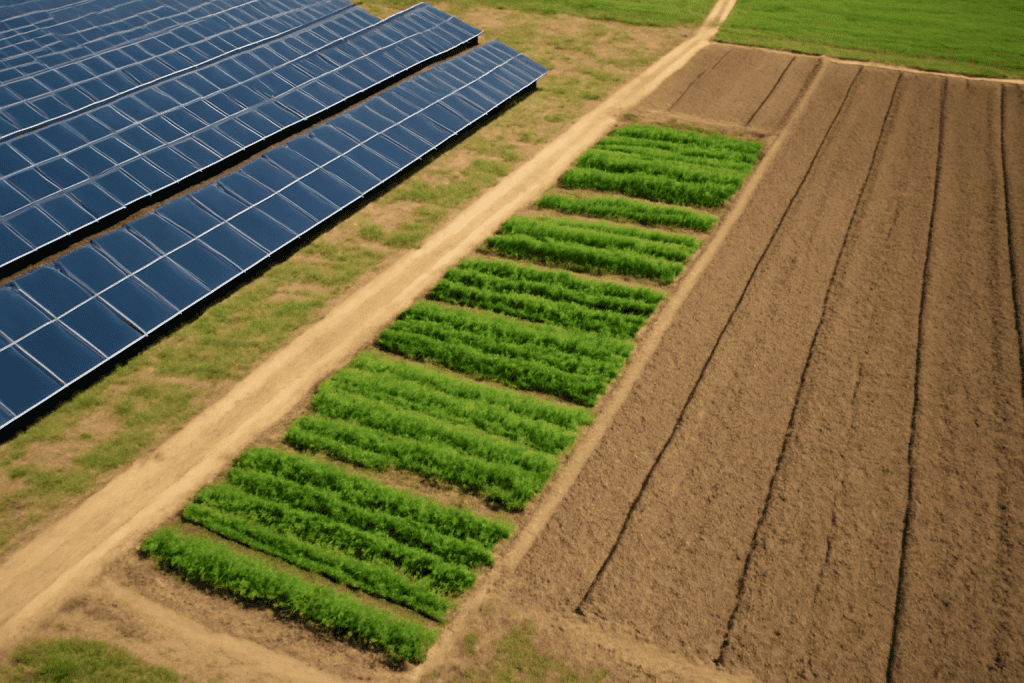
The Garden membership model requires a one-time membership fee of €200 plus an optional monthly subscription of €20 for delivery of organic produce tied to the agrivoltaic concept. These funds are pooled and channeled exclusively through the project’s solar financing arms, backed by legally binding guarantee structures that allocate revenues first to covering operational costs and guarantee reserves.
By integrating guarantee benefits—such as coverage for payment defaults and performance shortfalls—within the membership agreements, the model lowers perceived investment risk, creating a secure environment that encourages participation and retention. The approach is designed to scale up to manage 3,000 garden parcels, with transparent financial reporting and compliance controls ensuring that guarantee obligations and community activities are sustained without erosion of investor capital.
This financial security mechanism, combined with clear legal frameworks, supports the replication and scaling of renewable energy finance models that blend solar energy generation with community agriculture, aligning environmental impact with sustainable investment returns.
Role of Financial Institutions and Guarantee Providers in Structuring and Delivering Solar Investment Guarantees
Financial institutions and guarantee providers are critical intermediaries in renewable energy finance, bridging equity investors, debt financiers, and solar developers to structure guarantee frameworks that balance investment risk with expected returns.
- Participant Types: Banks provide credit guarantees alongside loan facilities; credit rating agencies conduct project viability assessments including credit risk assessment; insurance companies may provide integrated performance guarantees or warranty insurance as part of a layered risk management strategy.
- Assessment Criteria: These entities evaluate technical feasibility based on IEC 61215 solar panel standards, regulatory compliance under EU directives, projected cash flows verified through energy yield assessments (e.g., PVSyst analysis), and the creditworthiness of the project’s financial structure. These assessments influence guarantee costs and the extent of coverage.
- Interaction Among Stakeholders: Equity investors supply capital commensurate with risk profiles; debt financiers provide leverage under credit guarantees that reduce default risk; guarantee providers legally commit to covering predefined contingencies, thus facilitating financing terms that improve investment returns without undue risk exposure.
- Cost Structures: Guarantee costs, charged as fees or premiums, generally range from 0.5% to 2% of the loan principal, dependent on risk level, regulatory environment, and guarantee scope. These costs must be integrated into financial models to ensure realistic return on investment projections and accurate investor communications.
Comparing Insurance Products and Guarantee Structures in Solar Investment Risk Mitigation
While both insurance products and guarantee structures contribute to risk mitigation in solar project financing, their scopes, timing, and cost structures differ substantially.
- Coverage Scope: Insurance products cover physical asset risks including storm damage, fire, theft, and equipment malfunction under policies adhering to international insurance standards such as ISO 9001 and local regulatory regimes. Warranty insurance covers defects identified within specific timeframes post-installation. Guarantee structures exclusively cover financial risks arising from credit defaults, project delays, performance shortfalls, and revenue payment failures per contractual agreements.
- Timing and Claims Process: Insurance claims typically require 30 to 60 days to process, involving inspections, damage assessment, and policy compliance checks. Guarantee claims generally have accelerated invocation processes—15 to 30 days—due to clear contractual triggers and predefined dispute resolution clauses.
- Cost and Risk Transfer: Insurance premiums are recurring operational costs reflecting probabilistic risk models and indemnity coverage. Guarantee fees represent risk premiums paid upfront or periodically to transfer specific investment risk exposures to third-party providers, enabling more predictable financial security specifically during the project financing lifecycle.
- Suitability: Insurance products suit solar developers and asset owners seeking post-construction asset protection, while guarantee structures are aimed at investors and financiers requiring risk mitigation mechanisms to secure investment returns and facilitate debt financing during project development and operation phases.
Veelgestelde vragen
- What types of risks can solar investment guarantee structures protect me against?
- Solar investment guarantee structures mitigate credit risk related to loan repayment and capital preservation; performance risk ensuring construction milestones and energy yield standards are met; and payment risks related to delayed or missed investor payouts. They are tailored to address financial and operational uncertainties inherent to solar power plants.
- How does the Solar Plus Garden membership fee relate to investment guarantees?
- The membership fee consists of a one-time €200 payment plus an optional €20 monthly subscription for a tuinbak. These contributions are pooled into a legally controlled escrow-rekening and reinvested into the solar project. Guarantee reserves funded from project revenues protect investor returns by covering performance shortfalls and managing operational costs transparently within the community-backed financing model.
- Are guarantee structures the same as insurance policies for solar projects?
- No. Guarantee structures are contractual promises typically backed by financial institutions or specialized providers to cover defined financial risks such as borrower default or project underperformance. Insurance products cover physical asset damage and operational risks, with different claims procedures, coverage scopes, and premium structures.
- What legal frameworks support the enforceability of solar investment guarantees in projects like Solar Plus Garden?
- Guarantees are governed by the relevant national laws in Estonia and Serbia, including investment fund regulations, financial service directives, and renewable energy laws. The use of escrow accounts and detailed contractual agreements ensures funds management transparency and enforceable guarantee commitments, protecting investor interests within these dual jurisdictions.
Conclusie
Effective use of solar investment guarantee structures is fundamental to securing investment protection and financial security in renewable energy projects like the Solar Plus Garden 10 MW solar plant. By allocating risk through credit guarantees, performance guarantees, and payment guarantees within legally and contractually sound frameworks, project developers and investors can mitigate exposure to credit risk, performance risk, and project failure risks. Given evolving market stability factors and regulatory environments in Estonia and Serbia, investors should maintain rigorous due diligence and remain informed of relevant legal frameworks to ensure ongoing protection of investment returns. Engaging with platforms that combine transparent financial management, robust contractual agreements, and community-backed membership models offers a replicable approach to sustainable renewable energy finance.