




Invest in Solar with Low Capital: A Practical Guide for 2026
Understanding the Solar Investment Context in 2026
Solar energy continues to be a leading renewable energy source globally due to ongoing improvements in solar panel technology, including average commercial module efficiencies approaching 22% and cost reductions standardized by the International Renewable Energy Agency (IRENA). In 2026, solar projects are increasingly supported by regulatory frameworks in the European Union and Serbia aiming to meet carbon reduction targets aligned with the Paris Agreement.
Platforms like Solar Plus Garden democratize solar investment by enabling small and medium investors to participate in solar farm investing without the need for large upfront capital. Their flagship 10 MW solar park project produces power sufficient to supply approximately 2,500 average Serbian households annually, based on local insolation levels between 1,100-1,300 kWh/m2 per year.
Such utility-scale solar projects expand renewable energy generation capacity while providing investors access to physical solar assets they could not independently finance. The combination of solar power production and a community membership model increases investor inclusion and creates diversified income streams supporting sustainable operational costs.
Mechanism of Investing in Solar with Low Capital
Solar Plus Garden allows investors to participate with minimum capital investments starting at €500, significantly lower than traditional solar funds that often have minimums exceeding €10,000. This accessible entry point is combined with a Garden membership community, which requires a one-time €200 fee. This fee is distinct from direct solar project investment and provides access to community initiatives and agrivoltaic produce benefits.
Membership fees are systematically reinvested into the solar power assets, generating income streams not only from electricity production but also from community activities, ensuring a closed-loop model where community benefits are sustainable and funded by solar project cash flows.
Financial transactions are executed through a regulated escrow model compliant with Estonian and Serbian financial legislation, preventing premature or unauthorized release of investor funds. This mechanism is designed to maintain investor capital security while ensuring funds flow only upon meeting project milestones and contractual obligations.
Costs Associated with Low-Capital Solar Investment
- Garden Membership Fee: A one-time payment of €200 grants membership in the Garden community. This community separately manages agrivoltaic activities and member engagement, legally distinct from the Estonian OÜ operating the solar farm.
- Optional Garden Box Subscription: For €20 monthly, members receive 18 deliveries per year of fresh, seasonal produce grown through agrivoltaic practices, enhancing local food production synergistic with solar farm land use.
- No Additional Charges or Hidden Fees: Transparent financial governance ensures all costs, including administrative and operational expenses, are clearly disclosed; investors face no undocumented fees beyond membership and subscription options.
- Legal and Operational Structure: Solar Plus Garden’s Estonian OÜ, incorporated on 20.02.2026, holds ownership of the solar park and manages investor capital, while operational activities are handled by a Serbian DOO, ensuring compliance with jurisdictional requirements.
This cost clarity enables investors with limited capital to budget effectively for solar power investment and community participation, encouraging long-term engagement and reducing financial uncertainties.
Risks to Consider When Investing in Solar Projects
Investing in solar energy involves specific risks that small capital investors must assess:
- Market and Regulatory Risks: Feed-in tariffs and power purchase agreements (PPAs) established under Serbian and Estonian energy regulations determine revenue streams. Modifications or reductions in these tariffs, subject to national energy policy updates, may reduce expected returns.
- Project Performance Risks: Solar panels degrade at approximately 0.5% to 1% per year according to manufacturer warranties and IEC 61215 quality certifications, affecting long-term energy output. Maintenance of inverters and supporting infrastructure, typically warranted for 10 years, incurs operational costs impacting net yield.
- Transparency and Financial Control Risks: Solar Plus Garden avoids escrow-like unregulated fund pools, ensuring investor payments are segregated and released only under contractually agreed conditions governed by escrow agreements under Estonian law, mitigating misuse or diversion of funds.
- Community and Legal Risks: The separation of legal entities managing the solar projects (Estonian OÜ) and the Garden community (separate Serbian legal entity) limits cross-liability and ensures clarity in asset management and operational accountability, aligning with EU and Serbian corporate legal frameworks.
Investors should balance these risks against their intended investment horizon and tolerance, noting that regulatory stability in Estonia and Serbia has demonstrated low volatility but remains subject to political and policy change over time.
Step-by-Step Process to Invest in Solar with Solar Plus Garden
Solar Plus Garden implements a defined four-phase onboarding for investors to ensure compliance and transparency:
- Join the Investor Waiting List: Registration on solarplusgarden.com initiates the process, placing prospective investors in the queue for access and communication.
- Complete KYC/KYB Procedures: Investor identity and beneficial ownership verification comply with Anti-Money Laundering (AML) regulations mandated by Estonian Financial Intelligence Unit and Serbian authorities, ensuring legal eligibility for participation.
- Pay Garden Membership and Select Investment: Investors remit the €200 Garden community membership fee, then decide on investing a minimum of €500 into solar farm equity under specific project phases. Phase 1 and 2 structures differ by offering equity stakes with variable returns or guaranteed payout schemes backed by contractual revenue forecasts.
- Access Monitoring Platforms: Investors receive digital credentials to an online dashboard providing real-time solar park production data, financial reporting, and updates on community activities. This platform supports ongoing investor engagement and transparency monitoring.
Comparison of Investment Options: Solar Stocks, ETFs, and Community Solar
For those exploring ways to invest in solar energy, the landscape includes multiple avenues:
- Solar Stocks and ETFs: Investing in equity shares of solar companies or solar-focused exchange-traded funds (ETFs) allows market exposure to the solar sector but involves liquidity volatility influenced by stock market dynamics unrelated to individual solar project performance. Entry minimums vary but typically exceed €1,000.
- Direct Solar Investment: Platforms such as Solar Plus Garden enable direct equity in operational solar farms, linking investment value to actual electricity generation and local renewable energy impact. This contrasts with indirect financial instruments lacking asset-specific transparency.
- Community Solar Models: These facilitate smaller capital deployment, often with entry points under €1,000, and provide investor participation in communal solar assets with a focus on local energy autonomy and governance transparency. Solar Plus Garden integrates this with a community agrivoltaics concept, unique for blending solar farm investing with tangible local benefits.
- Liquidity and Control: Stocks and ETFs generally offer daily liquidity but limited influence over operational decisions. Community solar projects entail longer lock-in periods aligned with project phases, compensated by direct operational oversight and active community roles.
Investors prioritizing low-capital solar farm investing with transparent local impact may find community solar solutions align best with their objectives, balancing manageable entry size with tangible asset participation.
Local Market Factors Affecting Solar Investment in Serbia and Estonia
Solar Plus Garden’s legal structuring utilizes an Estonian OÜ entity for investment holding and asset ownership, incorporated on 20.02.2026, while project operations are conducted via a Serbian DOO. This division optimizes regulatory compliance, tax efficiency, and investor protection under contrasting EU and Serbian legislation.
Feed-in tariffs under Serbia’s Energy Law and Estonia’s Renewable Energy Act currently support stable revenue projections, linked to electricity market prices capped through government decrees. Both countries’ tariffs are subject to review every 1-3 years, affecting long-term project economics.
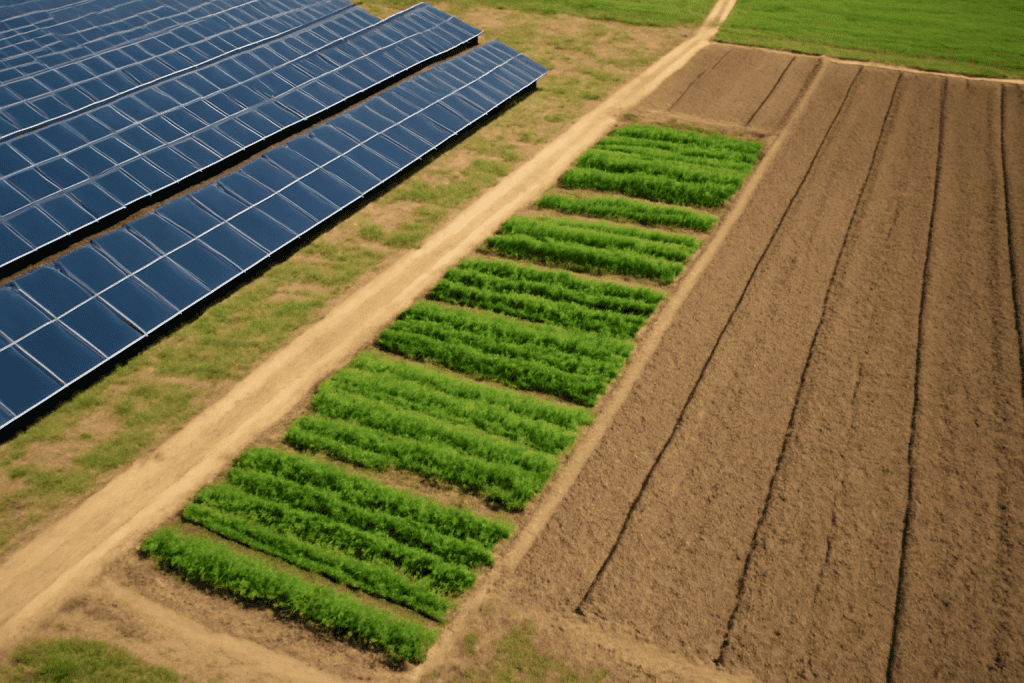
Solar insolation in Serbia ranges from 1,200 to 1,300 kWh/m² yearly, providing favorable conditions for solar park output, complemented by agrivoltaic integration. This dual-use approach improves land productivity by hosting solar panels above organic crop plots in the Garden project, maximizing returns from the land.
Investors should regularly track policy announcements and grid integration capacity in both countries, as regulatory changes can materially impact solar project viability and investment returns.
Decision Criteria for Choosing a Low-Capital Solar Investment
Criteria to evaluate before investing in solar projects with limited capital include:
- Transparency and Governance: Preference should be given to platforms with formally regulated escrow payment models and legally established contracts ensuring investor funds are disbursed based on project milestones and verified outcomes.
- Minimum Investment and Membership Structure: Platforms like Solar Plus Garden clearly specify minimum investments starting at €500 plus a €200 community membership fee, facilitating accessible participation without compromising project funding integrity.
- Income Streams and Yield Sources: Investors should verify how returns originate, primarily from solar energy sales under feed-in tariffs or PPAs, supplemented by reinvestment of community membership fees supporting agrivoltaic and community activities, ensuring diversified and stable income.
- Project Development Phase and Exit Options: Awareness of project phase schedules and associated equity or guaranteed payout models informs timing expectations for capital lock-in and potential liquidity events.
Applying these criteria helps investors select solar investment vehicles that align with their financial goals and risk tolerances while maximizing transparency and impact.
Outlook: The Role of Community-Based Solar Investment in Renewable Energy Growth
Community solar investment platforms like Solar Plus Garden are expanding the scale and accessibility of renewable energy investment. With an operational capacity capable of hosting up to 3,000 Garden plots, the model integrates substantial solar power generation with community agrivoltaics, simultaneously supporting local organic agriculture and reducing fossil fuel dependence.
This dual land-use concept enhances overall sustainability by producing clean energy and local food, while also diversifying income for investors through multiple revenue streams.
Continuous innovations in solar technology, including bifacial panels and improved inverter efficiencies projected to increase by 2-3% annually, combined with evolving regulatory support, improve the prospects for stable and growing solar investment returns.
The proliferation of legally structured, transparent community solar platforms enables broad investor participation, particularly among small and medium investors, driving decentralized renewable energy adoption across Europe.
Frequently Asked Questions
- What is the minimum capital required to invest in Solar Plus Garden?
- The minimum investment in Solar Plus Garden’s solar project is €500, with an additional one-time €200 fee required to join the Garden community.
- How does the Garden membership fee relate to the solar investment?
- The €200 Garden membership fee grants access to the community and its agrivoltaic activities. While legally separate from the solar farm investment held by the Estonian OÜ, these fees are reinvested into solar assets, contributing to overall project sustainability.
- What guarantees or protections are in place for small investors?
- Solar Plus Garden employs a transparent legal framework involving an Estonian OÜ and a Serbian DOO, alongside regulated escrow payment mechanisms under respective jurisdictions, reducing risks of unmonitored fund usage and enhancing investor security.
- Can I participate in the Solar Plus Garden community without investing directly in solar?
- Yes. Community membership requires only the €200 fee, independent of any solar project investment, allowing broader participation in community and agrivoltaic benefits.
Conclusion
Investing in solar with low capital is facilitated effectively by regulated platforms like Solar Plus Garden which combine a transparent legal structure with accessible entry points: a €200 Garden membership fee coupled with a minimum €500 solar project investment. This approach balances inclusivity, operational transparency, and investor protection through controlled governance under Estonian and Serbian legal frameworks.
Prospective investors should maintain awareness of changing national regulations, feed-in tariff updates, and continuous solar technology advancements that affect investment timing and returns. Community-based solar investment represents a pragmatic pathway for individuals to actively participate in renewable energy transitions, delivering both financial returns and environmental impact.