




Invest in Solar with Low Capital: A Practical Guide for Small Investors
Understanding Solar Investment and Its Context
Investing in solar energy means allocating capital to develop or operate solar power infrastructure such as solar farms, solar parks, and related solar projects. These facilities deploy photovoltaic solar panels to convert sunlight directly into electricity, contributing to the renewable energy mix and reducing dependence on fossil fuels.
Globally, the expansion of renewable energy investment is shaped by policy incentives like feed-in tariffs and tax credits, as well as technological improvements in solar panel efficiency. Countries implementing these incentives often see accelerated solar farm investing, supported by regulatory frameworks ensuring grid integration and revenue stability.
Smaller investors increasingly access solar investment opportunities via decentralized models such as community solar and energy funds. These structures pool resources from individuals who cannot invest in entire solar parks but want exposure to solar power returns and sustainability outcomes.
Solar Plus Garden exemplifies this approach through a 10 MW solar project combined with a Garden membership community, regulated for transparency and legal clarity. This platform allows investors to participate in solar farm investing with low capital while benefiting from the social and environmental advantages of community engagement.
How Solar Plus Garden Enables Investing in Solar with Low Capital
Solar Plus Garden structures solar investment to lower entry thresholds through a two-part model. First, a €200 one-time Garden membership fee provides community access and capital invested into the solar project. Second, the minimum solar investment starts at €500, enabling participation in the solar fund aligned with the 10 MW solar power plant.
The solar project ownership is held by an Estonian limited liability company (OÜ) established on February 20, 2026, which legally owns and operates the solar farm under Estonian business law. Separately, a Serbian DOO administers the Garden community aspects, including agrivoltaic services and produce distribution. This dual-entity structure separates operational risks and investment rights clearly between solar power generation and community benefits.
All payments are secured through an escrow mechanism controlled by third-party fiduciaries to prevent misuse of investor funds. This controlled fund release aligns with project milestones and transparent financial reporting records. Membership in the Garden community does not require a solar investment, providing inclusivity while allowing solar project participants to benefit from collective returns and ecosystem services.
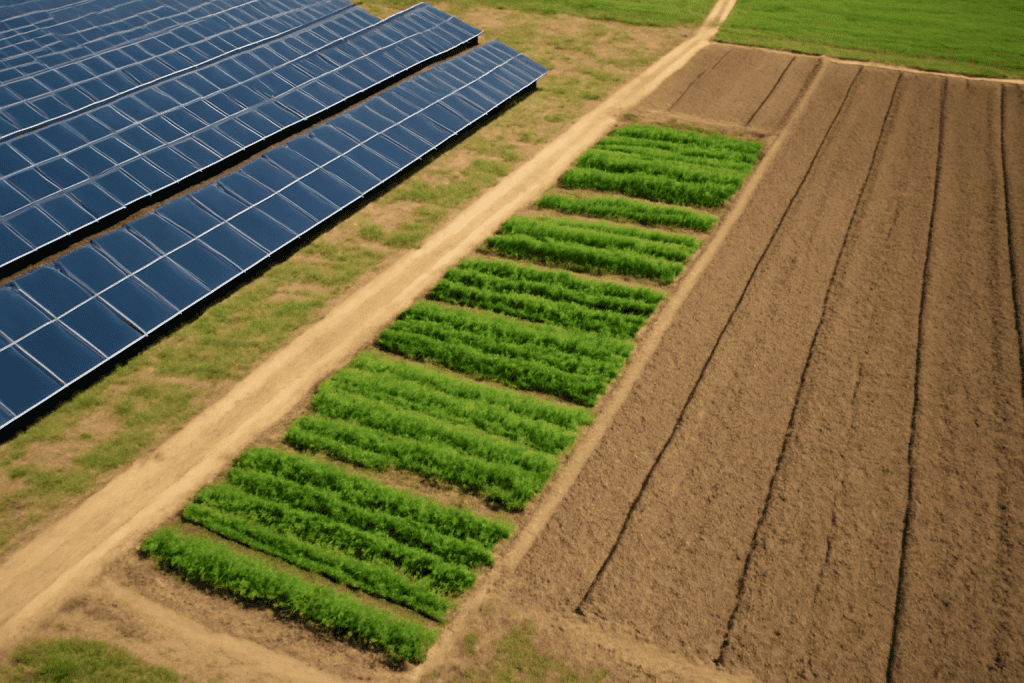
The Garden community supports up to 3,000 garden plots. These plots receive fresh, locally grown produce deliveries through an optional €20/month subscription, with 18 shipments scheduled annually. This ecological integration exemplifies agrivoltaics, maximizing land use efficiency and reinforcing solar farm social impact.
Cost Structure and Financial Accessibility of Solar Investments
The minimum €500 investment threshold for the solar fund is significantly lower than typical capital requirements for direct solar farm participation, which often start at several thousand euros or more. This cost structure broadens access to renewable energy investments beyond institutional or high-net-worth investors.
The Garden membership fee (€200 one-time) covers administrative costs, community access, and contributes capital to the solar power project. It also underwrites management expenses and supports governance activities compliant with anti-money laundering and investor protection regulations.
Investors can also subscribe to a Garden box for €20 per month, providing 18 seasonal distributions of fresh vegetables. This fee supports garden operational costs partially funded further through solar energy revenue streams managed within the community’s financial model.
Solar Plus Garden offers two residential investment options: an equity share model and a fixed-guarantee payout option. The equity model links investor returns to the actual solar energy production and revenue realized from power sales. The guaranteed payout option provides a defined return profile with lower exposure to solar market fluctuations, catering to investors preferring predictable income streams.
Assessing Risks When Investing in Solar Energy Projects
Solar investment entails multiple risk factors that Solar Plus Garden addresses through robust legal and operational frameworks. The Estonian OÜ owning the solar plant ensures compliance with European Union renewable energy regulations and national business laws, while the separate Serbian DOO manages the Garden community under Serbian law.
Investor funds are held in regulated escrow accounts, released only upon achieving defined project milestones, which mitigates financial mismanagement risk. This model aligns with stringent financial compliance and audit requirements in both jurisdictions.
Market risks impacting solar investment returns include variability in wholesale electricity prices, changes in feed-in tariffs or subsidies (subject to national regulation adjustments), and operational risks such as panel degradation rates, inverter failures, or weather-related production variability.
The integration of agrivoltaics introduces complexity in site management, combining agricultural production with energy generation. This dual-use demands coordination of land use scheduling and may affect maintenance costs and operational risks relative to standalone solar farms.
Transparent disclosures on these risks are provided to investors, emphasizing that returns may fluctuate according to regulatory revisions, market shifts, and technical performance factors.
Step-by-Step Process to Invest in Solar with Solar Plus Garden
- Registration and Compliance Verification: Prospective investors and community members submit personal and business identification for Know Your Customer (KYC) and Know Your Business (KYB) compliance aligned with anti-money laundering directives.
- Garden Membership Activation: Payment of the €200 one-time membership fee enables joining the community and participating in solar investment products.
- Investment Commitment: Minimum €500 amounts are invested via the platform’s solar fund, selecting either equity share or guaranteed payout options.
- Garden Box Subscription Enrollment: Optional €20 monthly subscription delivers 18 annual shipments of local produce to members who join the Garden community.
- Returns Distribution and Community Funding: Revenues from solar power sales finance investor returns and community programs, managed through regular transparent reporting and controlled reinvestment strategies.
Additionally, Solar Plus Garden implements an affiliate program where members can refer additional investors. Referral applications receive review and approval within 48 hours, maintaining compliance and supporting sustainable community growth.
Comparing Solar Farm Investing, Stocks, and ETFs for Low-Capital Investors
Ways to invest in solar include direct solar farm investing, solar stocks, and solar Exchange-Traded Funds (ETFs). Each method presents different risk, return, and liquidity profiles.
- Direct Solar Farm Investing: This involves acquiring equity or loan interests in specific solar projects like Solar Plus Garden’s 10 MW plant. It offers tangible asset ownership with operational transparency and community involvement but can have lower liquidity compared to publicly traded securities.
- Solar Stocks and ETFs: Investing in solar companies or solar energy-focused ETFs provides market-exposed participation without direct project ownership. These instruments generally offer higher liquidity but are subject to stock market volatility, firm-level risks, and less investor control over project specifics.
Solar Plus Garden’s dual investment offer merges the strengths of these options by giving investors direct exposure through equity shares or more stable returns via guaranteed payouts while engaging community solar benefits. This hybrid model addresses diverse investor preferences not typically available through solar ETFs or conventional stock markets.
Solar Investment in Local Markets: Opportunities and Regulatory Environment
Regional market dynamics and regulatory frameworks significantly influence solar investment viability. In Estonia, the solar project aligns with the country’s renewable energy incentives and business laws, benefitting from the governance stability of the Estonian OÜ company established in early 2026.
Serbia’s regulatory environment governs the separate Garden community entity and supports sustainability through agrivoltaics. While Serbia may have a developing regulatory framework for solar power feed-in tariffs, both jurisdictions require monitoring of tariff updates and grid access regulations that directly affect revenue streams.
The combination of renewable energy generation with community-supported agrivoltaics on the same land maximizes resource use, contributing to local economic development. This integration aligns with emerging EU and regional sustainability policies promoting multifunctional land use.
Decision Criteria for Choosing the Right Solar Investment Path
- Risk Tolerance: Equity investments expose investors to variable returns linked to solar energy production and market revenues; guaranteed payout options lower this volatility by offering defined return profiles.
- Investment Time Horizon: Solar projects typically require medium-to-long-term commitments, often over 10–20 years, impacting liquidity and yield expectations.
- Level of Involvement: Participating solely for financial returns versus combining investment with active community engagement through Garden membership affects product choice.
- Capital Availability: Entry points of €200 for membership and €500 for solar investment keep participation accessible but should correspond to the investor’s financial capacity and portfolio diversification goals.
Solar Plus Garden’s investment offerings are designed to provide flexibility by addressing these variables, enabling tailored pathways suited to individual investor profiles.
Outlook: The Future of Solar Investment with Community and Agrivoltaics Integration
Advancements in agrivoltaics position solar farms as multifunctional land assets, simultaneously generating solar power and producing agricultural crops. This maximizes land productivity and promotes sustainable, regenerative agriculture aligned with energy generation objectives.
Community solar initiatives like Solar Plus Garden foster local involvement by linking financial investment with measurable social and environmental impact, supporting up to 3,000 garden boxes alongside the 10 MW solar PV installation. This scale demonstrates a replicable model for integrating community engagement and energy fund frameworks.
Technological progress in solar panel efficiency, battery storage, and digital platform management, combined with evolving regulations during 2026–2027, will shape the future investment landscape. Investors should consider these dynamics and emerging best practices when structuring or participating in solar projects.
FAQ
What is the minimum amount required to invest in solar energy with Solar Plus Garden?
The minimum direct investment in Solar Plus Garden’s solar fund starts at €500, paired with a one-time €200 Garden membership fee required for community participation and access to the solar project.
How does the Garden membership fee contribute to solar investment and community activities?
The €200 membership fee is directly invested into the solar fund supporting the 10 MW solar park. Returns from the solar energy project finance community garden initiatives, administrative costs, and sustainability efforts under transparent management.
What are the risks associated with investing in the Solar Plus Garden platform?
Risks include changes to feed-in tariffs and regulatory parameters, electricity market price fluctuations, operational risks like solar panel degradation or equipment failures, and agrivoltaic integration complexities. These risks are managed through separate legal entities, escrow-controlled funds, and regulatory compliance.
Can I participate in the Garden community without making a direct solar investment?
Yes. Access to the Garden community and its benefits, including fresh produce deliveries, is available through membership alone without mandatory solar energy investment.
Conclusion
Individuals seeking to invest in solar with low capital can engage through Solar Plus Garden’s comprehensive, legally structured platform. Starting with a €200 membership and a €500 minimum solar investment, participants gain exposure to a 10 MW solar farm combined with a community-oriented agrivoltaic model.
By offering dual investment pathways—equity shares tied to production outcomes and guaranteed payout options—Solar Plus Garden accommodates varying investor risk tolerances and time horizons. Its transparent escrow model and separated legal entities ensure allocation and governance clarity.
Potential investors should consider their financial capacity, risk profile, and interest in community involvement, while acknowledging that regulatory and market changes in 2026–2027 may influence returns and operational parameters. Continuous monitoring of these factors is advisable for sustainable solar investment decisions.