


Evaluating Solar Microinverters vs String Inverters: Which Best Fits Your Photovoltaic System Needs?
Fundamental Design and Operation of Solar Microinverters
Solar microinverters implement solar energy conversion through dc to ac conversion at the module level, dedicating an inverter unit directly behind or adjacent to each solar panel. These devices connect in parallel connections, enabling independent conversion of the DC power generated by individual modules into AC power compliant with grid standards such as IEEE 1547-2018.
The distinct advantage lies in module-level power optimization, where each microinverter uses embedded power electronics that incorporate maximum power point tracking (MPPT) algorithms optimized per panel. This mitigates voltage mismatch et shading effects by preventing a single panel’s reduced performance from lowering the power output of the entire system. For instance, if a panel is partially shaded by 25%, only that module’s inverter output declines, not the full array’s current as happens in series configurations.
These microinverters integrate safety features including anti-islanding protection compliant with UL 1741 and arc fault detection to satisfy NEC 690.11 requirements. By responding rapidly to grid irregularities, they protect personnel and infrastructure. Additionally, microinverters enable granular system monitoring by transmitting panel-level performance data via communication protocols (e.g., Zigbee or Power Line Communication), facilitating precise system troubleshooting and preventive maintenance planning.
The modular architecture enhances system reliability, as failure in one microinverter affects only its panel’s output rather than the entire array. This architecture allows uncomplicated scalability; expansions involve adding additional panels with integrated microinverters without modifying existing string configurations or inverter loads. Distributed AC outputs reduce electrical wiring losses and improve safety by lowering DC voltage levels on rooftops.
Operational Principles and Configuration of String Inverters
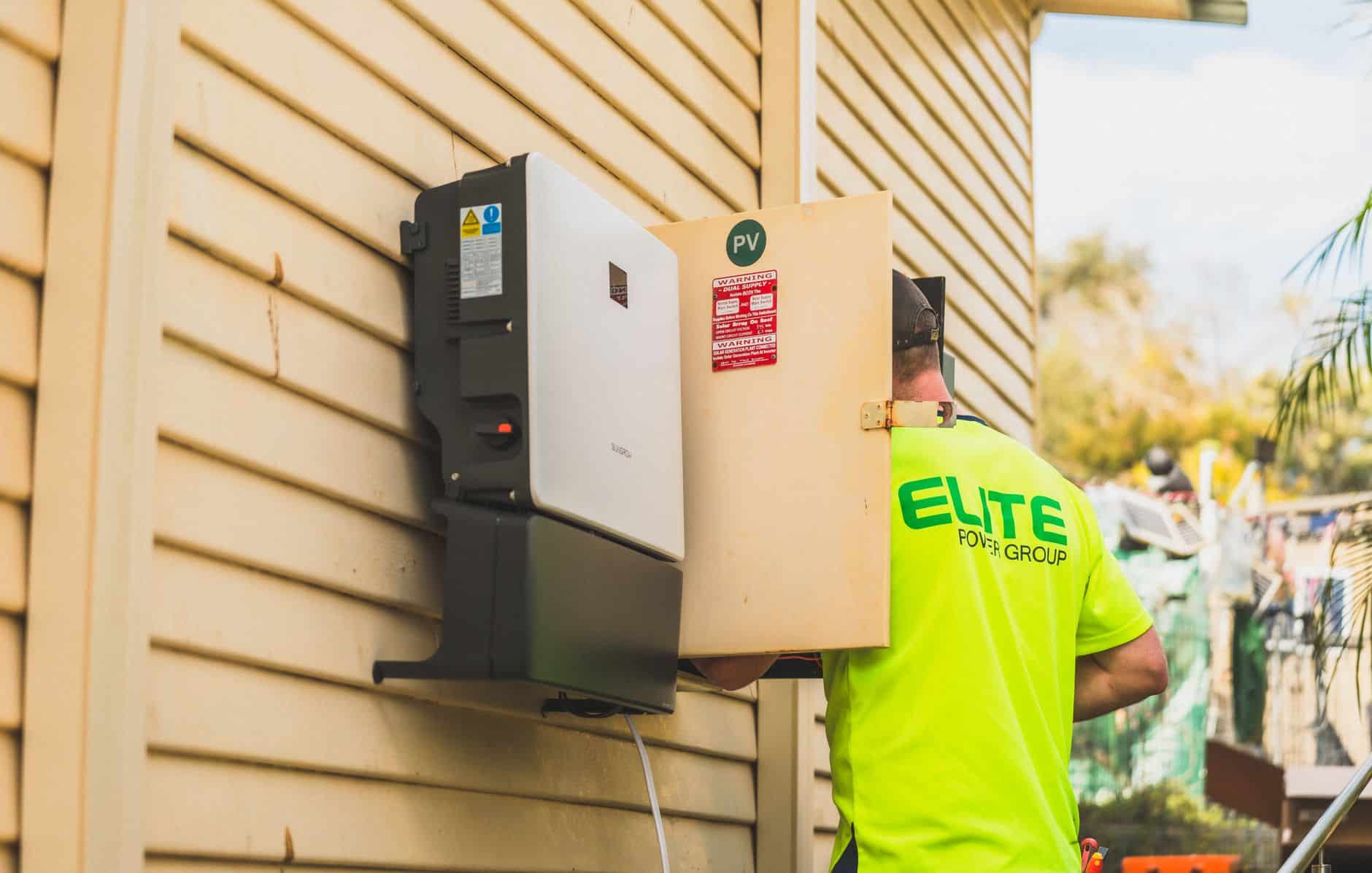
String inverters operate by aggregating multiple solar panels wired in series connections to form a “string” that delivers combined DC voltage to a single centralized inverter. This inverter performs the dc to ac conversion for the entire string and complies with grid interconnection codes such as IEC 61727 and IEEE 1547 standards for voltage regulation and anti-islanding.
Le load balancing circuitry within string inverters maximizes conversion efficiency under uniform conditions but faces inherent limitations. Since all panels share the same current in a series wiring scheme, the panel with the lowest solar panel performance—due to soiling, age, or shading effects—dictates the current through the entire string. This phenomenon results in energy losses often quantifiable between 5-20% in partially shaded installations.
Heat generated from centralized power electronics necessitates attention to heat dissipation. String inverter housings commonly include heat sinks and are mounted with ventilation clearance ratings specified by manufacturers (typically requiring minimum 10 cm air gap). Excessive operating temperatures above 45°C accelerate degradation of semiconductors, shortening system lifespan typically documented at 10-15 years for string inverter components.
Because the electrical wiring concentrates high DC voltages (up to 600 V or higher per string), installation complexity must address comprehensive grounding, overcurrent protection, and wiring insulation class compliant with IEC 60502. While string inverters reduce component numbers by centralizing conversion, fault isolation can be challenging, as one panel failure often requires inspecting the entire string for system troubleshooting.
Comparing Energy Harvest and Efficiency Between Microinverters and String Inverters
Energy harvest depends significantly on site-specific environmental factors. Under ideal, unshaded conditions with uniform solar irradiance, string inverters achieve high conversion efficiencies between 95-98%. This is measured as the ratio of AC output to DC input power under STC (Standard Test Conditions) and is optimized through consolidated MPPT.
In contrast, marginally lower peak efficiencies of about 90-95% may occur with microinverters due to distributed electronics and additional conversion steps at each module. However, in conditions with uneven insolation and voltage mismatch, microinverters yield an energy harvest boost estimated at 5-15% over string inverter systems. This gain results because microinverters perform individualized MPPT per module, preventing weak panels from dragging down the entire system’s output.
In terms of peak power, string inverters offer streamlined AC output with fewer conversion units, whereas microinverters provide distributed power electronics that tolerate panel-level variability. This advantage is critical in rooftops with diverse orientations or when shading effects vary temporally due to moving shadows or seasonal changes.
Le system reliability divide is reflected further in warranty differences: microinverters commonly feature 20-25 year warranties aligned with typical solar panel lifetimes, while string inverter warranties generally range from 10-15 years. This suggests greater confidence in distributed electronics’ equipment durability and reflects modular failure mitigation reducing total downtime risk.
Installation and Maintenance Challenges Specific to Microinverters and String Inverters
Installation for microinverters involves increased installation complexity due to the necessity of mounting and wiring an inverter on or behind each solar panel. This increases the number of electrical connections and requires contractor familiarity with low-voltage AC interconnections and compliance with IEC 61730 safety standards for photovoltaïque module junction boxes. Additionally, environmental sealing ratings such as IP65/IP67 are critical for microinverter longevity when exposed to weather.
String inverters offer reduced installation time through fewer units and voltage-rated DC wiring in series. However, wiring lengths can vary, and proper string sizing must balance voltage losses with inverter voltage input ranges, typically 250-1000 V DC depending on model. This reduces installation complexity but concentrates potential failure points.
Maintenance of microinverters entails possibly more frequent but isolated interventions, as thermal cycling and rooftop exposure can cause early component degradation. The strength lies in the integrated system monitoring enabling rapid automatic detection of underperforming units at the panel level, simplifying system troubleshooting and minimizing downtime.
Conversely, string inverters centralize maintenance efforts and allow for easier physical access. However, failures can cause widespread system outages. Maintenance also involves managing heat dissipation components, such as cleaning ventilation paths and verifying cooling systems, to preserve inverter function and extend system lifespan.
Cost Efficiency and Scalability Considerations in Choosing Inverter Technology
Capital expenditure trends show string inverters generally incur lower initial costs due to fewer inverters and simpler electrical wiring. Installation labor is minimized by series connections reducing the number of terminals and junctions. For projects like Solar Plus Garden’s 10 MW photovoltaic system, economies of scale reinforce this advantage up to multi-megawatt scale.
Operational cost efficiency varies with environment; string inverter systems in uniform, unshaded conditions maintain stable yields and lower maintenance needs. However, shading-induced energy losses reduce overall return on investment. Microinverters, although costlier upfront and with elevated maintenance needs due to many components, improve yield through energy harvest gains and enhanced operational data, potentially offsetting higher initial expenses.
Le scalability of microinverters suits phased project expansion, allowing incremental addition of arrays without reconfiguring existing strings or risking voltage mismatches past inverter input ratings. String inverters often require substantial redesign or inverter capacity increases for expansion, presenting logistical and technical barriers.
Warranty differences impact long-term cost considerations; microinverters’ longer warranties reduce risk of mid-project replacements, while string inverter replacement cycles necessitate planned capital expenditure within 10-15 years. Integrated system monitoring with microinverters may incur license fees but supports proactive asset management improving project financing and investor confidence.
Tailoring Inverter Selection to System Design and Environmental Conditions
Assessing system design and site-specific environmental factors is critical. Sites with heterogeneous conditions from nearby obstructions, seasonal shading, or variable solar installation types such as agrivoltaïsme benefit from module-level power optimization via microinverters. These conditions frequently cause voltage mismatch and uneven solar panel performance, impairing string inverter efficiency.
Microinverters accommodate complex rooftops with multiple azimuths and tilts, maintaining approximately 10-15% higher effective annual energy yield compared to string inverter alternatives in such contexts. String inverters perform better in large, uniform ground-mounted arrays with minimal shading and stable solar exposure, where their consolidated design minimizes losses and facilitates maintenance.
Grid compatibility is standardized across inverter types through compliance with recognized interconnection standards that govern anti-islanding, voltage regulation, and frequency synchronization. However, microinverters support more granular real-time data collection beneficial for advanced energy management systems and community solar models like Solar Plus Garden, enabling precise load balancing and fault isolation.
System reliability considerations favor distributed microinverters for redundancy, reducing system downtime risk. String inverter systems, while simpler, can experience catastrophic outages if the central inverter or wiring fails. Future-proofing capabilities also lean toward microinverters; their modular design allows selective electronic upgrades without full system replacement, supporting evolving technology standards post-installation.
Foire aux questions
- How do microinverters improve energy yield in partially shaded solar installations?
- Microinverters employ module-level power optimization, performing independent dc to ac conversion at each solar panel. This avoids energy losses caused by shading or dirt which, in string inverter setups, reduce the current of the entire string. The result is up to 15% higher energy harvest in uneven shading conditions.
- What are the primary maintenance differences between microinverters and string inverters?
- Microinverters involve maintenance across many units dispersed on the installation, but integrated system monitoring aids prompt identification and localized repairs. String inverters centralize components, easing accessibility for repairs but risking larger system impact from single-point failures.
- Which inverter type is more cost-effective for medium-scale solar projects like Solar Plus Garden’s 10 MW plant?
- For medium-scale projects, string inverters offer lower cost efficiency on capital and installation fronts under uniform conditions. Microinverters potentially improve returns through better energy yield and enhanced system reliability in sites with variable shading or panel orientations. Optimal choice depends on system design, environmental variability, and investor priorities.
- Can microinverters and string inverters be combined in a hybrid solar system?
- Hybrid systems are technically feasible but require precise electrical integration and coordinated system monitoring. Such configurations increase installation and maintenance complexity and generally do not offer significant economic advantages over a singular inverter topology.
Decision-makers evaluating inverter technology should rigorously analyze their site-specific solar installation types, anticipated shading effects, and scale of investment. Solar microinverters advance solar energy conversion with enhanced system monitoring and resilience suited for complex and heterogeneous environments, albeit at higher upfront and maintenance costs. String inverters provide cost-effective, centralized solutions optimized for uniform, large-array settings. Ongoing shifts in technology and regulatory frameworks necessitate continued appraisal to align inverter selection with evolving project requirements.
Lectures complémentaires
- Comment les logiciels de simulation solaire optimisent la conception et l'installation des systèmes photovoltaïques
- Comprehensive Solar Surge Protection: Safeguarding Your Photovoltaic System from Voltage Surges and Lightning
- Evaluating Solar Investment vs Real Estate: What Fits Your Portfolio in 2026?