






Navigating Solar Investment Impact Investing: A Comprehensive Guide for Strategic Investors
Defining Solar Investment Impact Investing Within Renewable Energy Finance
Solar Investment Impact Investing operates at the intersection of capital allocation toward solar power projects and adherence to impact investing principles. It involves financing solar plants that generate renewable energy while explicitly targeting measurable environmental benefits like carbon footprint reduction and social outcomes alongside financial returns.
Solar power projects are integral to the energy transition, replacing fossil fuel-based electricity generation with clean electricity. This shift supports climate change mitigation by reducing greenhouse gas emissions, aligning with Sustainable Development Goals (SDGs) such as Affordable and Clean Energy (SDG 7) and Climate Action (SDG 13).
Investors leverage Environmental, Social, and Governance (ESG) criteria to evaluate how investments promote sustainability and responsible practices. Solar investment platforms increasingly embed ESG-compliant frameworks to transparently report non-financial impacts, complementing traditional financial performance metrics.
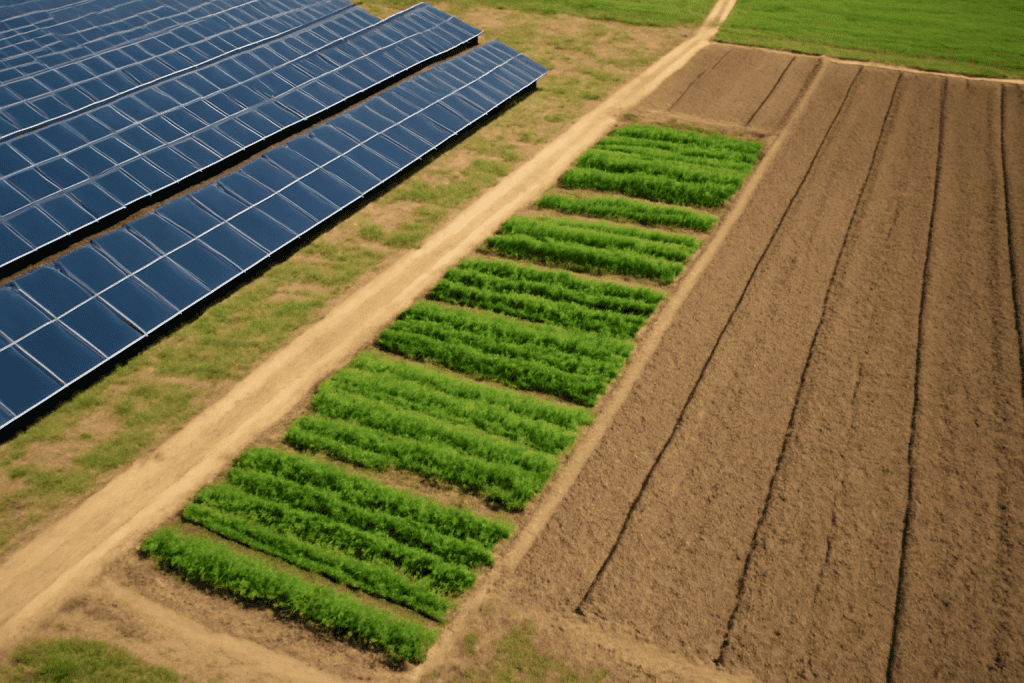
Solar Plus Garden exemplifies this integrated approach with a 10 MW Solarpark coupled to a Garden membership model. This combination diversifies investment portfolios by linking clean energy production with community agrivoltaic initiatives, reinforcing both social engagement and energy efficiency advancements. Platforms deploying clean energy funds and community solar programs expand access to socially responsible investing by offering transparent impact reporting and regular stakeholder engagement.
How Solar Investment Platforms Integrate Community Membership Models
The Garden membership model connects community access to solar infrastructure funding through a transparent membership fee. This fee finances solar farm development while supporting agrivoltaic community projects, enabling members to benefit from solar energy adoption alongside local sustainable agriculture.
Ownership and governance structures distinctly separate solar asset control from community agricultural management. Solar Plus Garden’s Estonian OÜ holds legal ownership and operational responsibility for the solar plant, adhering to European Union company law and renewable energy regulations. A separate Serbian legal entity holds exclusive rights to the Garden community concept, maintaining regulatory compliance and eliminating conflicts of interest inherent in combined ownership.
Revenues generated from solar energy sales feed into community activity funding and operational expenses. This creates a feedback loop where clean energy revenue directly sustains community solar programs and garden maintenance, preserving long-term financial sustainability through clear capital allocation.
The Garden community supports scalability to approximately 3,000 individual parcels or “boxes,” with governance mechanisms that maintain transparency as membership grows. This ensures proportional member representation and adherence to investment diversification principles as the community expands.
Payments for membership fees and optional Garden boxes (~€20/month for 18 annual deliveries of fresh local produce) are processed through escrow accounts. This strict payment and escrow model safeguards funds from unauthorized use, enhancing investor trust and protecting capital through escrow controls compliant with EU escrow regulations.
Financial Structures and Investment Options in Solar Impact Investing
Solar impact investing employs multiple financial structures tailored to varying investor risk profiles. Primary solar financing options include:
- Eigenkapital: Investors acquire private equity stakes in the solar project, aligning returns with operational performance and dividends distributed from net profits.
- Loan-based returns: Investors provide debt financing that delivers fixed or guaranteed returns over a pre-agreed term, reducing exposure to operational variability.
In Solar Plus Garden, the minimum investment starts at €500, facilitating access for small and medium investors. Investors select between a long-term equity share model, focusing on growth and dividends aligned with solar farm development success, or a guaranteed payout loan model structured to provide defined returns.
Government subsidies and renewable energy incentives, such as feed-in tariffs or investment tax credits, are incorporated into project feasibility analyses but are subject to regulatory change and are not guaranteed. Additional solar financing options include green bonds, which raise capital earmarked for environmentally sustainable projects, and crowdfunding solar projects that mobilize smaller investors via digital platforms in compliance with EU crowdfunding regulations.
Capital allocation strategies within these projects balance expected long-term returns against inherent solar investment risks—such as policy shifts or technology obsolescence—while ensuring investment diversification to mitigate sector-specific exposure. This approach aligns with impact investing principles by distributing risk across asset classes within renewable energy portfolios.
Quantifying Environmental and Social Impact in Solar Investments
Impact quantification uses project evaluation metrics based on direct and indirect measurements of carbon footprint reduction. Calculations standardize avoided CO₂ emissions by comparing solar-generated electricity against regional fossil fuel electricity grid mixes using protocols outlined by the Greenhouse Gas Protocol.
Impact reporting adheres to frameworks aligned with ESG standards and the United Nations’ Sustainable Development Goals, integrating quantitative CO₂ abatement data with qualitative assessments of social benefits, such as community engagement and local employment generation.
Technological improvements in solar panel technology—such as increased photovoltaic efficiency ranging from 20% to 23% for monocrystalline panels—and advancements in energy storage solutions enable optimized energy dispatch and enhance overall system energy efficiency. Solar Plus Garden’s agrivoltaic integration combines solar farm development with sustainable biomass cultivation and diversified agriculture, promoting biodiversity, optimizing land use, and providing social value through fresh produce supply to community members.
Standardized ESG impact reporting ensures transparency and credibility by requiring third-party validation of performance data and adherence to recognized international sustainability reporting guidelines.
Key Risks and Mitigation Strategies Specific to Solar Investment Impact Investing
Solar investment risks include technology obsolescence driven by rapid improvements in solar panel efficiency, inverter technologies, and energy storage systems, which can affect asset competitiveness and required reinvestment timelines.
Regulatory risks arise from potential changes in government subsidies, tax incentives, and evolving energy policy frameworks. These may alter projected returns and require scenario planning to accommodate fluctuations in feed-in tariffs or renewable energy certificates applicable in target jurisdictions such as the European Union.
Der Mitgliedschaft in der Gemeinschaft model introduces governance-related risks, including potential defaults on membership fees that could disrupt funding for community activities and operations. However, Solar Plus Garden’s investment rules prohibit capital commitment prior to full legal and regulatory clarity, effectively controlling exposure.
Investment funds are protected through escrow accounts overseen by independent third parties, limiting unauthorized use and ensuring adherence to payment schedules. Diversification of financing instruments—equity and loan models—and transparent stakeholder engagement further mitigate solar investment risks by distributing exposure and assuring accountability.
Operational risks in solar farm development are managed by experienced technical teams overseeing site selection, equipment procurement, and installation to comply with photovoltaic module warranties, IEC 61215 performance standards, and rigorous maintenance schedules that minimize downtime and yield losses over the solar plant’s expected operational lifespan (20-25 years).
Practical Steps to Start Investing in Solar Impact Projects Like Solar Plus Garden
Prospective investors initiate the process by registering on Solar Plus Garden’s waiting list, an initial step to express interest and receive project and investment information.
The next stage involves comprehensive Know Your Customer (KYC) and Know Your Business (KYB) verification to comply with anti-money laundering (AML) legislation and investor suitability requirements.
Investors then select financial products aligned with their risk tolerance and expected long-term returns: private equity shares for growth participation or loan instruments for predictable payouts.
Membership registration requires payment of a one-time Garden membership fee (€200) plus optional monthly contributions for Garden boxes providing locally grown produce through agrivoltaic operations, supporting the community solar program’s sustainability.
Digital tools such as Notion AI facilitate navigating comprehensive documentation and streamline decision-making, while project management platforms like Trello track workflows and ensure progress transparency throughout investment onboarding.
Der Solar Plus Garten Partnerprogramm enables investors to expand impact and earnings via a 3% commission on successful referrals, coupled with company equity opportunities, reinforcing network-driven capital allocation toward clean energy funds.
The structured four-step investor journey consists of application submission, approval within 48 hours, allocation of investment capital, and activation of community membership, providing a transparent and accessible framework for participation.
Current Market Trends and Regulatory Environment Impacting Solar Investment Impact Investing
Global and regional solar capacity growth continues robustly, with installations expanding in the European Union, Serbia, and surrounding markets. This growth is propelled by increasing market demand for solar as a renewable energy source, supported by evolving renewable energy incentives, such as EU Green Deal targets and national renewable portfolio standards.
Recent advancements in Agrivoltaik enable solar capacity growth to dovetail with sustainable agriculture, optimizing land usage and increasing energy efficiency. Market demand for solar and socially responsible investing instruments remains strong, with an uptick in capital directed toward clean energy funds and community solar programs acknowledged by ESG-compliant rating agencies.
Solar Plus Garden operates under a dual-legal structure with an Estonian OÜ managing the solar assets and a Serbian entity overseeing the Garden concept, aligning with EU energy directives, data protection regulations, and investment governance frameworks. This enables adaptation to varying regional energy policies and renewable energy incentives, facilitating sustainable project scaling and investor confidence.
Häufig gestellte Fragen
- What minimum investment is required to participate in Solar Plus Garden’s solar impact projects?
- Investors can start with an entry point of €500, choosing between private equity ownership or loan-based investment models designed to accommodate different risk-return profiles.
- How is the environmental impact of my solar investment measured and reported?
- Environmental benefits are quantified using carbon footprint reduction metrics standardized by the Greenhouse Gas Protocol, complemented by ESG-aligned impact reporting frameworks integrating progress against Sustainable Development Goals.
- What legal protections ensure transparency and security of my investment in the Solar Plus Garden platform?
- Solar Plus Garden operates under a clear legal structure, with an Estonian OÜ owning the solar farm and a separate entity managing the Garden community. Payments are subject to escrow controls ensuring all funds are used according to predefined investment guidelines without unauthorized disbursements.
- Are there risks related to changes in government policies or subsidies affecting my solar investment returns?
- Yes, government subsidies and renewable energy incentives are subject to change, potentially affecting project returns. Mitigation includes diversified solar financing options, transparent risk disclosure, and continuous monitoring of energy policy changes.
Abschluss
Solar Investment Impact Investing unites solar farm development with impact investing principles, enabling investors to contribute to climate change mitigation through renewable energy sources while realizing long-term returns. Choosing between equity and loan structures allows alignment with individual risk profiles and financial objectives.
Platforms like Solar Plus Garden establish robust governance and legal frameworks, ensuring transparency and safeguarding investments through escrow and membership models. Their integration of agrivoltaics and technology advances enhances energy efficiency and environmental benefits quantification.
Investors must actively monitor energy policy environments and technological developments to adapt strategies accordingly. Early engagement through structured onboarding processes secures access to verified solar investment opportunities with measurable community and environmental impact.