










Mastering Organic Mushroom Cultivation: A Practical Guide for Sustainable Mushroom Farming
Understanding Organic Mushroom Cultivation and Its Unique Challenges
Organic mushroom cultivation differentiates itself from conventional methods primarily through strict adherence to organic certification requirements spanning substrate sourcing, spawn production, and environmental management. An organic mushroom is cultivated without synthetic pesticides, fertilizers, or genetically modified organisms, relying instead on certified organic substrates, biological inputs, and controlled conditions that promote natural microbial activity.
The nutritional process of fungi distinguishes organic mushroom production from plant agriculture. Fungi grow by enzymatic breakdown of organic matter in the substrate, making substrate quality a critical parameter. Organic protocols mandate that substrates originate from certified organic materials such as hardwood sawdust from untreated trees, straw from organically farmed grains, or other plant-based byproducts harvested without synthetic inputs.
Spawn selection is similarly regulated: organic spawn must be produced without chemical additives or sterilants, often propagated in aseptic conditions using certified organic media. This ensures fungal strains used for inoculation meet traceable standards and maintain a resilient microbiome that supports healthy mushroom development.
Regulatory standards such as the EU Organic Regulation 2018/848 or USDA NOP forbid synthetic pesticides on substrates, requiring approved organic amendments such as agricultural lime or gypsum to comply with material input lists. These rules preserve ecological balance and ensure that every step—from substrate preparation and pasteurization to cultivation and harvest—aligns with organic integrity and transparency.
Setting Up a Mushroom Farm Tailored for Organic Production
Establishing a dedicated mushroom farm for organic production necessitates comprehensive planning of site characteristics, infrastructure, and environmental control systems to meet organic standards and promote optimal mushroom growing.
- Site Selection: The farm should enable strict segregation from conventional agricultural operations to avoid cross-contamination. Considerations include proximity to organically certified substrate suppliers to limit contamination risk and transportation time.
- Growing Room Design: Controlled environment rooms or tunnels equipped with calibrated sensors must maintain temperature and humidity within species-specific ranges; for instance, oyster mushrooms (Pleurotus ostreatus) require 18-24°C ambient temperature and 85-95% relative humidity. HVAC systems must support 8-12 air exchanges per hour with HEPA filtration to reduce spore contamination.
- Substrate Selection and Preparation: Organic substrates commonly consist of hardwood sawdust, straw, corn cobs, or cottonseed hulls derived from certified organic farms. Treatment protocols prioritize pasteurization over sterilization to suppress pathogens while conserving beneficial microbiota essential for fungal colonization.
Typical organic substrate pasteurization employs saturated steam at 65-80°C for 60-120 minutes. This process reduces competing organisms without fully sterilizing, preserving microbial communities that facilitate mycelial establishment. Energy-efficient pasteurization methods such as continuous flow steam tunnels or batch steam chambers align with sustainability criteria valued in organic methodology and help optimize operating costs.
Sourcing and Preparing Organic Spawn for Reliable Inoculation
High-quality organic spawn is fundamental to successful organic mushroom crops. It represents the living fungal mycelium propagated on approved organic substrates to initiate mushroom growing.
- Types of Spawn: Organic spawn forms include grain spawn (typically rye or millet), sawdust spawn, and liquid culture. Licensed organic spawn producers maintain documented processes that exclude synthetic chemicals and preservatives throughout strain propagation.
- Inoculation Techniques: Efficient distribution of spawn throughout the pasteurized substrate is critical. Techniques involve aseptic conditions and swift handling to minimize contamination, typically conducted in controlled inoculation rooms using laminar airflow or clean benches. Even dispersion ensures consistent colonization and reduces the risk of uncolonized patches vulnerable to contaminants.
- Storage and Handling: Maintaining cold chain storage between 4-10°C preserves spawn viability, which generally declines significantly beyond 30 days of storage if improperly managed. Spawn bags or containers must be kept sealed to control moisture and prevent microbial intrusion, complying with organic certification requirements for traceability and integrity.
Under optimal organic conditions, oyster mushroom spawn typically colonizes substrate within 14-21 days at 24-27°C, reflecting fungal metabolism without synthetic accelerants. Growers must schedule production cycles accordingly to align inoculation, colonization, and fruiting phases with market demand and resource availability.
Managing Microbial Activity and Disease Prevention in Organic Cultivation
Disease management in organic mushroom cultivation relies on enhancing beneficial microbial activity and stringent preventive practices, as synthetic fungicides and sterilants are prohibited.
- Monitoring Microbial Communities: Routine microbiological assays, using culture plating or molecular diagnostics such as qPCR, detect potential contaminant species including competitor molds (e.g., Trichoderma aggressivum) and bacterial pathogens. Regular substrate and air quality testing helps anticipate outbreaks.
- Biological Controls: Introducing beneficial fungi such as Trichoderma harzianum during substrate preparation provides competitive exclusion of harmful molds without contravening organic certification. The application rate typically ranges from 10⁴ to 10⁶ spores per gram of substrate, based on validated protocols documented in organic agricultural research.
- Sanitation Protocols: Cleaning regimes combine physical methods — steam cleaning at >100°C and hot water pressure washing — with approved organic disinfectants such as peracetic acid or hydrogen peroxide at specified concentrations. Sanitation frequencies follow production cycles or contamination events, ensuring environmental hygiene without chemical residues.
- Early Disease Detection: Visual inspection for substrate discoloration, off-odors, or abnormal fruiting patterns must be conducted daily. Identified infected batches are promptly isolated and humidity adjustments are implemented; lowering relative humidity below 85% during early infections discourages pathogen growth while preserving fungal health.
Use of beneficial Trichoderma is supported by multiple peer-reviewed studies demonstrating substantial reduction in crop losses and improved yield consistency across variable organic substrate types. This biological control, alongside systemic sanitation practices, forms the backbone of disease prevention strategies in certified organic mushroom farms.
Harvesting Organic Mushrooms: Timing, Techniques, and Post-Harvest Handling
Wirksam harvest protocols optimize shelf life and nutritional quality, which are critical attributes for organic mushroom products subject to consumer scrutiny and certification audits.
- Optimal Harvest Timing: For oyster mushrooms (Pleurotus ostreatus), picking typically occurs 3-5 days after pinhead formation (birth of fruit bodies), correlating to cap diameters of 4-6 cm under maintained 18-22°C temperatures. Delayed harvest results in diminished texture and increased susceptibility to microbial spoilage.
- Harvesting Techniques: Clean hand harvesting involves twisting the fruiting body at the base or cutting with sanitized knives, minimizing damage. Contamination risks are reduced by use of disposable gloves and harvesting tools cleaned between batches. Broken mushrooms significantly increase enzymatic degradation and reduce post-harvest longevity.
- Post-Harvest Handling: Immediately after picking, mushrooms are carefully brushed or blown to remove loose substrate particles. Rapid cooling to 4-7°C within 1-2 hours post-harvest slows respiration and microbial growth. Packaging materials must be breathable, food-grade plastics or cardboard to maintain humidity balance and comply with organic standards requiring minimal chemical preservatives.
Maintaining cold chain integrity during transport ensures organic mushrooms reach retailers and consumers without quality degradation. Cleaning protocols for all post-harvest equipment further prevent cross-contamination and preserve organic certification compliance throughout the supply chain.
Scaling Organic Mushroom Farming within Solar Plus Garden’s Agrivoltaic Communities
Integration of organic mushroom farming in agrivoltaic contexts such as Solar Plus Garden leverages synergistic benefits from co-location and community-based resource sharing, maximizing land use efficiency.
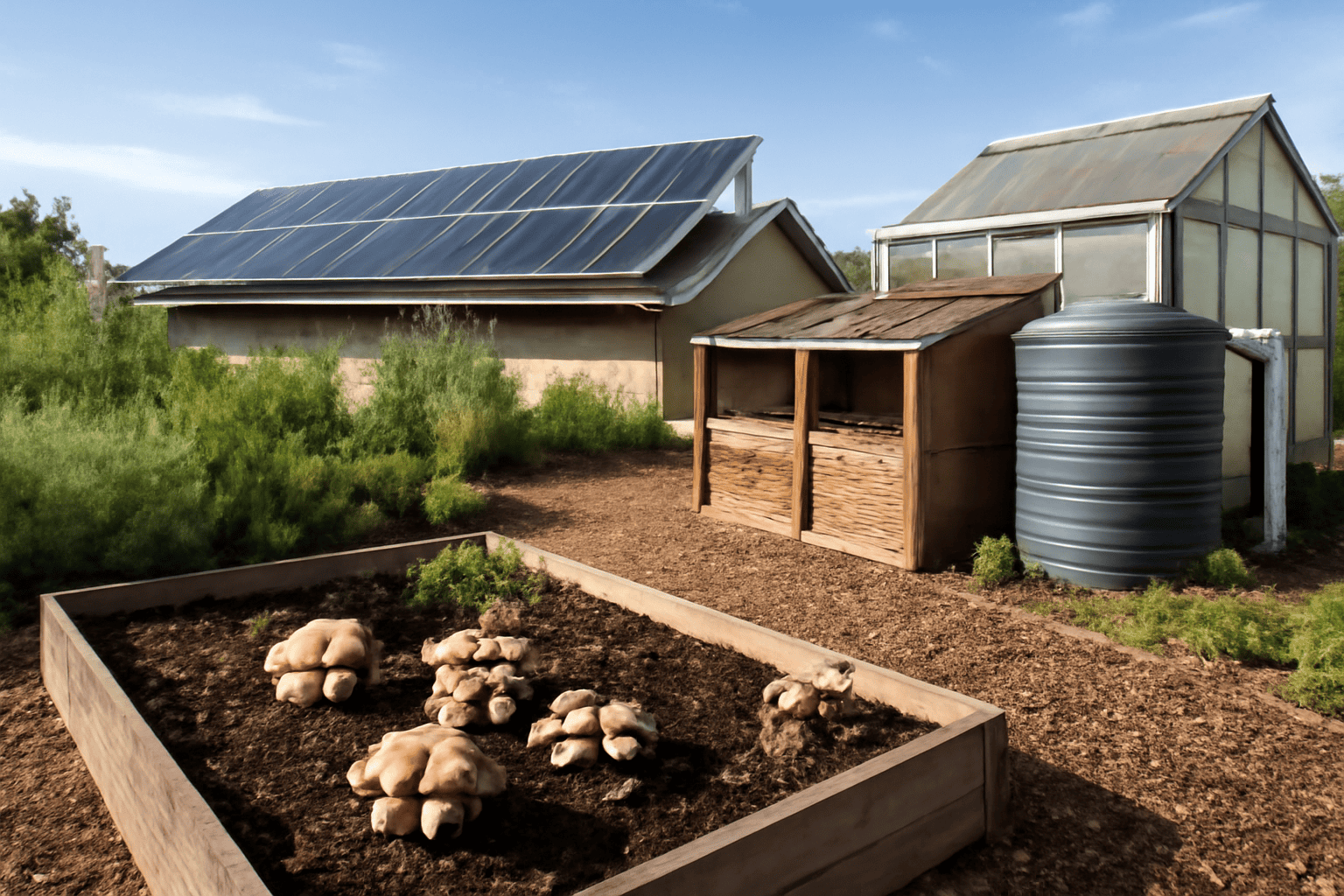
- Agrivoltaic Integration: Mushroom cultivation under photovoltaic panels benefits from moderated microclimates due to shading, which reduces thermal stress and maintains humidity within target ranges for species like oyster mushrooms. This beneficial microclimate reduces energy needs for climate control compared to standalone operations.
- Community-Supported Farming: Members of the Solar Plus Garden Gartengemeinschaft pay a €200 one-time membership fee plus optional monthly €20 Garden Box subscriptions delivering 18 fresh produce shipments annually. These fees are pooled into solar investment and ongoing garden operations, enabling shared procurement of certified organic substrates, technical guidance, and access to aggregated distribution networks for organic product marketing.
- Membership and Regulatory Framework: The project employs separate legal entities in Estonia (OÜ) and Serbia (DOO) to manage solar infrastructure and garden activities respectively, maintaining clear compliance boundaries and transparent financial flows. The community supports up to 3,000 parcels (bokseva), enabling scalable participation while adhering to legal and sustainability requirements.
This model facilitates mushroom growers in meeting organic production protocols while leveraging integrated solar energy and agrivoltaic benefits, improving resilience and operational cost efficiencies.
Leveraging Mycoremediation Potential in Organic Mushroom Cultivation
Mycoremediation enhances the environmental impact profile of organic mushroom farms by exploiting fungi’s enzymatic capacities to degrade contaminants and improve soil health within organic agricultural systems.
- Principles of Mycoremediation: Selected fungi enzymatically metabolize hazardous organic pollutants such as polycyclic aromatic hydrocarbons and certain pesticides through oxidative enzymes like laccases and peroxidases, breaking down complex molecules into less toxic compounds.
- Fungal Candidates for Mycoremediation: Experimental data indicate Pleurotus ostreatus can reduce hydrocarbon contamination by 40-60% within 30-60 days under carefully controlled organic substrate conditions. These capabilities make it one of the most practical species for combined production and remediation roles.
- Integrating Mycoremediation: Farms allocate discrete substrate batches inoculated with remediation strains during fallow periods or situate mushroom beds in previously contaminated soil zones with regulated environmental parameters (moisture, temperature) to optimize enzymatic activity without compromising organic certification or crop safety.
Mycoremediation within organic mushroom farming supports regenerative agriculture goals by reducing contaminant loads, improving soil quality, and enhancing ecosystem services alongside standard mushroom growing Aktivitäten.
Häufig gestellte Fragen
- What are the essential substrate materials permitted for organic mushroom cultivation?
- Substrates must be sourced from certified organic materials such as untreated hardwood sawdust, wheat or rice straw from organic farms, corn cobs, and other plant-based agricultural residues verified free of synthetic pesticides and fertilizers. Inputs are listed in relevant organic standards like USDA NOP or EU Organic.
- How do I ensure sanitation in an organic mushroom farm without using chemicals?
- Sanitation relies on physical pasteurization with steam treatments at 65-80°C for 1-2 hours, mechanical cleaning protocols, and application of biological control agents such as Trichoderma fungi. Chemical sterilants and synthetic fungicides are excluded to maintain organic integrity.
- What is the typical timespan from inoculation to harvest for organic mushrooms like oyster mushrooms?
- Under organic conditions, spawn colonizes substrate over 14-21 days at 24-27°C. Fruiting begins 3-5 days after pinhead formation, resulting in a total vegetative-to-harvest timeframe of approximately 4-5 weeks, varying by species and environmental controls.
- Can organic mushroom cultivation be combined with solar-powered agrivoltaic systems in a community setting?
- Yes. Integrating mushroom farms under solar panels within Agrivoltaic communities like Solar Plus Garden provides moderated microclimates, resource sharing, and financial structures that support scalable organic production while reinforcing sustainable energy use.
Abschluss
Getting started with organic mushroom cultivation demands sourcing fully certified organic substrate Und spawn, implementing rigorous sanitation protocols emphasizing pasteurization and biological controls, and maintaining climate conditions optimized around fungal biology and species-specific growth parameters. Precision in inoculation, environmental control, and disease monitoring underwrites successful, consistent yields.
Integration into agrivoltaic communities such as Solar Plus Garden offers strategic advantages through shared infrastructure, clear operational frameworks, and memberships funding both solar and garden activities. This fosters economic viability and aligns with sustainability and regulatory compliance goals. As organic certification standards and local regulations evolve, ongoing adaptation and detailed recordkeeping will remain essential to maintaining both market access and ecological benefits in organic mushroom farming.