









How Solar Investment Endowment Strategies Secure Long-Term Growth and Sustainable Impact
Aligning Solar Asset Allocation with Endowment Fund Objectives
Effective solar energy investment within an endowment fund requires precise alignment of the fund’s investment horizon, risk tolerance, and expected financial returns with the characteristics of solar power projects. Endowment funds typically target an investment horizon of 10 to 30 years, aiming for internal rates of return (IRR) between 6% and 9%, reflecting risks specific to renewable energy such as regulatory uncertainties, technology obsolescence, and variable solar yield.
Solar asset allocation involves selecting project types and solar technology that align with these parameters. Key distinctions in capital expenditure (CapEx) and operational costs (OpEx) exist among utility-scale photovoltaic (PV) plants, community solar projects, and agrivoltaic systems. For example, utility-scale PV plants often require upfront investments in the range of €800,000 to €1,200,000 per MW, while supporting infrastructure and operation costs may reach €10,000 to €15,000 per MW annually, depending on geographic location and technology.
Prudent project selection criteria include:
- Solar yield consistency: Preference for geographic regions with annual solar irradiance above 1,100 kWh/m² and long-term weather station data supporting stable generation projections to mitigate variability in power output.
- Technology maturity: Use of monocrystalline silicon PV panels compliant with IEC 61215 and IEC 61730 standards, which show proven efficiency rates above 21% and operational warranties extending 25 years, reducing technical risk.
- Balance of CapEx and OpEx: Portfolio emphasis on projects with CapEx in the mid-range but operational costs limited through effective preventive maintenance programs and inverter systems meeting IEC 62109 safety standards.
This solar asset allocation optimizes fund performance by integrating technologies and project types aligned with the investment horizon and risk profile, supporting stable asset valuation and long-term growth in renewable energy portfolios.
Integrating Community Solar and Garden Membership Models into Portfolio Sustainability
Investment diversification in solar financing increasingly incorporates community solar models paired with ancillary revenue streams. Solar Plus Garden’s integration of a 10 MW solkraftverk with a Garden membership framework illustrates this approach, enhancing portfolio resilience by introducing non-energy-based cash flows.
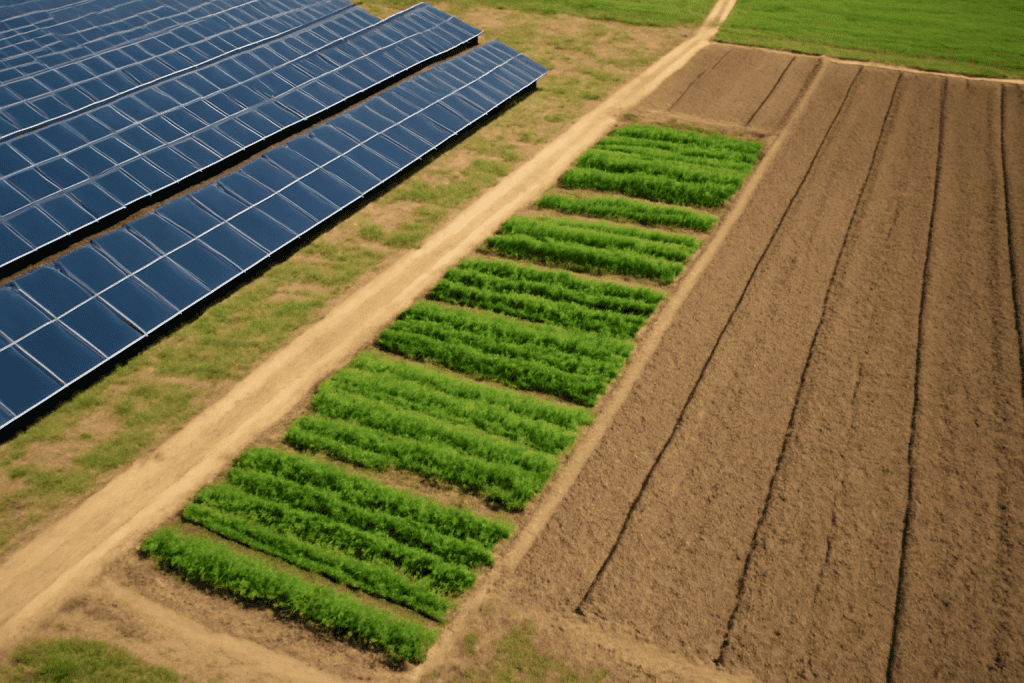
The Garden membership structure supports up to 3,000 individual garden parcels, enabling simultaneous solar power generation and community-supported agriculture. Members pay a €200 one-time membership fee granting community access, supplemented by an optional €20 monthly subscription for 18 annual garden produce deliveries. These payments, routed through a regulated escrow and structured payment system, create recurring revenue streams independent from fluctuations in solar power generation or energy market prices.
Portfolio impacts include:
- Revenue diversification: Income is derived from solar power generation under power purchase agreements (PPAs) and garden membership fees, ensuring operational stability even with variability in feed-in tariff rates.
- Cash flow analysis: Regular, predictable membership fees provide steady working capital supporting community activities and operational expenditures, reducing fund cash flow volatility caused by weather-dependent solar yields.
- Sustainable investing alignment: Combining green energy production with regenerative agriculture fulfills dual objectives of environmental impact and social engagement aligned with impact investing and ESG criteria.
This model expands traditional solar project revenue bases, improving fund performance forecasts and providing endowment funds with innovative pathways to sustainable investing.
Evaluating Financial Modeling and Risk Management Specific to Solar Endowments
Reliable financial returns in solar investment endowments depend on rigorous financial modeling and comprehensive risk management. Models project revenue streams over 20 to 25 years, consistent with typical solar asset operational lifespans and industry warranty periods.
Risk factors modeled include:
- Solar yield variability: Utilization of irradiance datasets spanning at least 10 years, meteorological projections, and stochastic simulation to estimate year-to-year generation fluctuations, affecting cash flow stability.
- Regulatory environment shifts: Scenarios accounting for changes in solar incentives, feed-in tariff adjustments commonly guaranteed for 15 years under EU regulatory frameworks, and possible revision of tax credit eligibility, directly influencing net revenue.
- Investment diversification: Capital spread across multiple solar projects (utility-scale and community solar) and supported by Garden membership income diversifies risk, shielding against operational failure or localized regulatory impacts.
Financial modeling integrates discounted cash flow (DCF) analysis with sensitivity tests on solar yield, tariff changes, and operational cost inflation rates, ensuring that projected fund performance matches the investment portfolio’s long-term growth targets.
Capital Deployment and Project Evaluation in Large-Scale Solar Endowments
Capital deployment for utility-scale solar projects necessitates phased investments governed by stringent project evaluation protocols. At Solar Plus Garden, initial steps include legal structuring via the pre-incorporation of an Estonian OÜ entity, addressing regulatory and tax efficiency considerations pertinent to EU cross-border investments.
Key phases in capital expenditure deployment consist of:
- Tillbörlig aktsamhet: Technical site assessment encompasses solar resource measurement, soil and land-use analysis for agrivoltaic integration, and compatibility checks of PV components certified to IEC and DIN EN standards.
- Phased funding releases: Capital injections align with milestone completions such as permitting, equipment procurement compliant with IEC 61730 safety standards, and commissioning tests adhering to IEC 62446-1 requirements for system performance verification.
- Operational cost forecasting: Maintenance budget planning based on standardized O&M contracts factoring inverter maintenance cycles, scheduled PV panel cleaning, and personnel expenses for site management over a minimum operational lifetime of 25 years.
Project evaluation emphasizes technology longevity and component efficiency, selecting monocrystalline PV panels with manufacturer performance guarantees and string inverters featuring grid compliance certifications under IEC 62116 standards. Transparent payment and escrow arrangements secure investor funds and operational expenses, in line with regulatory compliance and investor protection norms.
Leveraging Tax Credits and Regulatory Incentives to Enhance Solar Investment Returns
Tax credits and regulatory incentives materially affect solar project economics and financial returns within endowment fund frameworks. As of 2026, several EU member states offer investment tax credits of up to 20% on eligible CapEx for solar development, enhancing capital efficiency and lowering effective upfront costs.
Additional financial incentives include:
- Feed-in tariffs (FiTs): These guarantee fixed electricity purchase prices over typical durations of 15 years, providing predictable revenue streams though subject to adjustment risks linked to policy updates.
- Green energy certificates: Tradable renewable energy guarantees of origin supplement direct FiT revenue, structured under EU Renewable Energy Directive frameworks to incentivize clean energy adoption.
- Compliance and reporting requirements: Continuous adherence to operational standards, such as maintaining defined capacity factors and timely environmental impact reporting, is required for eligibility retention across tax and incentive programs.
Endowment fund managers integrate these solar incentives within financial return models, adjusting assumptions dynamically to reflect regulatory changes and maintaining portfolio resilience in changing energy markets.
Measuring Environmental and Impact Investing Outcomes in Solar Endowments
Quantitative measurement of environmental impact is essential to demonstrate alignment with international climate goals and validate impact investing claims. A 10 MW solar power plant typically achieves annual carbon dioxide emissions reductions estimated between 8,000 and 10,000 metric tons by displacing fossil fuel-derived electricity, based on standardized emission factors of approximately 0.85 kg CO2 per kWh for coal-generated power.
In combination with community solar integration and Garden membership models, the project delivers compounded outcomes:
- Supporting decentralized energy transition: Localized solar power generation reduces dependence on centralized fossil-fuel power plants, consistent with the EU Green Deal’s clean energy transition roadmap.
- Enhancing community solar engagement: Membership involvement in governance and usage fosters local stakeholder empowerment and education within renewable energy deployment.
- Delivering co-benefits: Regenerative agricultural practices facilitate fresh produce supply, contributing to local food security and social cohesion, expanding impact investing beyond environmental metrics.
Established impact investing frameworks utilize these combined metrics to evaluate project contributions to Sustainable Development Goals (SDGs), integrating environmental impact with demonstrated social value.
Optimizing Solar Portfolio Planning with Emerging Solar Technology Trends
Emerging technological advancements guide solar investment portfolio optimization by enhancing solar power project efficiencies, capital expenditure forecasts, and operational strategies. Solar Plus Garden’s utilization of agrivoltaik exemplifies this trend, integrating up to 3,000 garden plots with a 10 MW solar array to maximize land-use productivity.
Key technology considerations include:
- Agrivoltaik: By co-locating agricultural crops within solar installations, this approach increases land productivity per hectare, using crops tolerant to partial shading to foster regenerative agriculture and maximize dual-use benefits.
- Bifacial PV modules: These panels increase solar energy capture by harvesting irradiance from both front and rear surfaces, typically improving yield by 5-15% over mono-facial counterparts under optimal albedo conditions.
- Energy storage integration: Incorporation of lithium-ion battery systems enhances supply stability by mitigating intermittency, enabling dispatchable power sales, and smoothing cash flow aligned with dynamic energy market price signals.
The adoption of these technologies influences long-term financial modeling, operational cost estimates, and overall fund performance by reducing risk and improving solar yield predictability. Strategic inclusion of evolving solar technology supports scalable renewable energy endowment strategies aligned with long-term growth and sustainable investing.
Vanliga frågor
How does Solar Plus Garden’s membership model affect the financial stability of solar investments?
The €200 one-time membership fee combined with the optional €20 monthly trädgårdslåda subscription creates recurring income streams independent of solar power generation revenue. This diversification reduces reliance on energy market prices and solar yield variability, providing stabilizing cash flow that supports ongoing community activities and operational costs within the solar financing structure.
What are the main regulatory risks involved in solar investment endowments?
Regulatory risks encompass potential revisions to feed-in tariff schemes, reduction or elimination of solar tax credits, and evolving compliance mandates under EU and local laws. Endowment fund managers mitigate these risks through continuous monitoring of regulatory developments, scenario analysis in financial models, and investment diversification across jurisdictions and income sources.
How does integrating agrivoltaics impact solar project returns and sustainable investing goals?
Agrivoltaics enables dual land utilization, combining solar power generation with agricultural production, thereby enhancing overall asset utilization. This integration improves land-use efficiency and aligns with sustainable investing and impact investing frameworks by delivering co-benefits including food production, biodiversity preservation, and reinforcement of community engagement within renewable energy projects.
What factors determine the appropriate solar asset allocation within an endowment portfolio?
Solar asset allocation depends on investment horizon, risk tolerance, CapEx and OpEx trade-offs, forecasted solar yield stability, and portfolio diversification strategy. Decisions should incorporate technology maturity, geographical irradiance data, regulatory environment stability, and integration opportunities such as community solar and garden membership models to optimize long-term growth and cash flow predictability.
Slutsats
Long-term solar investment endowment strategies depend on clearly defined objectives that integrate sustainable investing priorities and community impact goals. A methodical due diligence process encompassing solar power project evaluation, regulatory environment assessment, and incorporation of innovative financing structures—such as Solar Plus Garden’s membership model—is essential. Ongoing analysis of emerging solar technology trends, tax credits, and incentive frameworks enables adaptation to evolving energy markets and regulatory conditions. This disciplined approach fosters sustainable financial returns and measurable environmental impact, critical for securing resilient renewable energy allocations within endowment fund portfolios.