









Solar Panel Efficiency Explained: Understanding Performance to Maximize Your Energy Savings
What Solar Panel Efficiency Really Means for Your Energy Output
Solar panel efficiency refers to the conversion efficiency—the ratio between electrical energy produced by panele słoneczne and the sunlight energy they receive. This metric quantifies how much energy a system can generate relative to the incident solar irradiance, measured in watts per square meter (W/m²).
Solar panel efficiency comprises both solar cell efficiency and system-level factors that reduce output. Solar cell efficiency measures individual fotowoltaiczny (PV) cells’ performance, typically under Standard Test Conditions (STC): irradiance of 1,000 W/m², 25°C cell temperature, and air mass 1.5 spectrum. The overall solar panel efficiency accounts for electrical losses caused by cell interconnections, encapsulation materials, and anti-reflective glass coatings.
Under STC, commercial solar panels exhibit a solar panel efficiency range between 15% and 22%. For example, monocrystalline modules can reach up to 22% efficiency, while some polycrystalline panels test closer to 15-17%. These figures represent ideal laboratory conditions; the solar panel efficiency really means the expected maximum potential output given perfect sunlight and temperature.
From an investor or property owner perspective, higher solar efficiency translates into more electricity produced per unit of installed area, which directly reduces energy bills and improves efficiency and savings. This relationship is critical when rooftop space or land availability is limited.
Key Factors That Affect Solar Panel Efficiency in Real-World Conditions
Real-world solar panel efficiency deviates from STC benchmarks due to several environmental and operational factors:
- Solar irradiance variability: The intensity of sunlight fluctuates based on time of day, weather, season, and geographic location. For example, average daily irradiance in Central Europe ranges roughly from 2 to 6 kWh/m² per day, affecting total energy production over time.
- Wpływ temperatury: PV modules typically have a negative temperature coefficient of around −0.3% to −0.5% per °C above 25°C, meaning every degree increase can decrease output by this percentage. In summer temperatures of 40°C, efficiency can drop by over 5% compared to STC.
- Zacienienie: Even partial shading covering 10-20% of a panel’s surface can cause disproportionate power losses. Because cells are wired in series, shaded cells reduce current flow, potentially dropping output by 30-40% or more in typical residential scenarios without mitigation measures.
- Degradation over time: Solar cells degrade annually due to UV exposure, thermal cycling, and moisture ingress. Industry benchmarks report annual solar cell efficiency drops of approximately 0.5% to 1%, varying by panel quality and manufacturer.
- Orientacja i kąt nachylenia: Panels oriented due south (in the northern hemisphere) at an angle close to the site’s latitude maximize yearly total solar gain. Tilts deviating by ±10° can reduce energy capture by around 5-10%, while east-west orientations reduce overall annual yield but can better match peak load times.
How Different Solar Panel Technologies Compare in Efficiency
Three principal commercial PV technologies differ in solar cell efficiency and system solar panel efficiency:
- Monocrystalline silicon panels: Made from single-crystal silicon wafers, they deliver efficiencies from 18% to 22% under STC. Their uniform crystal structure allows better charge carrier mobility and reduced recombination losses.
- Polycrystalline silicon panels: Constructed from multiple silicon crystals, efficiencies range between 15% and 17%. Though less efficient than monocrystalline, they are generally less costly to manufacture.
- Panele słoneczne cienkowarstwowe: Utilizing amorphous silicon, cadmium telluride (CdTe), or copper indium gallium selenide (CIGS), these typically achieve 10% to 13% efficiency. Their lower weight and flexibility make them suitable for large applications with ample surface area but require more space for equal output.
Advancements in cell architectures such as passivated emitter rear contact (PERC) technology increase conversion efficiency by reducing electronic recombination. Dwustronne panele słoneczne capture irradiance on both sides, often achieving a 15-20% increase in energy yield depending on albedo conditions, tested under IEC 60904 standards.
Improving Solar Panel Efficiency Through System Design and Maintenance
Efficiency matters beyond module selection, extending into overall system layout and maintenance:
- Cleaning: Accumulations of dust, bird droppings, or pollutants reduce solar transmission. Empirical studies show that unclean panels can lose between 5% and 15% of efficiency if cleaning intervals exceed six months, necessitating periodic washing procedures appropriate for local environmental conditions.
- Power electronics: Incorporating optimizers Lub microinverters on each panel mitigates shading and mismatch effects by enabling maximum power point tracking (MPPT) individually rather than string-wide. These components can raise output by between 10% and 25% in partially shaded or heterogeneous arrays.
- Mounting and tilt: Adjustable racking enabling seasonal tilt adjustments can fine-tune solar incidence angles, improving annual energy yield by an estimated 5-10% compared to fixed angles.
- Monitoring: Real-time performance monitoring systems detect output deviations due to module degradation, faults, or shading, allowing timely maintenance to sustain expected solar efficiency.
What Solar Panel Efficiency Means for Your Investment and Energy Savings
Higher solar panel efficiency leads to more electricity generation per unit area, reducing spatial requirements and effectively lowering energy bills. This is crucial for projects with limited installation space, such as urban rooftops or constrained land parcels.
Investment decisions weigh upfront solar panel efficiency-related costs against long-term returns. Although high-efficiency panels generally have higher initial prices per watt, their improved performance can reduce balance-of-system (BoS) costs by minimizing racking and wiring needs. This reduction improves the Levelized Cost of Energy (LCOE) over the system life.
For large-scale projects like Solar Plus Garden’s 10 MW plant, maximizing solar panel efficiency increases the usable capacity within available land, enhancing financial viability. Investor confidence also depends on panel durability and warranties; panels with degradation rates closer to 0.5% per year and warranties extending 25 years support sustained returns and risk mitigation.
How Agrivoltaic Concepts Like Solar Plus Garden Integrate Efficiency with Community and Sustainability
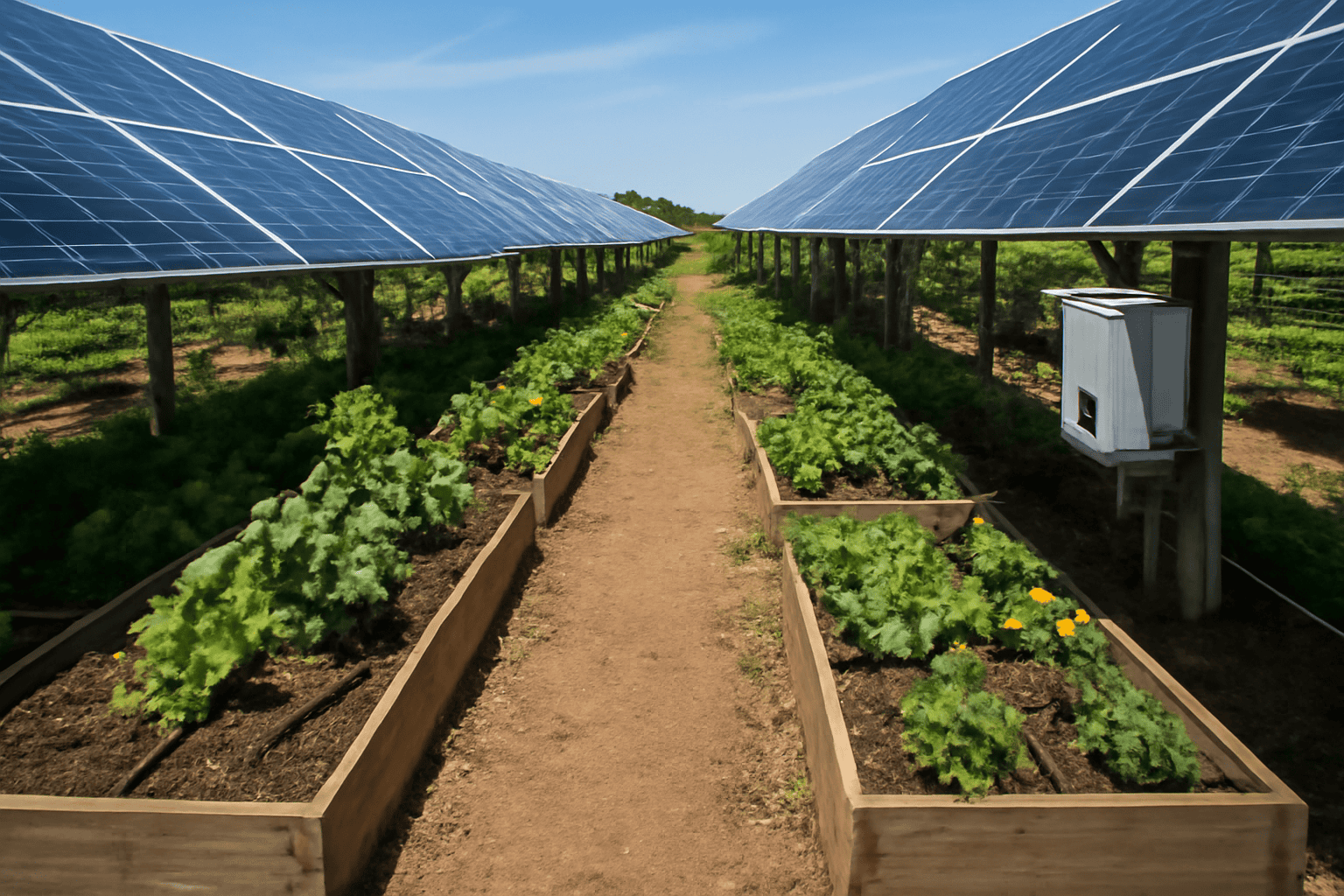
Ten Solar Plus Garden initiative combines solar efficiency with community-based agriculture using an agrivoltaic model. Its 10 MW solar photovoltaic plant powers not only electricity generation but funds a regenerative agricultural community hosting up to 3,000 garden parcels.
The project separates energy production and garden management via distinct legal entities under Estonian and Serbian jurisdictions, ensuring transparent governance and control over revenue flows. Investor membership fees finance solar infrastructure, with returns supporting local food production and community activities.
Optimized spatial design balances solar panels to avoid excessive shading on garden parcels while leveraging microclimatic benefits. This synergy enables high solar panel efficiency without compromising agricultural productivity, aligning energy generation and social impact to deliver dual value streams.
Emerging Trends and Technologies to Watch in Solar Panel Efficiency for 2026-2027
Advancements anticipated in 2026-2027 will influence future solar panel efficiency benchmarks and system design considerations:
- Tandem cells: Combining perovskite layers atop silicon cells promises efficiencies surpassing 30%. Although still in commercialization phases, tandem technology offers potential breakthrough improvements beyond the 22-23% limits of traditional monocrystalline PV.
- Bifacial modules: Continued adoption in commercial projects is expected to increase annual energy yields by 15-20% through rear-side irradiance capture, particularly when ground albedo exceeds 20%.
- Solar trackers: Single- and dual-axis tracking systems adjust panel tilt and azimuth to maximize sunlight capture, delivering production gains from approximately 10% to 25% compared to fixed-tilt installations, depending on latitude and climate.
Regulatory updates within the European Economic Area and Serbia in 2026-2027 will affect incentives and technical requirements, thereby influencing investor risk assessments and project cost structures for high-efficiency solar investments like Solar Plus Garden’s.
Często zadawane pytania
How does shading affect the efficiency of solar panels in a typical residential installation?
Shading on part of a PV panel reduces the current flow in a string of cells, decreasing solar efficiency. Without mitigation, partial shading can cause output losses of up to 30-40%. Use of module-level power electronics such as optimizers or microinverters can reduce losses significantly, by improving the power extraction from unshaded cells.
Are high-efficiency solar panels always the best choice for my investment?
High-efficiency panels produce more energy per square meter but carry higher upfront costs. The optimal choice depends on available installation area, local solar irradiance, and budget constraints. For sites with limited space or high energy demand, investing in high-efficiency modules can improve overall efficiency and savings.
What maintenance steps can help maintain solar panel efficiency over time?
Regular cleaning to remove dust and debris, which can decrease output by 5-15% if neglected, is essential. Scheduled inspections for physical damage and use of monitoring systems to detect underperformance ensure early correction, helping to sustain solar panel efficiency throughout the system lifespan.
How does the Solar Plus Garden project integrate solar panel efficiency into its community membership model?
Solar Plus Garden’s 10 MW solar plant’s high solar panel efficiency enables stable revenue generation, funding community garden activities and providing members with fresh, locally grown produce. The model balances financial returns with environmental and social impact under a transparent, regulated legal framework.
Wniosek
Solar panel efficiency directly influences how much electricity a PV system solar panels produce, thereby impacting energy savings and investment returns. Real-world factors such as shading, temperature, and degradation reduce theoretical efficiency but can be managed through appropriate system design and maintenance to improve efficiency.
Understanding technology differences, environmental influences, and emerging innovations helps investors and property owners make informed decisions balancing costs, performance, and long-term value.
Solar Plus Garden exemplifies integrating high-efficiency solar technology within a community-driven, sustainable agrivoltaic framework, aligning financial objectives with social benefits. Assessing site-specific conditions and staying updated on evolving technologies will support optimal efficiency and savings through 2026 and beyond.
Powiązane lektury
- Jak długo działają panele słoneczne? Zrozumienie żywotności i wydajności paneli słonecznych w czasie
- Zrozumienie fotowoltaiki organicznej: technologia, wydajność i stabilność dla rozwiązań solarnych nowej generacji
- Optymalne praktyki oczyszczania wody energią słoneczną w celu maksymalizacji wydajności fotowoltaicznej