








Comprehensive Guide to Ensuring Solar Fire Safety for Rooftop Photovoltaic Systems
Key Fire Hazards Associated with Rooftop Solar Photovoltaic Systems
Rooftop solar systems introduce specific fire safety hazards primarily driven by their electrical components and exposure to environmental conditions. Understanding the root causes of solar fires supports property owners, project developers, and investors in assessing risk and selecting appropriate safety measures for rooftop solar installations.
Primary Causes of Solar Fires:
- Electrical faults: DC arc faults are the dominant fire hazard, occurring when electrical discharge bridges damaged or loose wiring under DC voltages ranging from 250 V up to over 1000 V typical in utility-scale rooftop solar arrays. These arcs can reach temperatures exceeding 10,000°C, enough to ignite combustibles.
- Component failure: Defective modules, junction boxes, or inverters may generate sparks or overheating due to internal breakdowns. Junction boxes with poor seals are particularly vulnerable to moisture ingress causing insulation breakdown.
- Improper installation: Inadequate cable management, failure to use strain relief, loose connectors, or damaged conduits cause wiring abrasion and discontinuities, increasing arc fault probability on buildings with solar.
Environmental Exposure Risks: Rooftop systems face continuous impacts from UV radiation, temperature cycling between -20°C and 60°C, wind uplift forces, and precipitation, all contributing to insulation degradation and mechanical stress over time. Combustible roofing materials such as asphalt shingles increase fire ignition potential. This combination necessitates robust safety measures specific to rooftop solar.
Incident Data on DC Arc Faults: The United States Fire Administration (USFA) reports that while solar-related fires constitute less than 1% of roofing fires, they are increasing in proportion with the rising adoption of rooftop solar. Analysis of fire incident reports from 2018 to 2025 shows a steady upward trend in fire events linked to electrical faults in solar installations, reaching approximately 0.8 incidents per 10,000 rooftop solar systems annually.
Recognition of these hazards drives the implementation of codes, standards, and safety technologies essential to mitigating solar fire risk effectively in rooftop solar systems.
Critical Fire Safety Codes and Standards Governing Rooftop Solar Installations
Adhering to fire safety codes is crucial to secure legal compliance and mitigate fire risks in solar installations.
Relevant Codes and Standards:
- IEC 62446-1 (Grid-Connected PV Systems – Testing and Documentation): This standard specifies commissioning, documentation, and periodic inspection requirements focused on electrical safety and performance verification of solar systems.
- National Electrical Code (NEC) 2023 Edition (US): Introduced specific mandates for rapid shutdown systems (Article 690.12), requirements for arc fault circuit interrupters (AFCIs) on DC wiring, and defines access pathways for fire departments.
- European Standards: Countries such as Germany and the Netherlands implement regulations harmonized with IEC and EU mandates requiring rapid shutdown technology and fire clearance pathways compliant with local fire codes (e.g., DIN VDE 0100-712 in Germany).
Fire Clearance and Access Path Requirements: A minimum clearance of 36 inches (0.9 meters) is mandated on designated rooftop access routes and near roof edges per NFPA 70 and equivalent European fire codes. These clearances must allow firefighters unrestricted movement to ventilate smoke and deploy equipment safely.
Mandatory Rapid Shutdown Systems: Rapid shutdown functionality must reduce solar panel circuit voltage to below 80 V DC within 10 seconds of activation, enabling safe firefighting operations. The NEC 2023 and European counterparts require integration of these systems either via module-level power electronics or string-level disconnects.
Installation Documentation and Compliance Verification: Detailed inspection reports confirming grounding continuity, rapid shutdown functionality, AFCI operation, and electrical integrity are required at installation and during periodic reviews. Noncompliance risks revocation of building permits and insurance claim denials.
Firefighter Protocols and Challenges When Responding to Solar-Equipped Roof Fires
Fire departments face distinctive hazards and tactical adjustments when extinguishing fires on rooftop solar-equipped buildings.
Electrical Shock Avoidance Procedures: Firefighters treat solar panels as continuously energized sources during daylight, regardless of main disconnect status, due to photovoltaic generation. Standard operating protocols mandate maintaining a safe approach distance and use of insulated tools to prevent DC shock, which is not interrupted by conventional AC breakers.
Limitations on Extinguishment Techniques: Because water conducts electricity, fire departments restrict water application to areas clear of energized solar components. Instead, dry chemical extinguishers (e.g., monoammonium phosphate) or Class C-rated foam agents are deployed selectively on electrical fires to effectively extinguish without conducting current through firefighters.
Thermal Imaging Use in Fault Detection: Thermal imaging cameras pinpoint hotspots beneath solar panels, identifying arc fault locations invisible to the naked eye. This assists in directing firefighters’ efforts and preventing reignition by addressing residual electrical faults.
Coordination with Building Operators: Prompt communication with system operators to activate rapid shutdown protocols is standard procedure upon arrival. This expedites voltage reduction and safer access, minimizing firefighting risks.
Recognized Operational Steps: Firefighters follow a sequence including initial scene perimeter establishment, identification of electrical hazards, deployment of rapid shutdown devices, controlled ventilation, and methodical extinguishing using non-conductive agents per NFPA 70E guidelines and equivalent European fire service standards.
Essential Safety Measures and Technologies to Minimize Solar Fire Risks
Adoption of specialized safety devices and compliance with installation best practices substantially reduce solar fire ignition potential.
Rapid Shutdown Devices: Common systems include module-level power electronics (MLPE) such as optimizers and microinverters or string-level disconnect boxes. These devices comply with NEC 690.12 and reduce circuit voltage beneath 80 V DC within the mandated 10-second window on command or detection of fault conditions.
Arc Fault Circuit Interrupters (AFCIs): Solar-specific AFCIs monitor the DC circuit continuously for irregular current waveforms characteristic of arcing. Devices interrupt current flow within milliseconds upon arc detection. UL 1699B certified AFCIs withstand operational voltages up to 1000 V DC, integrating with inverters or standalone disconnects.
Fire-Resistant Mounting Hardware and Certified Wiring: Use of non-combustible materials such as anodized aluminum rails and stainless steel fasteners complies with fire-resistance requirements per ASTM E119. Wiring employing cross-linked polyethylene (XLPE) insulation with UV rating Type USE-2 and compliance with IEC 62930 withstands outdoor exposure conditions, preventing insulation breakdown leading to arcs.
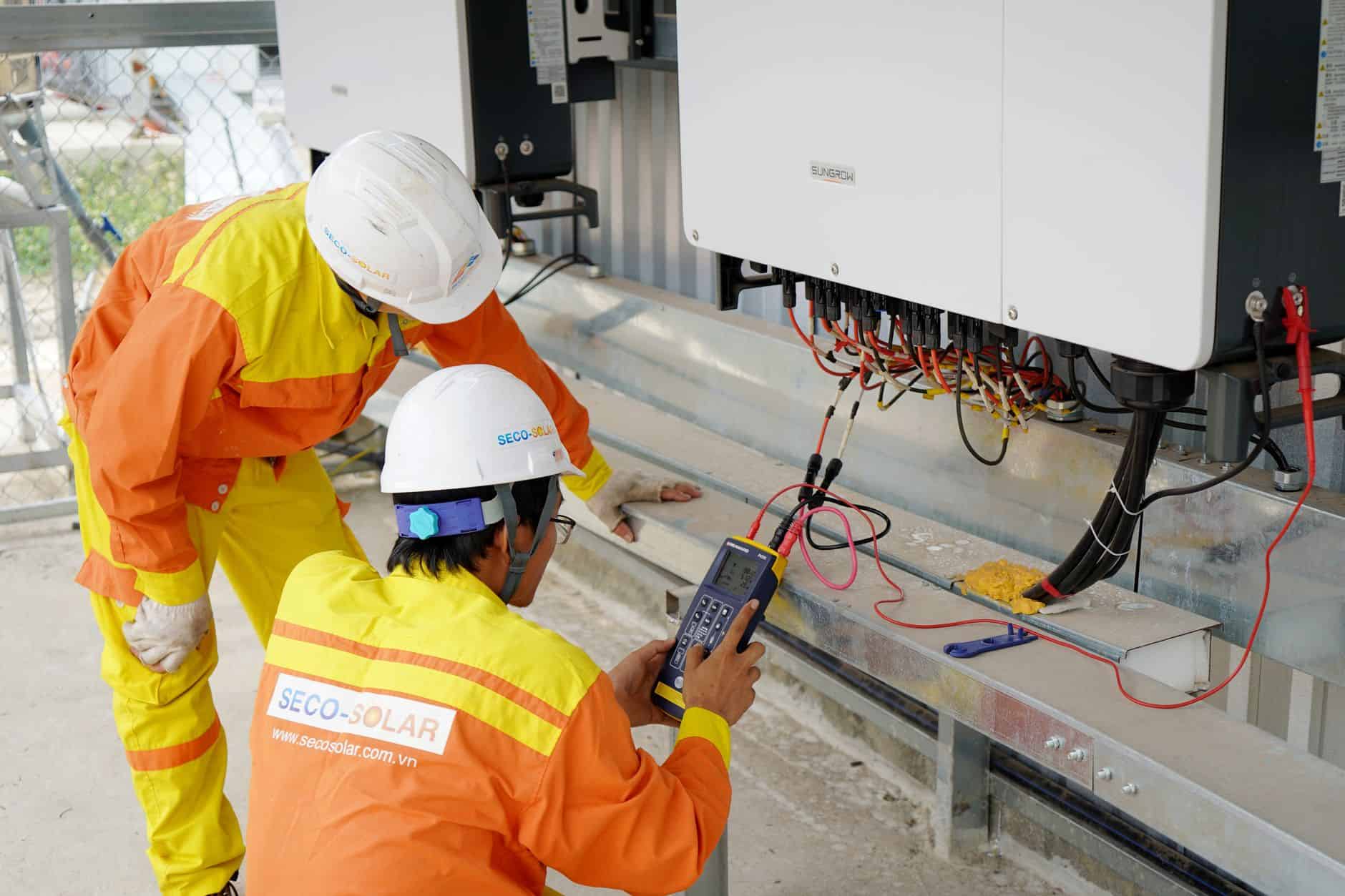
Comprehensive Commissioning and Regular Inspection: According to IEC 62446-3, commissioning includes functional testing of rapid shutdown, arc fault detection, grounding continuity, and inverter fault codes. Scheduled inspections every 12–24 months include visual and electrical diagnostics validated by qualified technicians, ensuring early detection of anomalies.
Integration of these safety technologies translates into measurable risk diminution, justified by reduced incidence of solar fires reported in installations applying them.
Maintenance Practices to Sustain Fire Safety in Operating Rooftop Solar Systems
Continuous maintenance preserves the efficacy of safety features and system reliability.
Scheduled Visual and Thermal Inspections: Visual inspections at least annually examine signs of mechanical damage, corrosion at connectors, cable abrasion, and moisture accumulation within junction boxes. Thermal imaging cameras detect localized hotspots consistent with resistive heating or incipient arc faults, enabling intervention before ignition.
Cleaning Practices: Panel cleaning protocols recommend intervals of 2–4 times per year depending on local dust and debris conditions. Cleaning must avoid excessive moisture intrusion and physical stress on wiring; soft brushes and pH-neutral detergents are standard. Strict procedures preclude electrical hazard creation during maintenance.
Monitoring Inverter and Electrical Parameters: Onboard inverter diagnostics continuously track voltage, current, temperature, and fault codes related to arc events or component failures. Remote monitoring platforms generate alerts when abnormal conditions arise, facilitating rapid response by operators or service contractors.
Fault Response Protocols: Detected electrical faults are addressed within 72 hours by certified technicians following safety standards (e.g., IEC 62446-3). Emergency escalations occur if faults present immediate fire hazards, involving system shutdown and notification of fire safety authorities.
Documentation of maintenance and inspection activities is maintained as part of compliance records, supporting insurance and regulatory obligations while reducing solar fire risk over the system lifecycle.
Interaction Between Building Structures and Solar Fire Safety Considerations
Building materials and design influence solar fire hazards and mitigation strategies.
Roofing Materials and Fire Resistance: Combustible roofing, such as wood shingles or asphalt composite roofs, exhibit ASTM E108 Class C fire ratings at best, elevating fire spread potential under solar arrays. Metal roofs or concrete substrates with Class A fire ratings significantly reduce ignition chances and conform better to rooftop solar fire safety recommendations in NFPA 5000.
Structural Load Capacity and Installation Height: Adequate load-bearing assessment ensures mounting hardware fixes securely without compromising roof integrity. Minimum panel-to-roof clearance of 100 mm improves heat dissipation and fire retardation by impeding heat transfer, while panel spacing configurations can disrupt continuous combustible surfaces limiting fire spread velocity.
Fire Department Access and Ventilation: Solar installation designs incorporate clear flame routes and smoke vent corridors aligned with fire code mandates requiring 0.9 m wide access lanes around arrays. Roof openings or vents facilitate compartmentalization and smoke extraction, critical for effective fire suppression in buildings with solar.
Legal Separation in Solar Plus Garden Model: The Solar Plus Garden project implements a formal legal demarcation: the Estonian OÜ owns and operates the centrale solaire assets, while the Garden community functions under a Serbian DOO managing agrivoltaic and adhésion à la communauté activities. This separation clarifies liability allocation for fire safety governance and regulatory compliance within the integrated rooftop solar and agrivoltaic ecosystem.
Legal and Insurance Implications of Solar Fire Safety for Investors and Property Owners
Fire safety adherence significantly affects legal accountability and insurance standing.
Liability Framework: Installation contractors bear responsibility for compliance with fire safety codes during construction, while property owners retain obligations for ongoing maintenance and inspections. Contractual agreements frequently outline maintenance schedules, inspection responsibilities, and immediate remediation requirements, minimizing litigation risks.
Insurance Underwriting Requirements: Insurers demand verifiable documentation of compliance: installation certificates, commissioning reports verifying rapid shutdown and AFCI functionality, and recent inspection logs. Properties with rooftop solar lacking these records may face higher premiums, restricted coverage, or denied claims following fire incidents.
Regulatory Enforcement Actions: Local building authorities enforce fire safety through periodic inspections. Noncompliance can result in fines, mandates to retrofit systems with compliant safety devices, or suspension of occupancy certificates, impacting property operation and investor confidence.
Solar Plus Garden’s Transparent Ownership Model: The project’s clearly defined ownership and operational entities promote transparent governance and risk management. This structure facilitates proactive identification and resolution of fire safety issues, reducing hidden liabilities and enhancing investor protection in the complex regulatory environments of Estonia and Serbia.
Innovations Enhancing Solar Fire Safety Beyond Current Standards
Emerging technologies expand capabilities for preventing and managing solar fire risks beyond existing code requirements.
Smart Monitoring Systems with AI Integration: Advanced platforms employ machine learning algorithms analyzing high-frequency electrical data to detect subtle arc fault precursors undetectable by traditional AFCIs. Pilot studies report these systems reduce false positives by 30% and enable earlier detection of insulation degradation, supporting predictive maintenance regimes.
Fire-Retardant Coatings: Experimental coatings based on intumescent polymers applied to solar glass surfaces and frame components have demonstrated reduced flame spread rates and increased self-extinguishing behavior in UL 1703 testing. Ongoing certification is assessing durability under outdoor exposure and photovoltaic efficiency impacts.
Agrivoltaic Layouts with Fire-Resilient Vegetation: Within Solar Plus Garden’s concept, integrating low-flammability plant species such as lavender and rosemary as buffer zones between solar arrays reduces fire spread likelihood. Strategically placed vegetative firebreaks supplement mechanical safety measures, providing a layered fire mitigation approach.
Electrical System Architecture Innovations: New designs incorporating distributed inverters paired with segmented DC string wiring reduce maximum DC voltage per segment from typical 600–1000 V to below 150 V, significantly lowering arc fault severity. Combined with improved polymeric insulation materials, these architectures provide inherent fire hazard reduction alongside device-level protections.
Commercial adoption of these innovations depends on regulatory certification, cost-benefit analyses, and operational integration but indicates a clear trajectory towards more resilient rooftop solar fire safety aligned with sustainability goals.
Foire aux questions (FAQ)
What are the primary causes of fires in rooftop solar photovoltaic systems?
The primary causes are DC electrical faults including arc faults caused by damaged wiring or loose connections, faulty components like junction boxes and inverters, and improper installation resulting in mechanical damage. Environmental stress leading to insulation degradation also contributes to fire ignition.
How does rapid shutdown technology improve safety during solar system fires?
Rapid shutdown quickly reduces DC voltage to below 80 V within 10 seconds, minimizing shock hazards for firefighters and emergency personnel. This reduces both ignition risk from energized components and facilitates safer fire department intervention.
What clearance distances must be maintained around rooftop solar panels for fire department access?
Minimum clearances of 36 inches (0.9 meters) around designated access pathways and roof edges are required by codes such as NFPA 70 and European fire regulations. These clearances allow firefighting personnel to navigate safely and operate ventilation and suppression equipment effectively.
Can regular maintenance prevent solar fires, and what does it typically include?
Yes. Scheduled visual inspections to detect physical damage, thermal imaging to identify hotspots, cleaning to prevent debris accumulation, and inverter parameter monitoring help detect early signs of electrical faults, reducing fire risk. Maintenance follows standards IEC 62446-3 and includes prompt fault remediation.
Conclusion
Mitigating rooftop solar fire hazards requires comprehensive adherence to established safety codes, integration of advanced fire safety technologies including rapid shutdown and AFCIs, and rigorous maintenance regimes. Fire department collaboration to secure rooftop access and incorporate specialized firefighting procedures is essential. Solar Plus Garden’s agrivoltaic community model incorporates these elements with transparent legal structuring to ensure sustained investment protection and community safety amid evolving solar energy landscapes. Continuous monitoring of technology advances and regulatory frameworks will be critical to maintaining effective solar fire safety for rooftop solar systems in 2026–2027 and beyond.