






Solar Best Practices for Successful Project Design, Operations, and Maintenance
Key Design Considerations to Maximize Solar PV Efficiency
Effective solar project design combines expert knowledge and systematic evaluation of site-specific parameters to maximize energy output and system durability. The design process begins with a comprehensive site assessment, including irradiance measurement, topography mapping, and shading analysis using solar pathfinders or LiDAR-based modeling tools. These measures support adherence to best practices documented in solar industry handbooks and standards.
Panel tilt angles between 20° and 35° optimize annual solar irradiance capture for mid-latitude regions between 35° and 50° latitude; this range can vary by ±5° depending on seasonal energy prioritization—tilting steeper for winter-optimized solar gain or flatter for summer. Azimuth orientation should align panels as close as possible to true south (±10° tolerance) in the northern hemisphere or true north in the southern hemisphere. Adjustments account for landscape obstacles and microclimate effects such as prevailing winds or reflective surroundings.
Shading analysis employs tools like PVsyst and Helioscope, which simulate the impact of shading from trees, buildings, or terrain for intervals as short as 5-minute increments over annual cycles. Even brief shading over portions of a panel can reduce string output by 10-25%, necessitating string layout optimization and bypass diode selection to minimize losses.
Selecting PV modules depends on efficiency, durability, and cost within design constraints. Monocrystalline silicon solar panels typically feature conversion efficiencies of 18-22%, with module power ratings assessed under Standard Test Conditions (STC) of 1000 W/m² irradiance and 25°C cell temperature following IEC 61215 certification. Polycrystalline modules offer efficiencies around 15-18%, often at lower initial cost. Modules meeting IEC 61215 undergo tests for thermal cycling, humidity freeze, mechanical load, and PID resistance, ensuring stable output over a minimum 25-year lifespan.
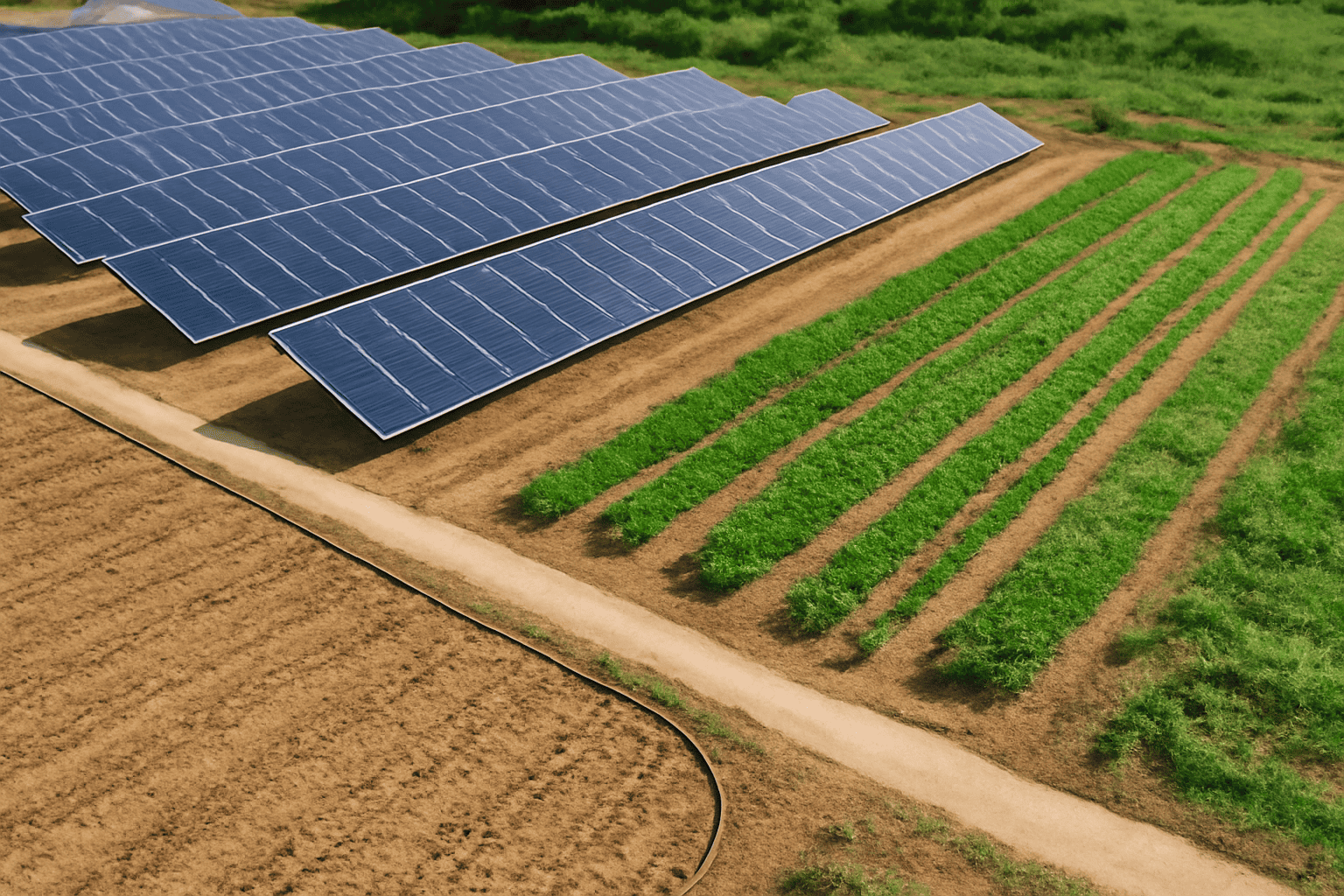
Bifacial solar panels integrate dual-sided photovoltaic cells to capture albedo reflected light, potentially increasing energy yields by 10-15% depending on ground reflectivity, tilt, and mounting height. Agrivoltaic designs co-locate standard solar arrays with under-canopy crops that benefit from partial shade, reducing evapotranspiration and boosting land productivity by as much as 10-15% compared to separate agricultural or solar-only systems, aligned with agrivoltaics research published in 2025 agronomy journals.
Electrical design involves configuring DC string lengths within inverter voltage input limits to avoid clipping losses, typically restricting string voltage to 600-1000 V DC for common inverters like SMA Sunny Tripower or Huawei SUN2000 series. Inverter selection must include advanced Maximum Power Point Tracking (MPPT) algorithms for accurate adaptation to irradiance variability. Properly sizing DC/AC ratios between 1.1 and 1.3 balances inverter loading efficiency and clipping risk in regional solar profiles.
Selecting Reliable Solar Components for Long-Term Performance
Component selection shapes the long-term viability of solar projects by emphasizing certified performance, warranty coverage, and proven reliability under field conditions. Expert evaluation frameworks review technical datasheets, international certifications, and manufacturer track records.
PV modules generally carry a 25-year performance warranty guaranteeing at least 80% of the original nominal power capacity, assuming an average annual degradation rate near 0.5%. Inverter warranties typically range from 10 to 15 years with options for extended coverage. Selecting inverters with integrated remote monitoring and predictive fault diagnostics enhances O&M efficiency and reduces unplanned downtime.
Quality standards enforcing safety and reliability include IEC 61730 parts 1 and 2 for photovoltaic module electrical and mechanical safety, and UL 1741 certification for inverters ensuring grid interconnection compatibility and anti-islanding protection. Components certified under these standards meet strict requirements on insulation, fire resistance, and surge protection.
Balance of system (BOS) components such as corrosion-resistant aluminum or stainless-steel mounting racks, double-insulated PV cables rated for at least 1.5 kV DC, and fused combiner boxes manufactured following IEC 60947 support operational safety and durability. Use of high-transparency tempered glass exceeding 3.2 mm thickness and anti-reflective coatings protect panels from mechanical stress, hail impact (tested to Class 3 per IEC 61215), and UV degradation, extending system lifespan beyond 25 years.
An expert design handbook recommends procurement from suppliers providing traceable certification documents, batch testing records, and warranty backstops to mitigate risks associated with component failures or premature degradation that could affect IRR and asset valuation.
Operations and Maintenance Guidelines to Sustain Solar Plant Output
Structured operations and maintenance (O&M) protocols sustain solar PV system performance and ensure contractual warranty compliance. O&M schedules align with lifecycle stages and environmental conditions to preempt system failures and optimize output.
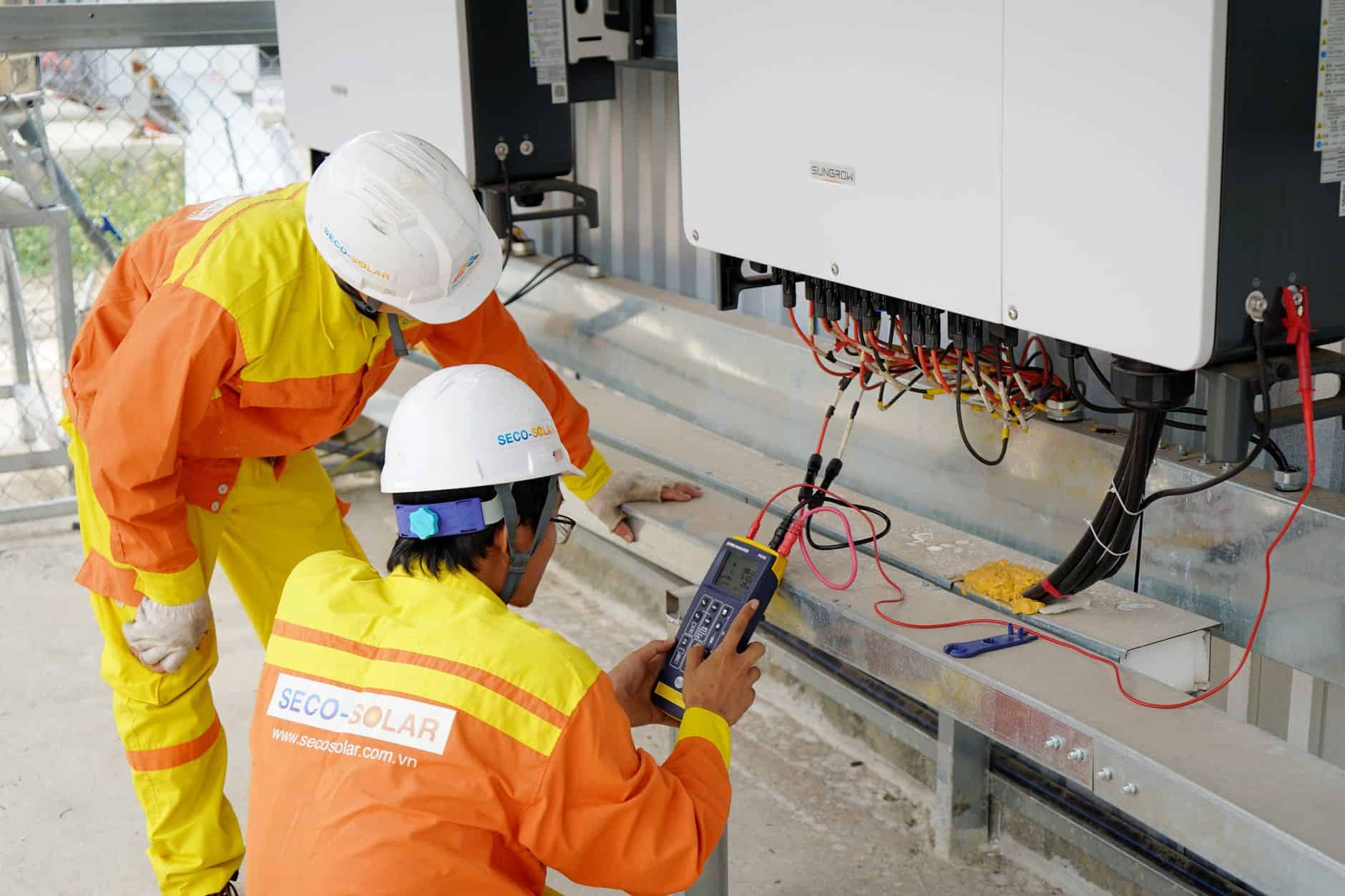
Preventive maintenance includes quarterly site inspections covering module surface integrity, string current measurements, torque checks on electrical connectors, and inverter firmware updates. Annual performance audits involve detailed I-V curve tracing and energy yield analysis against modeled expectations using PVSyst or equivalent software. These audits detect progressive performance losses or system-wide faults.
Cleaning frequency depends on local soiling rates quantified through on-site measurements or regional studies. In arid or dusty climates (e.g., Mediterranean or Central Asian regions), monthly cleaning is necessary with expected losses from soiling ranging between 5-10%. Cleaning implements use soft-bristle brushes and deionized water where available, or automated robotic systems designed per manufacturer protocols for water efficiency and panel safety.
Remote monitoring platforms based on SCADA systems or commercial energy management software collect data points such as Performance Ratio (PR), inverter efficiency, and string-level current and voltage at 1-minute to 15-minute intervals. This telemetry supports automatic fault alarms and trend analysis.
Fault detection employs thermographic inspections conducted biannually using infrared cameras to identify hot spots on PV modules, indicating partial cell failures or bypass diode issues. I-V curve tracers, compliant with IEC 61215-1 test procedures, identify mismatches or inverter malfunctions by comparing voltage-current relationships under standard test conditions.
Corrective maintenance targets downtimes of less than 48 hours for critical components like inverters and safety disconnects. Operators maintain logs of work orders and maintenance activities for audit and warranty claim substantiation, aligning reporting formats with investor requirements.
Evaluating Project Performance: Metrics and Benchmarking
Evaluating solar project performance requires systematic measurement and benchmarking to quantify efficiency, detect deviations, and guide maintenance or optimization decisions.
The Performance Ratio (PR), expressed as a percentage, is defined as the ratio of actual AC output energy to reference energy derived from plane-of-array irradiance and ambient temperature corrections. Typical PR values range from 75% to 85% for projects using high-quality monocrystalline modules and well-maintained balance-of-system equipment. Variations outside this range trigger detailed fault investigations.
Energy yield normalized per installed capacity (kWh/kWp/year) standardizes output assessment across sites. Regional solar irradiance anisotropy leads to variations: for instance, sites in Southern Europe may average 1200-1400 kWh/kWp/year, while Northern European locations may record 900-1100 kWh/kWp/year, with adjustments for system losses and availability.
Benchmarking uses databases like the PV Performance Database and modeling platforms such as PVSyst, which incorporate local meteorological data to forecast expected yields. Continuous comparison of actual data against models identifies underperformance from soiling, shading, or equipment degradation within seasonal cycles.
Tracking degradation rates over multi-year timeframes informs maintenance prioritization and asset revaluation. Standardized reporting uses IEC 61724-1 compliant formats encompassing monthly energy yields, PR trends, inverter availability, and downtime records, combined into investor reports that balance technical and financial transparency.
Agrivoltaic projects incorporate combined land productivity indicators calculated as the sum of electrical output (kWh) plus agricultural product yield (kg or tons per hectare). Published case studies demonstrate that structured planting below solar arrays can enhance land use efficiency by 10-15%, enabling dual revenue streams.
Incorporating Community and Agrivoltaic Models into Solar Projects
Solar Plus Garden integrates a 10 MW solar photovoltaic installation within a replicable community and agrivoltaic framework designed to extend project benefits beyond electricity generation.
The project employs a separation of assets where the solar power plant is owned and operated by a Serbian DOO (limited liability company), while the Garden community activities are managed by a separate legal entity holding exclusive rights to the Garden concept and content. This legal separation clarifies governance, financial flows, and liability, supporting compliance with cross-border investment regulations.
Garden membership operates under a fee structure of a one-time €200 membership payment complemented by an optional €20 monthly subscription for a Garden box providing 18 annual deliveries of seasonal, locally grown vegetables and herbs. Notably, community participation is available without solar investment, expanding accessibility and inclusivity.
The agrivoltaic integration allows a maximum capacity of up to 3,000 garden parcels (boxes), facilitating scalable land utilization. Dual-use land increases total productivity by as much as 10-15% compared to conventional solar farms, in line with recent research published by agrivoltaic consortiums in 2025.
Financial flows follow a structured payment and escrow model, which ensures community membership fees are pooled and allocated transparently to solar project maintenance and community programming. This model excludes off-balance-sheet or escrow-like mechanisms lacking full regulatory clarity. Investor-ready narratives and pitch materials clearly delineate these arrangements for informed decision-making.
Regulatory and Legal Frameworks Guiding Solar Project Best Practices
Solar Plus Garden operates within a documented legal and regulatory structure that secures investor protection, regulatory compliance, and operational transparency.
The registered Estonian OÜ holding company, incorporated on 20.02.2026, provides a corporate framework for cross-border operations and investment management. This entity structure supports adherence to EU legislation on renewable energy, financial disclosures, and data privacy through GDPR compliance.
Permitting and grid connection procedures comply with national and European Union directives, including but not limited to the Renewable Energy Directive (RED II) and local grid codes. These frameworks govern interconnection agreements, power quality standards, and feed-in tariffs (where applicable), subject to evolving regulatory conditions in 2026-2027.
Investor fund flows are controlled through transparent escrow agreements that release payments contingent on verified milestones, with independent auditing reports provided to stakeholders. The organizational separation between solar asset ownership and Garden community management mitigates conflict of interest risks and delineates financial and operational responsibilities.
Investor due diligence encompasses strict KYC and KYB protocols to comply with anti-money laundering regulations and tax obligations. These processes ensure only compliant individuals and entities participate in the investment and membership structures, reinforcing project governance and reporting integrity.
Expert Recommendations for Scaling Solar Projects with Sustainable Investment
Scaling solar projects benefits from a methodical approach combining phased capital deployment, integration of community engagement models, and continuous knowledge management.
Solar Plus Garden segments its 10 MW installation into discrete phases, aligning investment products to investor risk profiles: Phase 1 offers long-term equity shares while Phase 2 provides guaranteed payout investment options. This phased investment strategy balances risk mitigation with capital efficiency over multi-year development horizons.
Investor communication relies on transparent pitch decks underpinned by documented decision logs maintained in Notion. Execution activities delegate to task management software Trello, providing operational clarity and audit trails for all project milestones and decisions.
The use of Notion AI enhances internal expertise transfer and accelerates onboarding by generating role-specific task lists, summarizing decision histories, and querying governance documentation. This system supports consistent application of solar best practices across expanding teams and geographies.
Long-term sustainability focuses on blending financial returns from stable solar generation with the community-derived non-financial benefits of agrivoltaics and regenerated food systems. This hybrid value proposition positions projects to attract impact-focused investors seeking measurable environmental and social outcomes alongside renewable energy returns.
Frequently Asked Questions
What are the most critical factors to consider during solar PV system design?
Critical factors include accurately setting panel tilt between 20°-35° relative to local latitude, orienting panels toward true south or true north within ±10°, conducting detailed shading analysis with modeling software, selecting IEC 61215-certified and efficient PV modules, and configuring electrical strings with appropriately rated inverters to optimize voltage, avoid clipping, and ensure long-term reliability.
How often should solar panels and systems be maintained to ensure optimal performance?
Best practices call for quarterly preventive maintenance inspecting electrical and mechanical integrity, with monthly cleaning recommended in dusty or arid climates to mitigate 5-10% soiling losses. Real-time performance monitoring using SCADA or remote systems should be continuous to enable swift fault identification and corrective actions.
Can I join the Solar Plus Garden community without making a solar investment?
Yes. Access to the Garden community is provided through a membership fee separate from direct investment in the solar asset. Membership supports community activities financed by fees alongside solar project maintenance funding.
What standards ensure the quality and safety of solar project components?
PV modules must comply with IEC 61215 for performance and IEC 61730 for safety certifications, while inverters are required to meet UL 1741 standards ensuring safe grid integration and anti-islanding protection. These certifications confirm product reliability and investor confidence.
Conclusion
Applying solar best practices entails rigorous design rooted in precise site analytics, selecting certified, durable components aligned with project specifications, and establishing structured O&M supported by detailed monitoring and fault detection tools. Integrating social and agrivoltaic community frameworks, as implemented by Solar Plus Garden, extends the value proposition beyond renewable energy to include local food production and stakeholder engagement. Compliance with evolving regulatory landscapes and transparent governance safeguards investment security and operational transparency. Continuous evaluation and adaptation of these practices remain necessary as technology standards, regulations, and market conditions evolve through 2026 and beyond.