










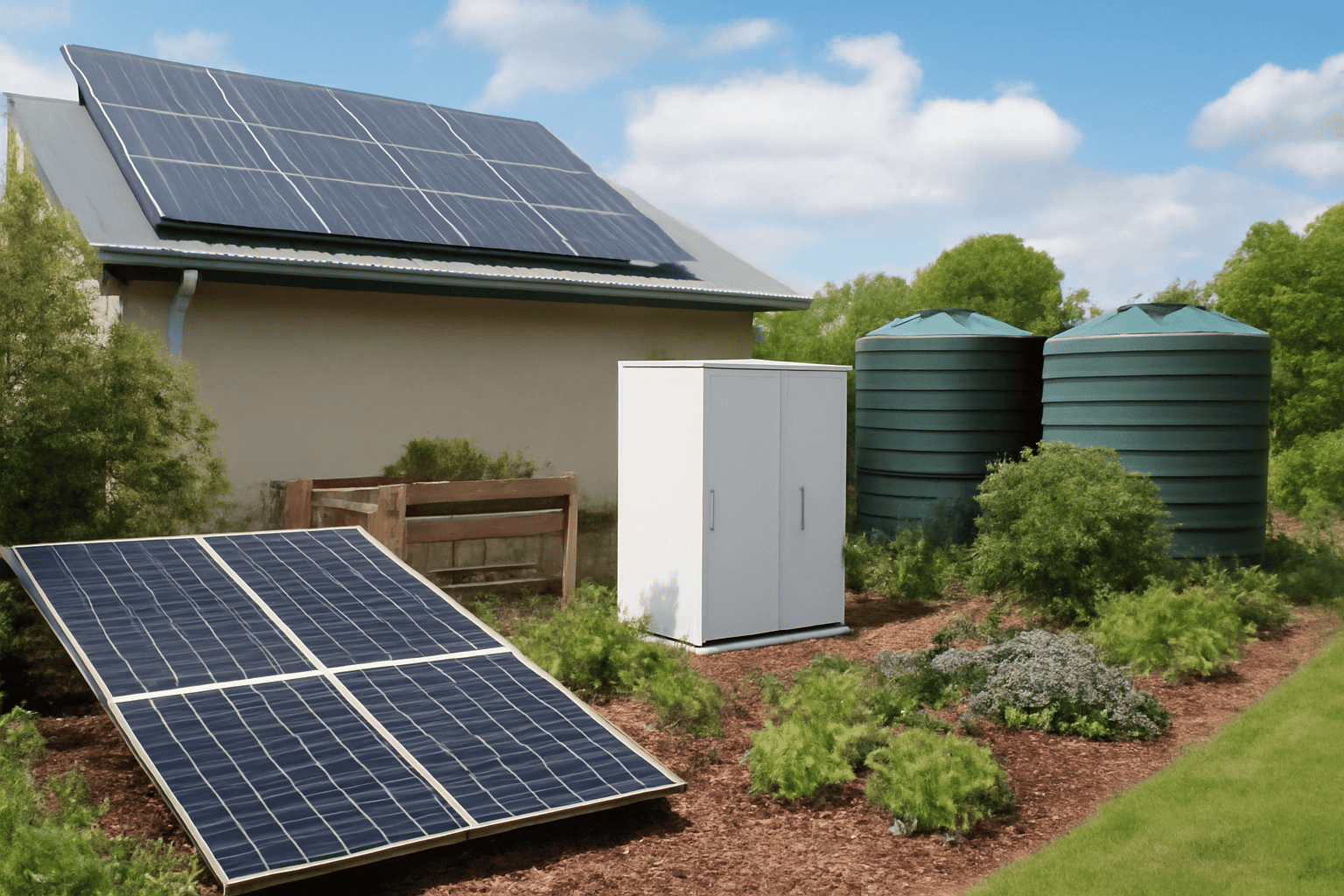
Integrating Battery Energy Storage Systems (BESS) for Optimized Solar Power Generation and Grid Management
Key Components and Architecture of Solar BESS Integration
Integrating BESS with solar PV requires a system architecture that incorporates photovoltaic arrays, battery modules, power conversion systems (PCS), and an energy management system (EMS) working in unison. Solar PV arrays convert solar irradiance into direct current (DC), which can be either consumed on site, stored in batteries, or injected into the utility grid.
Battery technologies predominantly used include lithium-ion chemistries such as NMC (nickel manganese cobalt) and LFP (lithium iron phosphate), with flow batteries like vanadium redox serving niche applications requiring long-duration storage. Lithium-ion batteries typically provide energy capacity densities of 150-250 Wh/kg and cycle lives ranging from 3,000 to 5,000 cycles at approximately 80% depth of discharge (DoD).
The PCS in solar BESS installations includes bidirectional inverters capable of handling ±1 MW per unit for medium-scale projects, converting DC battery power to 50 Hz/230 VAC grid power (European standard). These inverters support both grid-tied injection and controlled charging from the grid or solar PV.
Two main coupling configurations dictate the physical and electrical layout:
- AC Coupling: The battery system connects on the AC side, downstream of standard solar inverters. This approach simplifies retrofitting existing solar PV plants by avoiding changes to already installed DC cabling. However, it introduces two conversion steps—DC to AC by the solar inverter, then AC to DC by the battery inverter during charging—resulting in typical round-trip efficiencies of 85-88%.
- DC Coupling: Batteries integrate directly with the DC bus between solar panels and the inverter, reducing power conversions to one step (DC to AC), with round-trip efficiencies typically exceeding 90%. DC coupling necessitates integrated PCS and more complex EMS coordination but increases overall system performance.
Integration decisions account for factors including existing infrastructure, desired efficiency, initial capital expenditure, and operational flexibility. For 10 MW solar plants like Solar Plus Garden’s, modular PCS units and battery packs sized around 1 MW/2 MWh increments facilitate phased installation and maintenance.
Communication interfaces implement protocols such as Modbus TCP/IP and IEC 61850 to enable real-time data exchange between PV arrays, battery modules, PCS, EMS, and transmission system operators (TSOs). Standardized data exchange supports remote monitoring, fault diagnostics, and automated control to maintain grid compliance and optimize asset utilization. Utility-scale BESS capacities under consideration range from 2 MW/4 MWh up to 10 MW/40 MWh aligned with solar plant scale and community energy demand.
Energy Management Systems (EMS): Central to Coordinating Solar and Battery Operations
The energy management system integrates control logic for solar BESS operation, optimizing power flows based on forecasted solar irradiance, load profiles, and grid signals. EMS software platforms employ meteorological data with temporal resolution of 5-15 minutes and historical generation databases to schedule battery charge/discharge cycles over horizons of 24-72 hours.
Real-time EMS control typically runs with feedback loops refreshed every 1 to 5 seconds, adjusting inverter setpoints for dispatch, regulating battery state-of-charge (SoC) within manufacturer-prescribed bands (e.g., 10%-90%), and implementing cycling strategies that maximize battery lifetime while meeting demand obligations.
Key EMS functionalities include:
- Peak shaving: Reduces grid peak loads during high demand intervals by discharging stored energy, thus mitigating grid congestion and lowering operational costs for system operators.
- Load leveling: Smooths fluctuating solar output caused by transient cloud cover through controlled battery compensation, facilitating stable power injection to the grid.
- Frequency regulation: Supports grid stability by rapidly responding to frequency deviations within ±0.1 Hz, using fast activation BESS capabilities compliant with ancillary service requirements.
EMS interfaces with PCS and grid operator SCADA systems via IEC 61850, ensuring integration with substation automation and secure communication environments designed to meet IEC 62443 cybersecurity standards. This real-time coordination guarantees adherence to dynamic grid codes while enabling flexible asset dispatch aligned with market signals or community needs.
Grid Compliance and Stability: Regulatory and Technical Requirements for Solar BESS Systems
Grid codes applicable to photovoltaic plants with integrated BESS in Europe are regulated by ENTSO-E guidelines and national grid operators such as Elektromreža Srbije (EMS) and Elering in Estonia. These codes define technical and operational characteristics to ensure safe, reliable, and resilient grid interaction.
Key grid code requirements include:
- Voltage regulation: Power electronic devices in BESS must maintain output voltages within ±5% of nominal low-voltage (230 V) or medium-voltage (up to 20 kV) levels.
- Frequency response: Systems must operate continuously within the normal frequency band of 49.8 to 50.2 Hz and provide primary frequency control by adjusting active power output within ±10% of rated power in response to deviations.
- Ramp rate control: Limits on power increase or decrease rates, typically set between 5% and 10% of nominal power per second, prevent destabilizing load transients.
- Fault ride-through (FRT): Ability to remain connected during voltage dips lasting up to 150 milliseconds (per EN 50160) is mandatory, enabling continuous support during short grid faults.
- Reactive power support: Capability to supply or absorb reactive power within ±0.4 power factor range improves voltage stability and reduces grid losses.
Failure to meet these requirements can lead to deployment delays, curtailment of export capacity, or regulatory penalties. Hence, Solar Plus Garden’s technical design integrates grid code compliance verification early in development, with control system parameters adjustable for regional standards.
Battery Technology Selection: Trade-offs Between Performance, Cost, and Lifecycle
Battery technology choice for BESS integration balances metrics such as energy density, cycle life, depth of discharge (DoD), thermal management needs, and capital plus operational expenditure.
- Lithium-ion (Li-ion): Dominant in utility solar BESS deployments, Li-ion packs operate at DoD of up to 90%, delivering energy efficiencies of 90-95%. Their typical lifespan equates to 3,000-5,000 full equivalent cycles, translating to 10-15 years under grid support operational modes assuming balanced charge/discharge profiles. Advanced thermal management using liquid cooling is common to mitigate degradation and ensure safety.
- Flow batteries: Technologies like vanadium redox flow batteries exhibit cycle lives exceeding 10,000 cycles at 100% DoD, suitable for daily deep cycling applications with consistent capacity retention. However, their lower energy density (20-50 Wh/kg) results in larger footprint requirements and higher capital costs. They also necessitate auxiliary pumps and electrolyte management hardware.
- Emerging chemistries: Solid-state and metal-air batteries are undergoing field validation but currently lack commercial scale deployments with standardized energy management support.
Battery degradation results from calendar aging (time-dependent capacity reduction) and cycling stress (capacity fade proportional to cycles and DoD). Lifecycle cost modeling incorporates anticipated replacement or second-life utilization after 10+ years, influencing investment planning for projects such as Solar Plus Garden’s phased deployment.
Compatibility with PCS and EMS architectures varies by chemistry; lithium-ion benefits from extensive standardization with off-the-shelf inverters and mature energy management protocols. Flow battery integration requires tailored PCS for DC bus connection and custom EMS logic to manage electrolyte flow and state-of-charge estimation.
Operational Benefits and Challenges When Integrating BESS with Solar PV Plants
Solar BESS integration enables more predictable and stable power delivery, addressing inherent variability of solar PV output due to weather conditions and diurnal cycles.
- Intermittency mitigation: BESS smooths solar generation volatility on timescales from seconds to hours, using real-time EMS control to stabilize injection into the grid and improve compliance with ramp rate limits.
- Load shifting and peak demand support: Charging during low tariff or off-peak periods and discharging during peak grid demand increases solar asset utilization beyond daylight hours and enhances revenue streams through energy arbitrage.
- Capacity factor improvement: Battery firming increases effective solar plant availability by up to 25-30%, allowing for contracted firm power delivery and participation in ancillary service markets.
Challenges involve managing electrical harmonics generated by bidirectional inverters, which require passive or active harmonic filters to meet power quality standards (IEC 61000-3-2). Thermal management systems must maintain battery temperatures within manufacturer limits (typically 15-35°C) via active liquid cooling or air circulation to preserve performance and reduce aging.
High-frequency cycling can accelerate capacity fade; thus, advanced EMS employs optimized charge-discharge algorithms based on state-of-health monitoring to extend battery lifetime by minimizing high SoC ranges and avoiding deep discharges where possible.
Predictive maintenance enabled by continuous BESS data acquisition and analytics reduces unplanned downtime by identifying early fault signs such as increased internal resistance or cell voltage imbalance. Reliability improvements translate into operational cost savings over multi-year project horizons.
Industry examples report commercial solar BESS installations increasing plant dispatchability by approximately 25-30%, achieving better revenue stability and grid support capability.
Scalability and Integration Pathways Within Solar Plus Garden’s 10 MW Solar Project Framework
Solar Plus Garden employs a modular BESS deployment strategy to match the progressive scale-up of its 10 MW solar PV capacity and community membership growth. Initial BESS installations target 1 MW/2 MWh units, allowing staged capacity expansion aligned with investor funding and technical maturity over a 24-month horizon.
BESS modules integrate within a multi-stakeholder platform connecting investors, community members, and agrivoltaic operations through a transparent payment and escrow system governed under Estonian OÜ and Serbian DOO structures. This configuration facilitates clear tracking of investment inflows and operational costs, including BESS maintenance and upgrades.
The energy storage integration aligns with community energy consumption patterns revealed by load profiling of garden activities (e.g., irrigation, lighting), prioritizing local usage to reduce grid export dependence and optimize behind-the-meter value capture.
The project’s technical roadmap includes regular EMS software updates to incorporate algorithmic improvements and hardware refreshes scheduled every 5 years to maintain grid code compliance and enhance system resilience in response to evolving regulatory frameworks and technology advancements.
Integration of Control Systems in Hybrid Solar-Agri-BESS Operations
Solar Plus Garden’s hybrid system features integrated control systems orchestrating solar PV generation, battery dispatch, and variable agricultural load management based on real-time data acquisition.
Control algorithms dynamically modulate battery charging and discharging by monitoring photovoltaic output and battery state-of-charge, simultaneously adjusting agricultural load devices such as irrigation pumps (variable speed drives), greenhouse LED lighting, and climate control elements through programmable logic controllers (PLCs).
Distributed sensors—including soil moisture probes, ambient temperature/humidity sensors, and solar irradiance meters—feed data to an IoT-enabled supervisory control and data acquisition (SCADA) platform. This platform processes microclimate data and energy consumption metrics with latencies below 100 milliseconds to ensure timely adjustments.
The EMS incorporates feedback loops that correlate battery dispatch schedules with seasonal agricultural demand cycles, increasing battery discharge during peak irrigation days and reducing it during dormant periods. This adaptive energy strategy enhances operational efficiency while preserving battery lifespan and ensuring crop productivity.
Maintenance Strategies and Lifecycle Management for Solar BESS Systems
Robust maintenance regimes underpin safety and reliability of integrated solar BESS operations.
- Routine inspections: Quarterly checks involve battery diagnostic testing using impedance spectroscopy and capacity measurement to track capacity fade and internal resistance increases. PCS and inverter thermal imaging and electrical testing confirm mechanical and electrical integrity.
- Predictive maintenance: EMS data analytics run continuous health assessments using machine learning algorithms to forecast degradation trends, enabling planned interventions and reducing unexpected failures by an estimated 40% compared to reactive maintenance.
- Safety protocols: Implement temperature sensors, fault isolation switches, and emergency shutdown sequences designed per IEC 62619 (Lithium-ion battery safety) and IEC 62933 (energy storage system safety). These mitigate risks such as thermal runaway and electrical faults.
- End-of-life management: Batteries reaching 70-80% of original capacity are considered for second-life applications, such as stationary grid-support roles with lighter cycling demands, or are dismantled and recycled following strict European Union environmental directives (WEEE and Battery Directive 2006/66/EC) to reclaim valuable metals and minimize waste.
These processes ensure sustained performance, regulatory compliance, and cost-effective asset management over the 15-year typical project lifespan.
Frequently Asked Questions
What are the main benefits of integrating BESS with solar PV systems?
Integration reduces solar generation intermittency, improves grid stability via frequency and voltage support, enables load shifting to balance supply and demand, increases solar plant dispatchability by up to 30%, and enhances revenue predictability through strategic energy time-shifting enabled by an energy management system.
How do AC and DC coupling differ in solar BESS integration, and which is preferable?
AC coupling connects batteries after the solar inverter on the AC side, offering simpler retrofits without DC-side changes but with slightly reduced round-trip efficiency (85-88%). DC coupling connects batteries directly to the DC bus before inversion, improving efficiency (>90%) but requiring more complex integrated power conversion and control systems. The choice depends on existing infrastructure, desired efficiency, and cost considerations.
What grid code requirements must Solar BESS systems meet in European markets?
Systems must comply with voltage tolerance limits typically ±5%, frequency operation within 49.8-50.2 Hz, ramp rate restrictions often 5-10% of rated power per second, fault ride-through capability lasting approximately 150 milliseconds, and communication compatibility with grid operator protocols such as IEC 61850 to enable real-time control and ancillary services participation.
How does Solar Plus Garden’s community membership model support BESS investment and operation?
Community membership fees are allocated exclusively to solar asset investments including BESS, managed via legally distinct entities under Estonian and Serbian law structures. A transparent payment and escrow model ensures that revenue from solar generation finances BESS operation and community activities, aligning member interests with sustainable asset management.
Conclusion
Effective integrating BESS within Solar Plus Garden’s 10 MW solar PV project necessitates aligning battery technology selection, energy management system capabilities, and grid code compliance with both project scale and local community energy demands. Modular BESS deployment enables phased capital investments reducing upfront risk, while advanced control systems support hybrid solar-agricultural power needs.
Consistent adherence to evolving regulatory requirements, ongoing monitoring of battery health, and transparent financial governance structures are essential for maintaining operational performance, optimizing economic returns, and sustaining community engagement. Collaborating closely with technical teams and regulatory bodies will facilitate adaptive integration strategies supporting long-term project success and renewable energy contribution.