









How Agrovoltaics Benefits Farmers: Integrating Solar Panels with Agriculture for Enhanced Productivity and Resilience
Understanding Agrovoltaics: Dual Land Use for Farming and Solar Energy
Agrivoltaics, also known as agrovoltaics, involves co-locating solar photovoltaic panels on active farm land to facilitate simultaneous crop cultivation or livestock grazing alongside renewable energy production. This contrasts with traditional solar farms that typically exclude agricultural activities by occupying the entire land parcel solely for energy production.
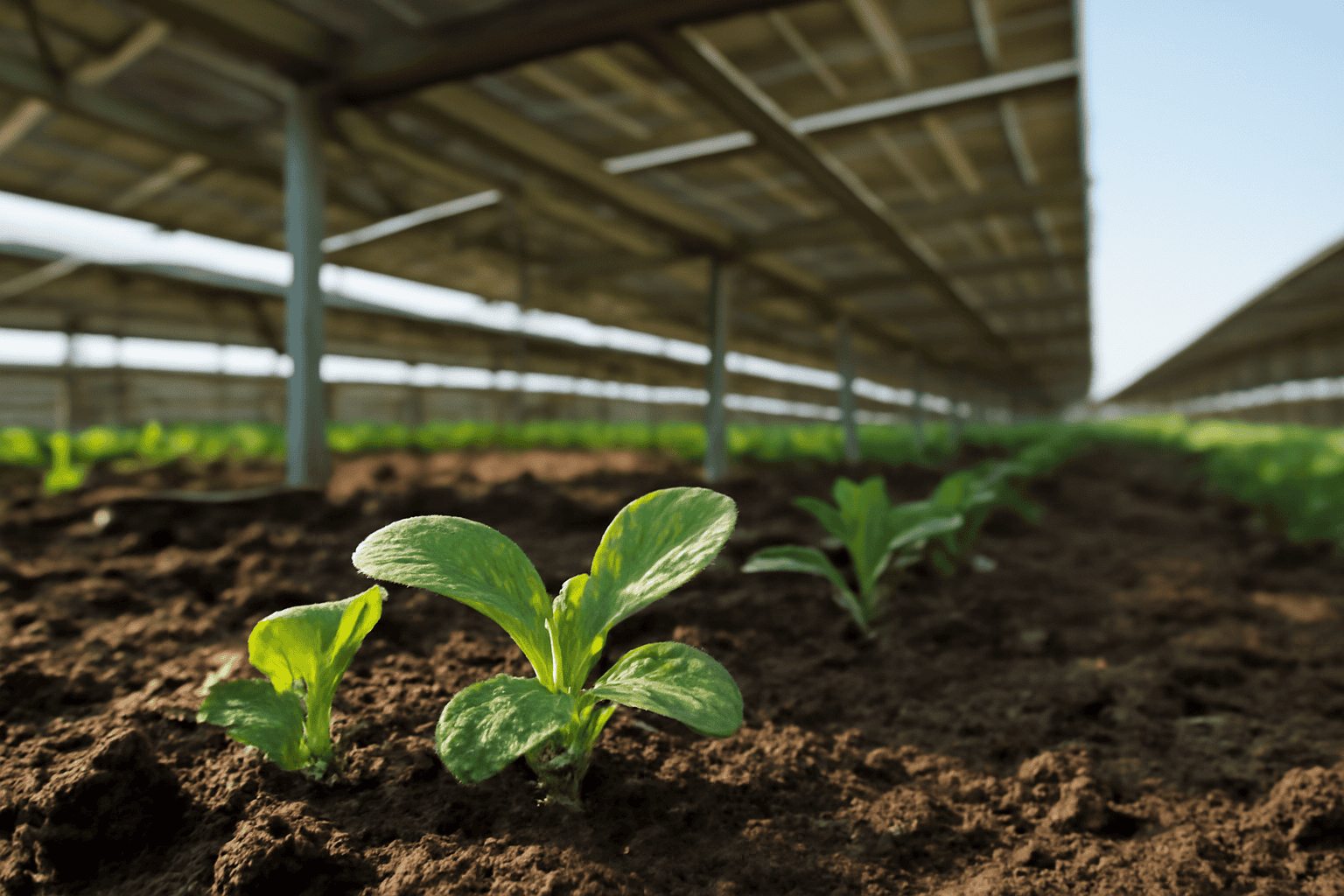
Agrovoltaic systems optimize the spatial layout by arranging solar panel rows at intervals generally ranging from 5 to 7 meters. This spacing ensures at least 60%-70% sunlight penetration at ground level, sufficient to sustain photosynthetically active radiation (PAR) required for many crop types. Panel tilt angles between 15° and 30° (depending on latitude and crop type) are chosen to maximize annual solar energy production while maintaining crop light availability, based on local solar geometry data.
- Dual land use effectively combines renewable energy generation and farm production without conflicting land requirements
- Elevation and spacing of solar arrays are engineered to accommodate crop growth or livestock movement under panels
- Panel alignment is configured to balance energy yield (measured via yield ratios relative to standalone solar installations) and agricultural output retention
This integration provides diversified revenue streams for farmers while advancing regional renewable energy targets through efficient land utilization.
Crop Growth Advantages from Solar Panel Shading and Microclimate Modification
Partial shading by solar panels reduces direct radiation incidence, lowering midday canopy temperatures by 2-5°C, as recorded in replicated agrivoltaic field trials for crops such as spinach and strawberries. This mitigates heat stress, which otherwise reduces photosynthetic efficiency and accelerates evapotranspiration.
The presence of solar panels alters microclimate parameters, including relative humidity and soil temperature. Trials conducted under USDA-supported agrivoltaic projects found soil moisture retention increased by 10-20% compared to full-sun plots, leading to proportional reductions in irrigation water demand. These improvements are location dependent but show consistent benefits in semi-arid or drought-prone regions.
- Shading extends growing seasons by reducing thermal stress, benefiting heat-sensitive crops including leafy greens, berries, and medicinal herbs
- Reduced soil evaporation enables 10-20% lower irrigation volumes, contributing to water-use efficiency
- Partial shading effects contribute to yield retention rates of 60%-80% for shade-tolerant crops versus full sun cultivation
These conditions contribute to more resilient crop systems under the dual pressures of climate variability and water scarcity.
Livestock Integration with Solar Infrastructure: Opportunities and Management
Elevated solar panels mounted at a minimum height of 2.5 meters enable integration of livestock grazing beneath the arrays without obstructing animal movement or maintenance access. Predominantly, sheep grazing has been demonstrated as compatible due to their manageable size and grazing behavior. Comparable height regulations derive from industry guidelines such as the IEC 62759 series for solar installation safety clearances in agricultural contexts.
Livestock gain from solar infrastructure shaded areas, which can reduce heat stress during summer months, potentially improving animal welfare and production indicators such as daily weight gain or milk yield. Simultaneously, grazing contributes to vegetation control, reducing mechanical mowing frequency and associated operational costs.
- Solar panel structures elevated ≥2.5 meters to allow passage and grazing activities safely beneath
- Fence designs and panel layouts planned to accommodate animal movement paths and reduce canopy damage risk
- Maintenance procedures coordinated to balance livestock health and solar system integrity
Field case studies in France and Germany document integrated sheep grazing under agrivoltaic systems maintaining continuous energy output while generating supplemental livestock income on the same hectare.
Solar Technology Adaptations Tailored for Agricultural Environments
Bifacial solar panels are increasingly adopted in agrivoltaic installations. These panels harvest irradiance on both front and rear faces, enabling gains of approximately 10-15% in annual energy production compared to monofacial modules, as confirmed by IEC TS 60904-1-2 testing protocols. The rear-side gain is enhanced by reflective soil surfaces or specially prepared ground covers beneath the arrays.
Tracking mount systems, which adjust panel tilt angles diurnally or seasonally, optimize solar capture while maintaining necessary sunlight levels for crops. Single-axis trackers aligned north-south are common, permitting panel tilt adjustments up to ±60°, scheduled based on crop light sensitivity and solar altitude data from regional meteorological stations.
Durability standards such as IEC 61215 and 61730 guide panel resistance to environmental factors predominant on farms—dust abrasion, vibration from machinery, and animal contact. Regular cleaning cycles and sturdy mounting materials reduce performance degradation risks.
- Bifacial modules providing 10-15% additional energy yield through dual-face light capture
- Single-axis tracking enabling panel tilt optimization with ±60° adjustment range maintaining crop photosynthetically active radiation
- Compliance with IEC 61215 for mechanical integrity and IEC 61730 for safety under farm environmental conditions
These specifications ensure solar components suit combined agricultural and energy functions over 25-30 year design lifespans typical of photovoltaic systems.
Regulatory Frameworks and Incentives Supporting Agrovoltaic Adoption by Farmers
Regulatory approaches vary across jurisdictions but share common features supporting agrivoltaic projects. The European Union’s Horizon Europe program, alongside national initiatives such as Germany’s KfW Renewable Energy Programme, provides grants and advisory services specifically targeting co-locating solar with agriculture, streamlining permitting by integrating energy and land-use regulations.
Permitting processes require compliance with agricultural zoning, environmental impact assessments, and grid connection standards such as EN 50549-1 for distributed generation. Feed-in tariffs or contractual power purchase agreements (PPAs) commonly provide tariff guarantees for 15-20 years, subject to periodic policy reviews.
- EU and U.S. pilot grants facilitate upfront capital contributions and technical support
- Compliance with multi-sector permitting involving agricultural land zoning and electrical safety standards like EN 50549-1
- Feed-in tariffs and PPAs typically guarantee revenue streams for 15-20 years, variable by jurisdiction and subject to evolving energy policy
Early engagement with regulatory authorities and legal advisors is recommended to navigate these processes and secure maximum financial incentives.
Impact on Farm Economics: Balancing Energy Revenue and Agricultural Output
Land productivity studies in agrovoltaic systems show that crop yields retain approximately 60%-70% of baseline outputs compared to full-sun monocropping, depending on crop species and shading ratios between 20%-40%. Simultaneously, solar energy production delivers ancillary revenues calculated per installed kilowatt peak (kWp), with expected capacity factors of 11%-19% annually on typical European mid-latitude sites.
These factors contribute to improving the overall economic resilience of farms by reducing exposure to agricultural commodity price volatility. Initial capital expenditures encompass solar panel procurement, mounting hardware, grid interconnection, and agronomic adaptation, amortized over a design life of 25-30 years.
- Crop yield retention at 60%-70% under shading ratios commonly between 20%-40%
- Solar production capacity factors of 11%-19% annually in relevant climates, influencing revenue predictability
- Capital investment balanced over 25-30 years with consideration for operational cost reductions including irrigation savings
Site-specific financial models incorporating local energy tariffs, crop economics, and capital costs are essential to accurately evaluate agrovoltaic project feasibility.
Implementation Steps for Farmers Considering Agrovoltaic Systems
Farmers adopting agrovoltaic systems should follow a sequenced approach that integrates agronomic and technical considerations with regulatory compliance:
- Site Assessment: Measure solar irradiation data (using pyranometers or satellite sources), analyze soil types and water availability, and select compatible crop species based on shade tolerance and growth cycle.
- Regulatory and Funding Engagement: Submit required documentation for land-use permits and grid interconnection agreements; apply for region-specific incentives and grants from agencies such as the European Innovation Council or USDA Rural Development.
- Technology Provider Collaboration: Design system specifications with agrivoltaic-experienced vendors addressing panel type, elevation, orientation, and tracking systems aligned with farm operational workflows.
- Installation Planning and Execution: Develop project timelines spanning 6-12 months, schedule construction avoiding critical farming periods, and coordinate commissioning with utility grid operators according to standards like IEC 61727.
Interdisciplinary collaboration between agronomists, engineers, legal experts, and financial consultants is crucial for effective implementation.
Community and Environmental Benefits from Combining Solar and Agriculture
Agrivoltaics conserves arable land by overlaying renewable energy production onto existing farm uses rather than converting new land for solar panels alone. This dual usage minimizes pressure on natural habitats and contributes to biodiversity preservation within farm landscapes, consistent with conservation agriculture principles promoted by global frameworks such as the FAO Conservation Agriculture guidance.
Replacing fossil fuel energy sources with onsite renewable energy reduces greenhouse gas emissions. Solar installations generate estimated carbon offsets ranging from 1.5 to 2 metric tons of CO2 equivalent per installed kilowatt annually, depending on grid emission factors and solar irradiance intensity in the project area.
By maintaining local food production alongside renewable energy, agrivoltaics supports resilient food-energy economies and fosters social acceptance within rural communities, aligning with sustainable development goals related to climate action and zero hunger.
- Preservation of biodiversity through land-sparing and habitat continuity within solar-agro landscapes
- Carbon footprint reduction estimating 1.5–2 metric tons CO2 equivalent offset per kWp installed annually, variable by location
- Strengthening of local economies through synergistic food and clean energy production
FAQ
- What types of crops grow best under agrovoltaic solar panels?
- Crops tolerant of partial shade and reduced direct sunlight perform best. Leafy greens (spinach, lettuce), berries (strawberries), and certain medicinal plants like lavender show yield increases of 10%-30% under 20%-40% shading compared to full sun conditions. Selection depends on plant-specific light saturation points and growth cycles.
- How does integrating livestock with solar panels affect farm operations?
- Elevated solar panels (≥2.5 m) allow sheep and similar livestock to graze underneath safely, providing shade that can reduce heat stress and improve welfare. Grazing also complements vegetation management, lowering mowing frequency and associated costs, provided that proper fencing and maintenance schedules are established to protect both animals and equipment.
- Are there government incentives available for agrovoltaic projects?
- Yes, various EU and U.S. regional programs offer incentives including grants, low-interest loans, tax credits, and feed-in tariffs designed to encourage renewable energy projects with agricultural integration. These incentives are subject to change based on policy updates; applicants should verify current availability with relevant authorities.
- What is the typical installation timeline for an agrovoltaic system on a farm?
- From comprehensive site assessment through permitting, procurement, and commissioning, the timeline typically spans 6 to 12 months. Duration depends on project scale, complexity of regulatory requirements, and seasonal constraints relevant to crop cycles.
Conclusion
Farmers exploring agrovoltaic integration must conduct thorough land and crop assessments before engaging technology providers and regulatory agencies. The convergence of solar energy production with farming activities offers advantages including diversified income streams, improved microclimate conditions supporting crop resilience, and reduced environmental impacts. Given evolving policy frameworks and anticipated technological innovation beyond 2027, continuous reassessment of technical and financial parameters is recommended. Agrovoltaics provides a pragmatic model for sustainable farm management that aligns renewable energy and agricultural productivity within shared land use.
Related reading
- What is Agrovoltaics? Understanding the Integration of Solar Energy and Agriculture for Sustainable Land Use
- How Eco Communities Deliver Measurable Benefits in Sustainable Living and Community Resilience
- Integrating Battery Energy Storage Systems (BESS) for Optimized Solar Power Generation and Grid Management